The health secretary, Matt Hancock, has been forced to deny explosive claims by a civil servant at the top of government that ministers made a ‘political decision’ to opt out of an EU scheme to bulk-buy ventilators and protective equipment for NHS workers.
Following comments to a select committee by the Foreign Office’s permanent secretary, Sir Simon McDonald, Hancock used Downing Street’s daily press briefing to rebut the damaging claims which risk accusations that ministers have put Brexit ideology ahead of people’s lives.
“I have spoken to the foreign secretary,” Hancock said an hour after McDonald’s remarks, which he retracted on Tuesday night. “As far as I’m aware there was no political decision not to participate.
“We did receive an invitation in the Department of Health and it was put up to me to be asked and we joined so we are now members of that scheme.”
However, a spokesman for the European commission swiftly rebutted any suggestion that the UK was currently involved in any of the EU’s efforts to buy masks, gowns, ventilators or laboratory supplies. “They are most welcome to participate in future rounds,” the spokesman said.
The EU launched four rounds of procurement of personal protective equipment, ventilators and laboratory supplies in late February and March.
UK officials failed to take up an invitation to join the steering committee of participating countries that issues orders for medical equipment until 19 March – after the bulk purchases had been made.
When Downing Street has previously been questioned about the lack of involvement, officials and ministers have said the government failed to take part in the schemes because “owing to an initial communication problem, the UK did not receive an invitation in time”.
But when asked on Tuesday by the chair of the foreign affairs select committee, Tom Tugendhat, whether there had been policy advice on whether to participate in the EU ventilator scheme, the FCO’s most senior mandarin appeared to contradict the government line.
McDonald told the committee: “It was a political decision. The UK mission in Brussels briefed ministers about what was available, what was on offer, and the decision is known.”
His remarks appeared to blow a hole in the original defence of a “communication confusion” previously put forward by the Cabinet Office minister, Michael Gove.
McDonald had earlier been asked by the Labour MP Chris Bryant: “Why oh why did we not take part in the EU ventilator procurement scheme?”
He replied: “The UK declined to participate because we left the European Union on 31 January.”
Bryant replied: “No, we were invited to take part apparently, we missed the emails or forgot the emails.” At this point McDonald insisted that ministers had been fully briefed.
In a “clarificatory” letter to the foreign affairs select committee on Tuesday night, McDonald said that unfortunately due to a misunderstanding he had mistakenly and wrongly told the committee that a political decision had been taken not to be involved in the EU joint procurement scheme.
He wrote: “Ministers were not briefed by our mission in Brussels about the scheme and a political decision was not taken whether or not to participate. Owing to an initial communication problem the UK did not receive an invitation in time to join four EU joint Covid joint procurement schemes. As these four initial schemes had already gone out to tender we were unable to take part.”
Hancock’s claim to have given the green light to joining the procurement scheme appeared to be a reference to the belated decision on 19 March to be represented on the key committee making the orders of equipment.
He told reporters at the daily press briefing that he did not believe that any equipment under the EU scheme had yet been delivered. EU sources said they expected the first deliveries of €1.5bn (£1.3bn) worth of protective gear within days.
McDonald’s claim that he made an error in giving evidence to the committee is remarkable, given that he is the senior civil servant responsible for handling UK relations with the EU, and the controversy over UK involvement in the EU medical schemes had been widely aired in the media.
At the end of his evidence session McDonald had also taken the chance to correct a separate minor error in his evidence, but clearly had been given no guidance that he had wrongly briefed the select committee over the EU medical equipment schemes since he made no attempt to correct the record.
Speaking after the hearing, Bryant said he had been shocked by McDonald’s answer, adding: “It seems that not content with refusing to take part in a mass EU purchase of desperately needed vital equipment out of a fit of Eurosceptic pique, the government has repeatedly told fibs in a sad attempt to cover its tracks.”
He added: “It beggars belief that they deliberately, intentionally, with forethought and against advice, decided not to take part. And that they trotted out every excuse in the book when they realised they had messed up.”
Epidemics of infectious diseases behave in different ways but the 1918 influenza pandemic that killed more than 50 million people is regarded as a key example of a pandemic that occurred in multiple waves, with the latter more severe than the first. It has been replicated – albeit more mildly – in subsequent flu pandemics.
How and why multiple-wave outbreaks occur, and how subsequent waves of infection can be prevented, has become a staple of epidemiological modelling studies and pandemic preparation, which have looked at everything from social behaviour and health policy to vaccination and the buildup of community immunity, also known as herd immunity.
Is there evidence of coronavirus coming back elsewhere?
This is being watched very carefully. Without a vaccine, and with no widespread immunity to the new disease, one alarm is being sounded by the experience of Singapore, which has seen a sudden resurgence in infections despite being lauded for its early handling of the outbreak.
Although Singapore instituted a strong contact tracing system for its general population, the disease re-emerged in cramped dormitory accommodation used by thousands of foreign workers with inadequate hygiene facilities and shared canteens.
Singapore’s experience, although very specific, has demonstrated the ability of the disease to come back strongly in places where people are in close proximity and its ability to exploit any weakness in public health regimes set up to counter it.
What are experts worried about?
Conventional wisdom among scientists suggests second waves of resistant infections occur after the capacity for treatment and isolation becomes exhausted. In this case the concern is that the social and political consensus supporting lockdowns is being overtaken by public frustration and the urgent need to reopen economies.
The threat declines when susceptibility of the population to the disease falls below a certain threshold or when widespread vaccination becomes available.
In general terms the ratio of susceptible and immune individuals in a population at the end of one wave determines the potential magnitude of a subsequent wave. The worry right now is that with a vaccine still months away, and the real rate of infection only being guessed at, populations worldwide remain highly vulnerable to both resurgence and subsequent waves.
McDonald also spoke to the committee about the end of the transition period for the UK to leave the EU at the end of the year, apparently raising the possibility that Boris Johnson would consider in the next few weeks whether to go for an extension of the deadline.
However, he then seemed to step back from the startling suggestion, saying he was stressing the theoretical possibilities, and adding that he believed the prime minister would confirm the existing timetable.
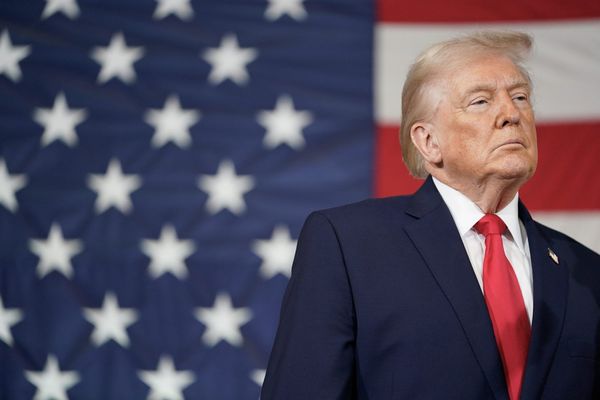
Commenting on conversations with the US following Donald Trump’s decision to suspend payments to the World Health Organization, McDonald said: “It is clear that they think the WHO is overloaded and there needs to be a separate space for pandemics.”
What is the World Health Organization’s remit?
The World Health Organization (WHO) was founded as the UN global health body in 1948 in the aftermath of the second world war with a mandate to promote global health, protect against infectious disease and to serve the vulnerable.
Its current programme envisages expanding universal healthcare to a billion more people, protecting another billion from health emergencies and providing a further billion people with better health and wellbeing.
What does that involve?
The WHO acts as a clearing house for investigation, data and technical recommendations on emerging disease threats such as the coronavirus and Ebola. It also supports eradication of existing diseases such as malaria and polio and promotes global public health.
While its role on emerging diseases is most familiar in the developed world, its practical involvement is far more marked in the global south, where it has been working to expand basic healthcare, support vaccination and sustain weak and often stressed health systems through its emergencies programmes.
Why is the WHO under fire from Trump?
Trump has presented the freezing of US funding to the WHO as a direct response to what he claims was its slow reaction in raising the alarm over the global threat from the coronavirus and being too “China-centric” in its response. The allegation that the WHO was slow to warn of the risk of human-to-human transmission, and that it failed to cross-examine Chinese transparency early on, is largely not borne out by the evidence. And the organisation’s funding was already in his sights on 7 February, when his administration was suggesting cutting the US contribution by half.
The WHO, to whom the US theoretically contributes roughly 10-15% of its budget as its largest contributor, has been appealing for an extra $1bn to help fight the coronavirus. While the suspension of funding by the US for 60-90 days is relatively small – not least because the US is so far in arrears in its annual payments – the potential for a general US withdrawal from global health funding under the cover of this announcement would be very serious and felt most profoundly in places that need the most support.
McDonald also said an “unacceptably large number of British people” stranded overseas had felt let down by the calibre of aid provided by the FCO. He conceded that cost-saving had driven the decision to require British nationals to use commercial as opposed to chartered flights to return home, but said the decision was good and defensible.
He accepted the FCO had not initially been equipped at its central call centre to help Britons stranded abroad. But he insisted the department had received more praise than criticism for its efforts, by a margin of 20 to one.