MATSUE -- This year marks the 200th anniversary of the death of Harusato Matsudaira, the seventh lord of the Matsudaira-Matsue domain, who is also known as Fumai-ko. In tandem with this occasion, a number of efforts are being made to disseminate, in new ways, the Japanese tea culture he left behind.
Words such as macaron and honey may remind visitors of Western-style confectioneries, but these are the names of utensils for latte made with matcha powdered green tea that are sold at the Yaoyorozu Market, a souvenir shop in the Tamatsukuri hot spring area of Matsue.
Collectively called "Matsue Chatte," the utensils come in five colors, including pink and light blue. "The name 'chatte' also means that tea etiquette is not necessary," shop manager Michi Kono, 41, said smiling.
Originally from Kyoto, Kono joined a TV station in Matsue. In the first year of her employment, she was served matcha made with hot water from an electric pot when she visited the home of an elderly person. She was surprised to find the practice of drinking matcha without sticking to Japanese tea etiquette is still rooted in the lives of local residents.
When planning new products to commemorate the 200th anniversary of Fumai-ko's death, Kono remembered the words of a craftsman: "Things become tradition only after they are used by the people of the day." That made her think about adding fun twists to give tea utensils a contemporary touch, so as to pass on the tradition to future generations.
Working with young potters in the city, Kono developed tea utensils for matcha latte and whisks made from resin that can be washed with regular detergents. These products are especially popular among young customers, she said.
"Fumai-san was what we would now call a producer, because he thought about how to make people's lives more affluent," Kono said. "I believe if he was alive now, he'd say my products were interesting."
Nakanoshiro is matcha green tea that was named by Fumai-ko. The dining bar Sweet in the city offers three kinds of drinks using the product: Customers are given the matcha made in a spouted tea bowl and asked to pour it into beer, shochu distilled liquor or a highball.
"The flavor of the tea makes the liquor's taste refreshing," a customer said holding a glass filled with green liquid.
Bar manager Daiki Mishima, 40, said: "I hope young customers and foreign visitors, who do not usually drink matcha, will make good memories in Matsue by enjoying Japanese green tea through alcohol."
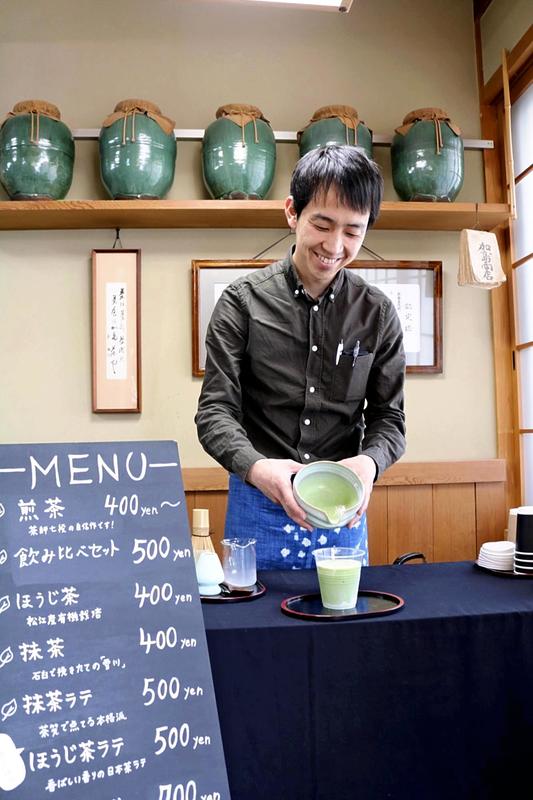
Kosuke Kashima runs a Japanese tea stand at Kashimachaho, a 127-year-old shop in Matsue that offers to-go matcha latte and matcha beer among other drinks. The store is located in a neighborhood where the people who constructed Matsue Castle are said to have been served tea. Both the castle and Lake Shinji, another major sightseeing spot, are just several minutes' walk from his shop.
"I hope tourists rest with some tea," the 33-year-old Kashima said. "I want to make tea that lives up to the reputation of the tea culture of Matsue, which was established here thanks to Fumai-ko."
The lord, who mastered the art of the tea ceremony, wrote in his book: "Those who do not understand how the times are changing and do not recognize transitions while remaining in one place, and do not know transformation, should be described as half-hearted in life."
Fumai-ko learned from his predecessors and always moved forward while sensing the trends of the time. He still serves as a role model for the people of Matsue.
Fumai-ko deserves another look
How can the 200th anniversary of the death of Fumai-ko be utilized? The following are excerpts from a Yomiuri Shimbun interview on this subject with Kazukiyo Takahashi, 73, producer for tourism and culture at the Matsue Travel Association.
People in Matsue are well aware how much they have benefited from Fumai-ko. Many people in Japan believe he was just addicted to collecting tea utensils, but recent studies have found that he in fact rebuilt the finances of the domain by increasing production and encouraging new industries. He also prevented excellent tea utensils from being scattered and lost.
Yozan Uesugi, a contemporary of Fumai-ko, took over the Yonezawa domain in what is now Yamagata Prefecture at almost the same age as Fumai-ko, and is known for his efforts to reform the domain's administration. This is because his achievements were introduced in books written by Inazo Nitobe, Shuhei Fujisawa and others. Fumai-ko's achievements deserve to be well known enough to be written about in novels.
The 200th anniversary of Fumai-ko's death should be used to examine him not just from the perspective of the tea ceremony, but from other vantage points as well, to establish a new image of him.
Read more from The Japan News at https://japannews.yomiuri.co.jp/