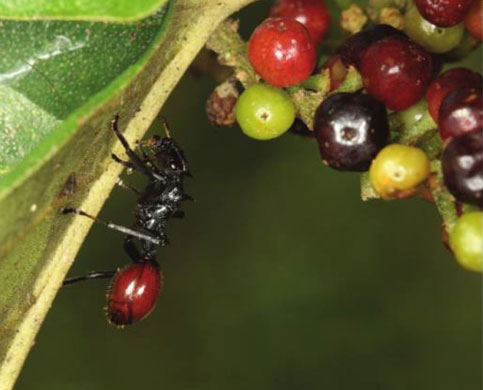
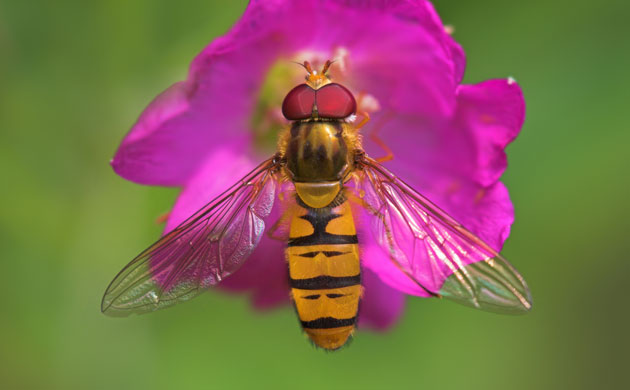
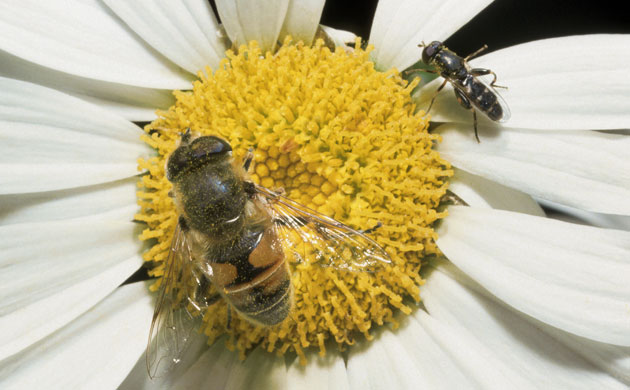
A parasitic nematode worm turns the abdomen of its host, the canopy ant, bright red like a ripe berry – tricking birds into eating the ant and its parasites. The nematode's eggs are excreted in the bird's droppings, which more ants then feed to their broodPhotograph: Stephen P. Yanoviak/www.canopyants.comThe harmless hoverfly fools potential predators into thinking it's a waspPhotograph: Ben Hall/Getty ImagesDrone flies are so called because they are dead ringers for drone honey beesPhotograph: D. Robert Franz/Corbis
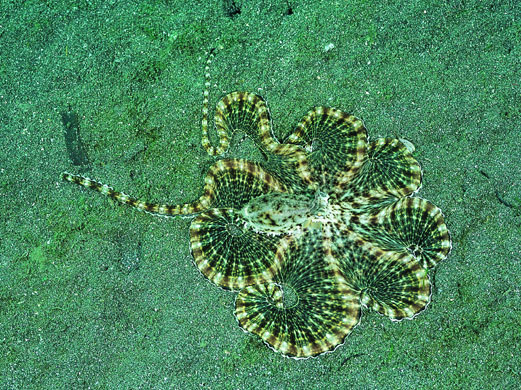
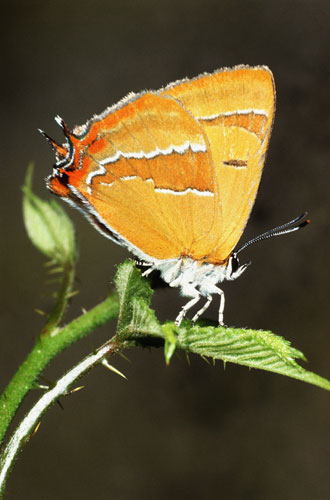
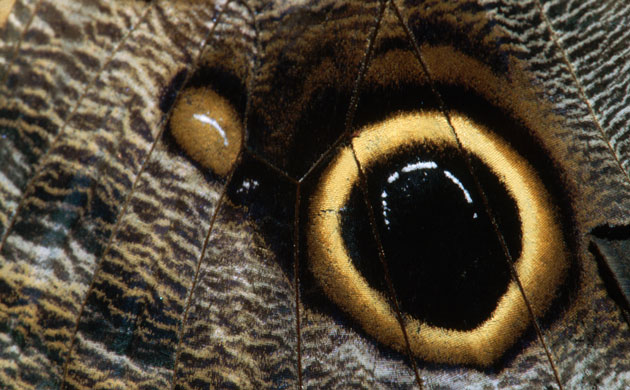
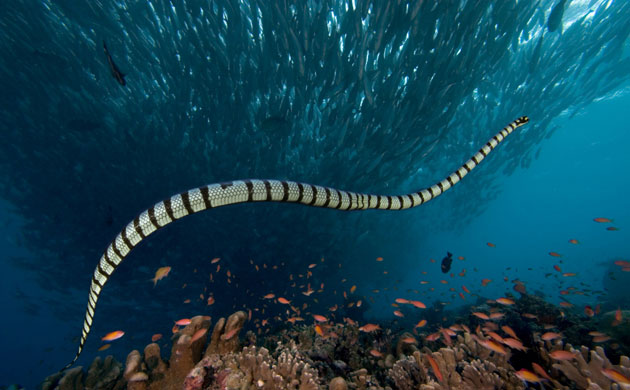
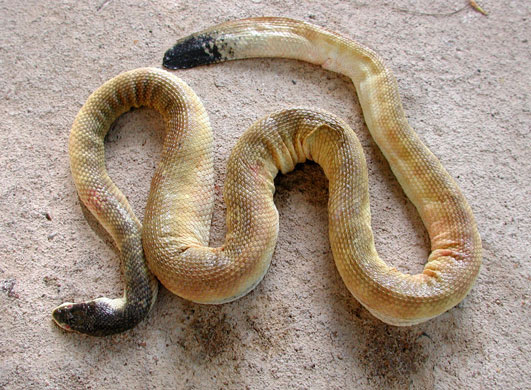
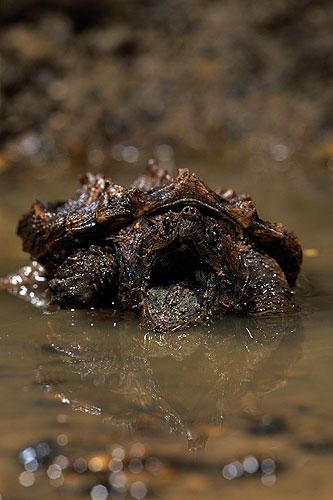
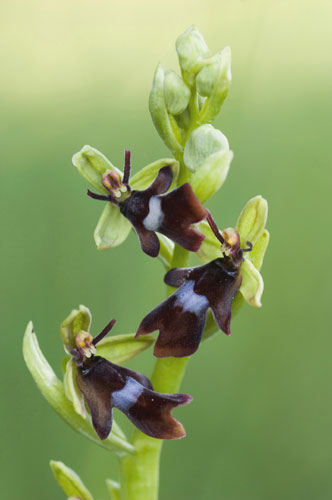
The mimic octopus can change its colour and shape to look like several different species, including flatfish – and sea snakesPhotograph: Constantinos Petrinos / Nature P/NPLAntennae-like projections make the ends of a hairstreak bufferfly's wings look like a head, fooling predators into attacking a less vulnerable part of the insectPhotograph: Robert Pickett/CorbisAn eyespot on the wing of an owl butterfly achieves the same featPhotograph: D. Robert Franz/CorbisThe chrysalis of some species of butterfly resembles a leaf, making it harder for birds to spotPhotograph: Dorling KindersleyThe venomous yellow-lipped sea krait deters predators while it forages by waggling its head-like tailPhotograph: David Fleetham/Getty ImagesThe thick-tailed sea snake also has distinctive colorations on its tail that make it look like a headPhotograph: Arne Rasmussen/PAAlligator snapping turtles have a worm-like appendage on their tongue that fish find irresistiblePhotograph: David A. Northcott/CorbisThe flowers of the fly orchid not only look like flies, they also produce a scent that mimics a female fly's pheromones. Passionate male flies try to mate with the flowers and pollinate them in the processPhotograph: Corbis
Sign up to read this article
Read news from 100’s of titles, curated specifically for you.