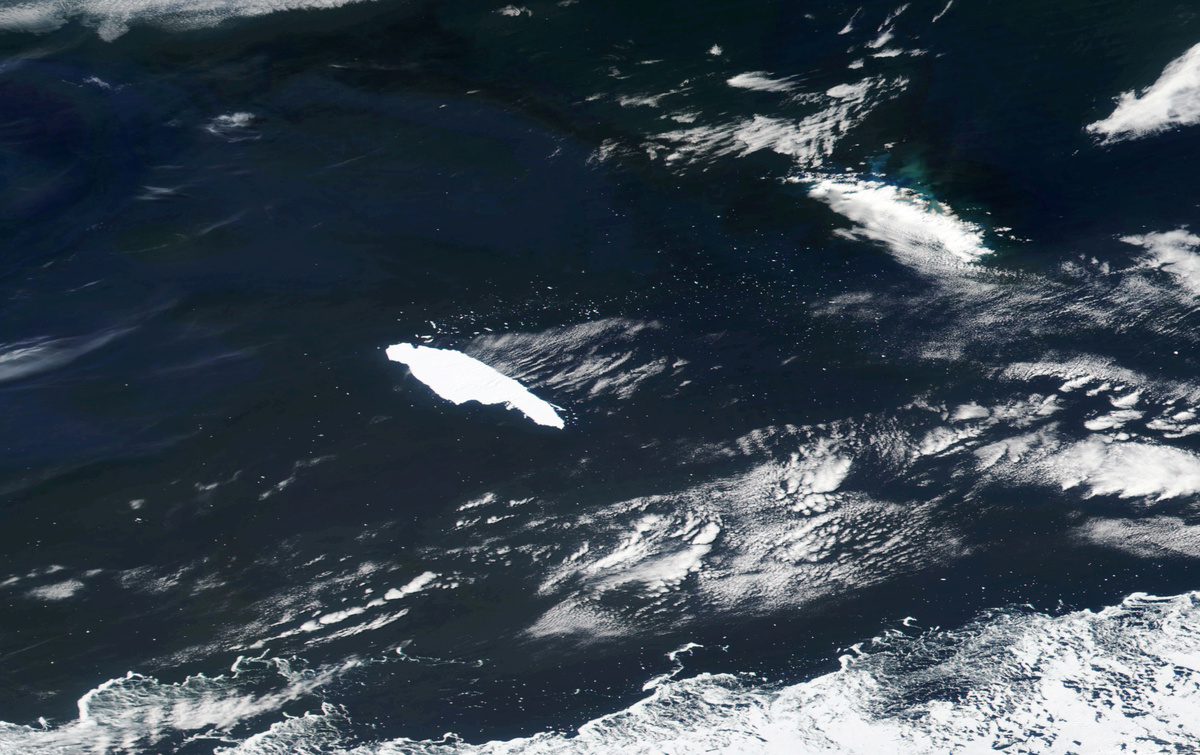
Strong currents have taken hold of a massive Antarctic iceberg that is on a collision course towards South Georgia Island, causing it to shift direction and lose a major chunk of mass, a scientist tracking its journey said on Friday.
As the iceberg, dubbed A68a, approached the western shelf edge of the south Atlantic island this week, it encountered strong currents, causing it to pivot nearly 180 degrees, according to Geraint Tarling, a biological oceanographer with the British Antarctic Survey.
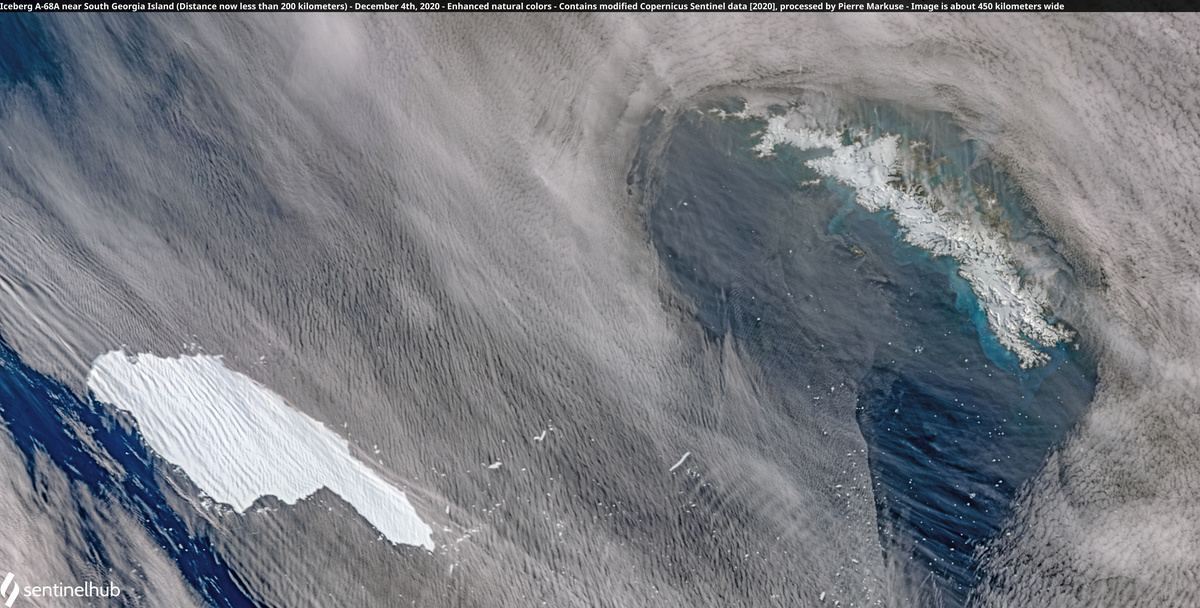
"You can almost imagine it as a handbrake turn for the iceberg because the currents were so strong," Tarling said.
That's when the berg appeared to clip the shelf edge, and caused a large piece to break apart. That new piece is an iceberg in its own right and already has a name - A68d.
Scientists have been watching for weeks the massive iceberg, last measured at 4,200-square-kilometers, as it rode a fast-track current towards the island.
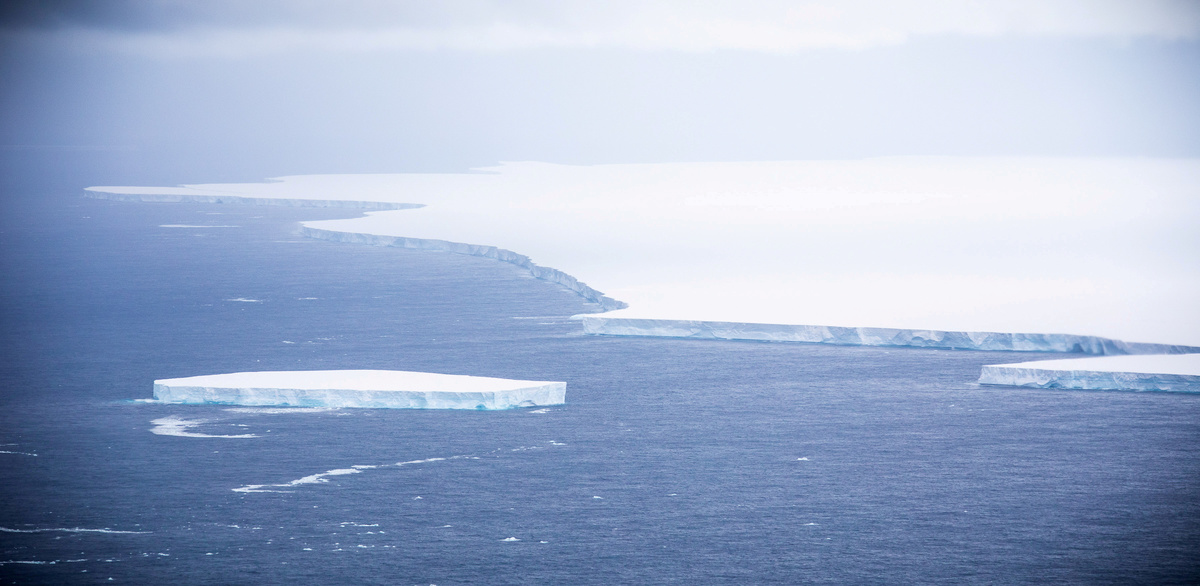
Researchers feared that, as the berg closed in on the wildlife-rich island, it could grind into the seabed, disrupting underwater ecosystems. They were also worried that the berg might block penguins making their way into the sea for food.
As of Friday, the original A68a iceberg was about 50 kilometers (31 miles) from the island's west coast. It appeared, however, to be heading southeast towards another current that would likely carry it away from the shelf edge before sweeping it back around toward the island's eastern shelf area.
That means the berg could still cause an environmental disaster for local wildlife, but along the island's eastern coast rather than the southwest.

"All of those things can still happen, nothing has changed in that regard," Tarling said.
The new smaller berg, A68d, is moving further away from the original berg. Scientists don't yet know if it will follow the same path, or become lodged somewhere else on the shelf. An estimate of A68d's size was not yet available.
Scientists had predicted some chunks could break away from A68a as it approached the island, and more breakage is possible.
A68a broke off from the Antarctic peninsula in 2017.
(Reporting by Cassandra Garrison; Editing by Katy Daigle and Gareth Jones)