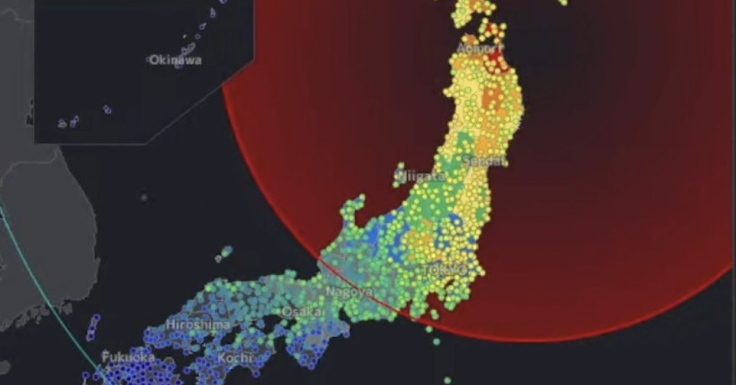
A powerful offshore earthquake rattled northern Japan late Monday, triggering tsunami warnings, injuring dozens, and prompting authorities to issue an unprecedented advisory for a possible "megaquake" in the days ahead.
The magnitude-7.5 quake struck at 11:15 p.m. local time off the Sanriku coast near Aomori Prefecture, according to the Japan Meteorological Agency. Shaking reached an "upper 6" on Japan's seven-level intensity scale in parts of Aomori, strong enough to make standing impossible and send furniture crashing across rooms.
Tsunami warnings were immediately issued for coastal prefectures including Hokkaido, Aomori and Iwate, with initial forecasts warning of waves as high as three meters. The largest observed waves, however, reached 20–70 centimeters at several ports before the warnings were downgraded and ultimately lifted early Tuesday.
At least 30 people were injured, most by falling objects or minor building damage, though no deaths have been reported. More than 90,000 residents in vulnerable coastal areas were ordered to evacuate during the height of the tsunami threat. Power outages hit thousands of homes, and bullet train services in the region were paused for inspections.
While immediate damage appeared limited, authorities issued a rare and heightened alert: the possibility of a magnitude-8.0 or stronger "megaquake" over the next week. The advisory covers 182 municipalities across northern and northeastern Japan — the first time officials have issued such a widespread warning tied to increased seismic stress along the nearby subduction zones.
Scientists said the probability of a catastrophic follow-up quake remains low — roughly 1% — but emphasized that the region's tectonic conditions warrant increased caution. Japan sits along the seismically volatile Ring of Fire, and Monday's quake struck near the same trench systems that have historically generated some of the country's most destructive earthquakes.
Local governments urged residents to secure heavy furniture, refresh emergency supplies and remain prepared for strong aftershocks or additional seismic activity. Travel disruptions were expected to continue through Tuesday as rail operators completed safety checks and coastal towns assessed damage.
The rapid government response reflects lessons learned since the catastrophic 2011 quake and tsunami, which reshaped Japan's disaster-response infrastructure. Officials said the early warning system worked as intended — but cautioned that this week could be critical.