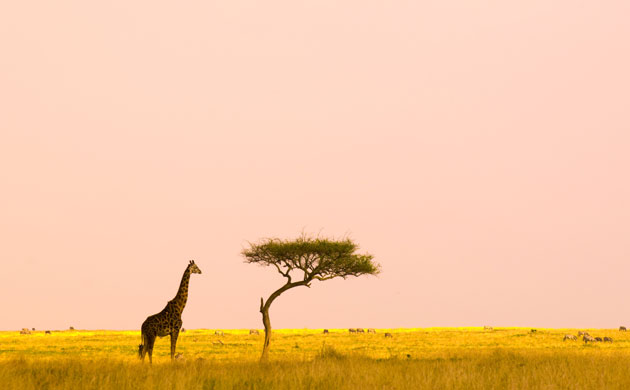
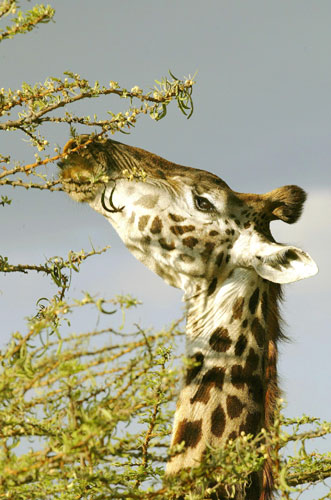
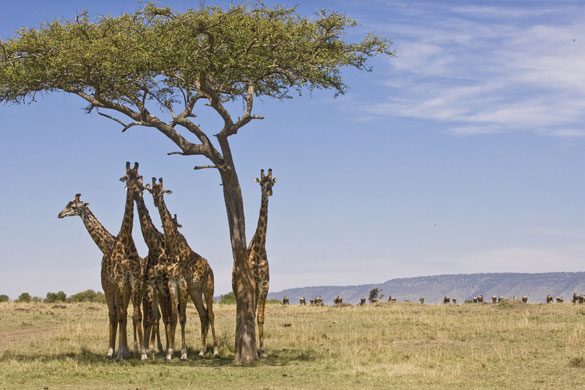
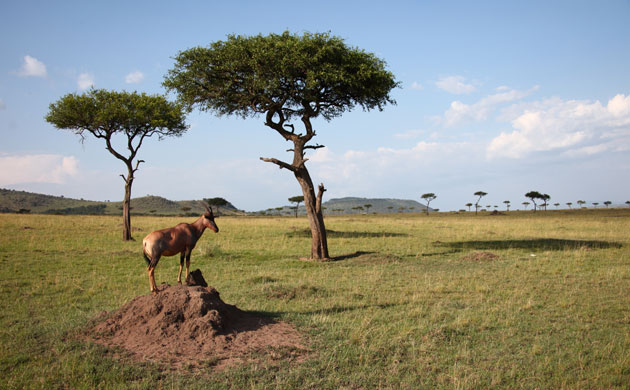
A giraffe beneath an acacia tree in Masai Mara National Reserve, Kenya. Scientists at the Nairobi-based International Livestock Research Institute (ILRI) have found that the numbers of giraffes, hartebeest, impala, warthogs, topis and waterbuck all fell “markedly and persistently” throughout the 580 square mile reserve between 1989 and 2003. They believe increased human settlement around the unfenced park is to blamePhotograph: Blaine Harrington III/CorbisThe scientists' sample counts were backed by government population estimates that showed actual losses as high as 95% for giraffesPhotograph: Rex Features/Rex FeaturesThe authors of the study, which was funded by the WWF and will be published in the British Journal of Zoology in May, say it presents the most detailed evidence yet on the rapid decline of ungulate, or hoofed, animals in the Mara, in south-western KenyaPhotograph: Michael Poliza/Getty Images
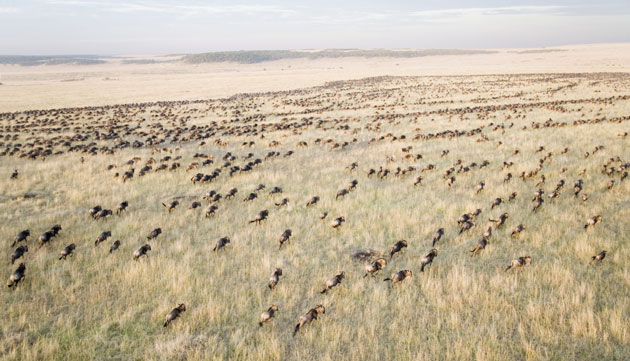
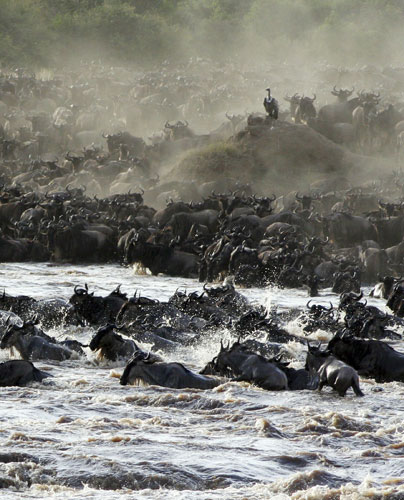
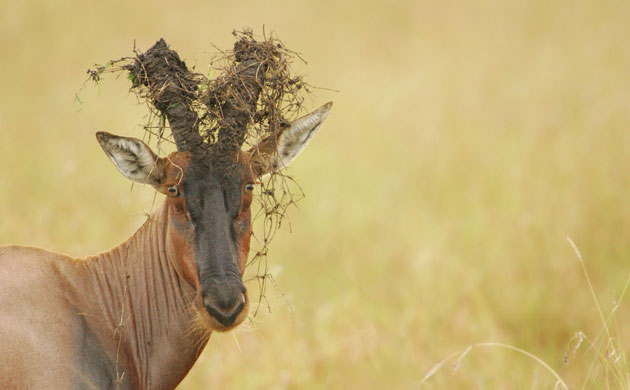
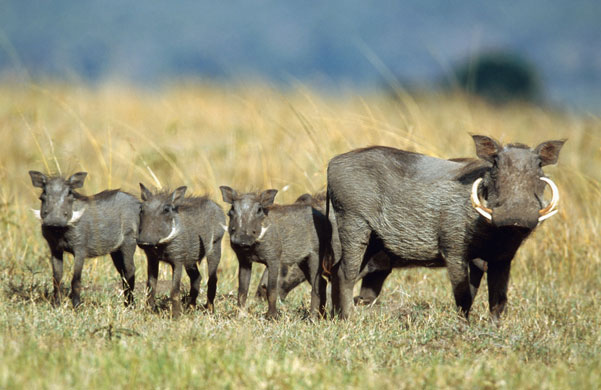
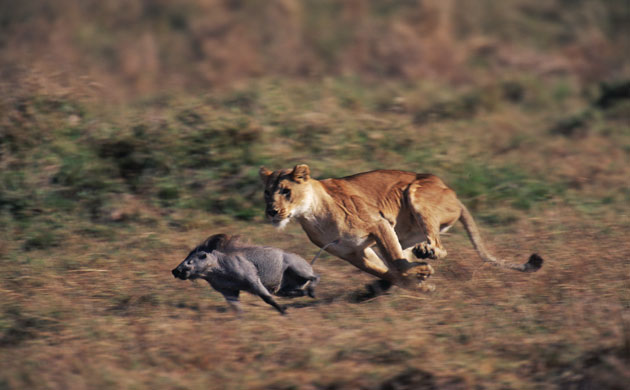
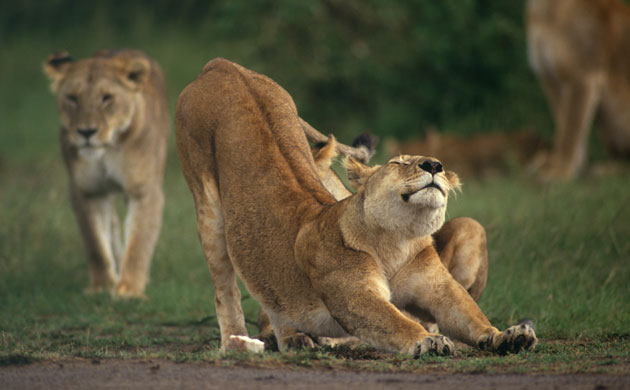
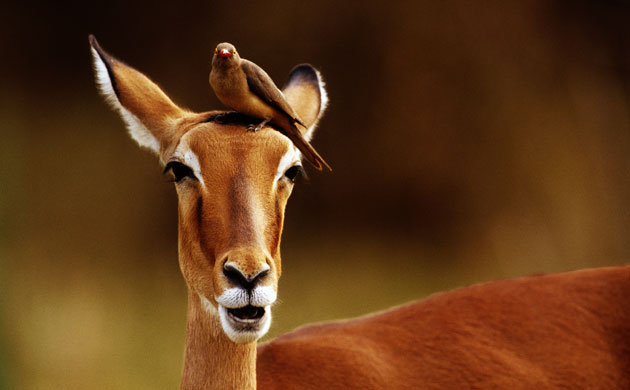
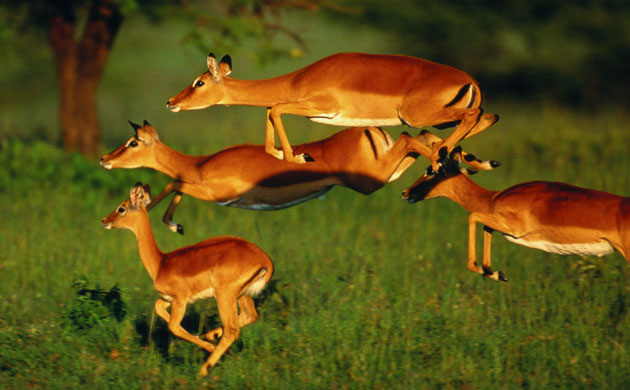
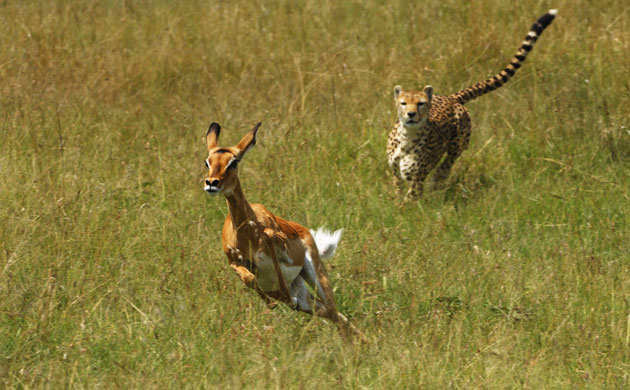
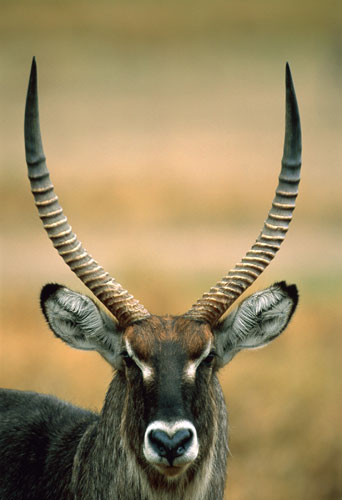
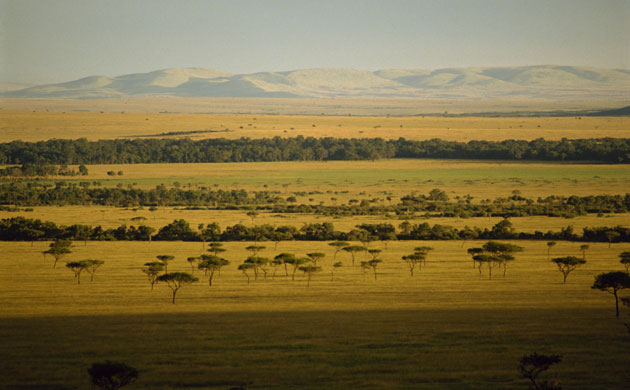
The Mara reserve sits at the top of the Mara-Serengeti ecosystem, which hosts the spectacular annual migration of up to 2m wildebeest and other animalsPhotograph: Arthur Morris/CorbisAn African vulture watches part of a herd of some 1.5m wildebeests as they cross the Mara river during their annual migrationPhotograph: STAFF/ReutersA topi with grass and mud on its horns. Topi have suffered a 79% decline in population in the Masai Mara reserve based on aerial counts between 1979 and 2002Photograph: Arthur Morris/CorbisThe main reason for the population decrease is the rapid expansion of human settlements on the land adjacent to the reserve, scientists say. The area was traditionally used by wild animals for seasonal grazing but is increasingly being turned over to livestock and crop productionPhotograph: EyesWideOpen/Getty ImagesGovernment population estimates showed losses as high as 80% for warthogs in the period dating back to 1979Photograph: Gabriela Staebler/CorbisA lioness hunting warthog in the Masai Mara Photograph: Peter Blackwell/NPL/Rex FeaturesA lion stretches Photograph: DLILLC/CorbisAn impala with an oxpecker perched on its head. Impala also suffered sharp declines over the 15-year period studied. They were 57% from their 1979 population estimates Photograph: Anup Shah/Getty ImagesImpala. Land adjacent to the reserve which was traditionally used by wild animals for seasonal grazing is increasingly being turned over to livestock and crop productionPhotograph: Art Wolfe/Getty ImagesA cheetah chases a female impala Photograph: Federico Veronesi/Getty ImagesNumbers of waterbuck have also fallen Photograph: Winfried Wisniewski/ Winfried Wisniewski/zefa/CorbisThe Maasai Mara National Reserve, KenyaPhotograph: Robert Harding/Rex Features
Sign up to read this article
Read news from 100’s of titles, curated specifically for you.