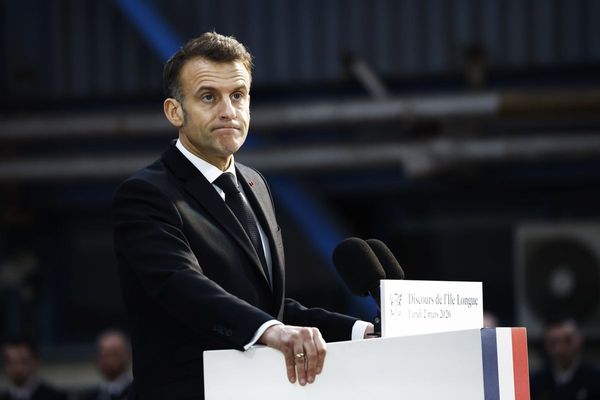
Today we are co-authoring a mini-novel that sums up all there is to say about the videotropic presidency of Donald Trump. It's a short-story, really, because it focuses on the stark contrasts of the TV news the president made on two days this week.
I've already got our title: "Two Days in May."
(Being savvy co-authors, you probably want to warn me that I've just nicked, if not plagiarized, an epic title: "Seven Days in May," the famous novel by Washington political writers Fletcher Knebel and Charles W. Bailey II that became the film starring Burt Lancaster, Kirk Douglas and Ava Gardner. But when I first came to Washington as Newsday's young correspondent, Chuck Bailey, the Minneapolis Tribune bureau chief, was more than generous; he became a friend despite our generation gap. So we're good on this. And don't worry about the fact that Chuck's plot featured a general plotting a military coup against a president who was pushing global disarmament. We're not going there and neither is Trump. Believe me.)
May 8 and May 10 just gifted us with the starkest start-and-stop contrasts that define the worst and best of Trump's bumper-car presidency. On May 8, Trump reneged on yet another global agreement � withdrawing America from the Iran nuclear pact � a wrongheaded move that earned him a world of rebukes. Then on May 10, Trump began the day by posing in predawn beside three Korean-Americans who were imprisoned but were just freed by North Korea's Kim Jong Un � as a sweetening prelude for announcing a Trump-Kim June 12 denuclearization summit.
I just thought of an opening chapter we might want to try � it says it all:
"It was the best of times, it was the worst of times, ... it was the epoch of belief, it was the epoch of incredulity, ... we were all going direct to Heaven, we were all going direct the other way..."
But unfortunately, rewriting "A Tale of Two Cities" poses a dickens of a challenge for writers of punditry, fortune cookie slogans and others who like to keep things simple.
So let's just start by summarizing Trump's May 8 and May 10 like this: It was the worst of days and the best of days.
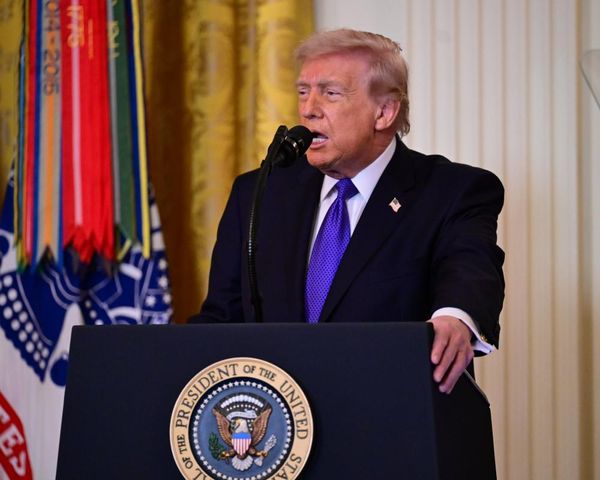
MAY 8th: It was shortly after 2 p.m. when Trump strode into the formal, muraled Diplomatic Reception Room of the White House. The Republican 45th president of the United States announced he was doing what he seemingly likes to do most of all � blowing up yet another legacy accomplishment of the Democratic 44th president, Barack Obama.
Standing at a podium and looking most uncomfortable (because he was reading, which he doesn't like to do), Trump announced he was withdrawing America from the international deal that has stopped and vastly diminished Iran's nuclear bomb program. The pact also provided unprecedented international verification inspections. Trump's abdication of global leadership was promptly condemned virtually everywhere � including U.S. allies Britain, France and Germany, plus Russia and China.
We come now to another sort of abdication � the news media's failure to prominently and clearly tell Americans what they most need to know. The New York Times carried but buried (bottom of page A1l) an excellent fact-checking that needed to be atop page A1. It detailed misleading statements Trump used to justify his Iran pact pullout. Example: Trump's claim that "the deal allowed Iran to continue enriching uranium" was willfully misleading. Iran surrendered 97 percent of its nuclear stockpile and two-thirds of its centrifuges.
MAY 10th: It was well after 2 a.m. when Trump and first lady Melania climbed the jet stairs at Joint Base Andrews outside Washington, and then posed with three U.S. men who had been imprisoned by North Korea's dictator Kim Jong Un but were released simultaneously with the announcement that Trump and Kim will meet in Singapore June 12. Topic: de-nuclearizing the Korean peninsula.
All the world knows what's really happening: North Korea's young ruler � who has assassinated kinfolk � has figured out how to play and manipulate the needy U.S. president who taunted him as "Little Rocket Man." Or maybe China's Xi Jinping, with whom Kim just met for a second time, showed the North Korean dictator Kim how to pull Trump's strings. Whatever. Kim clearly knows the key to getting what impoverished North Korea needs to survive: Make the egocentric U.S. president look like the global achiever he desperately wants to be.
We'll all be watching. But we may not know how "Two Days in May" turns out until June 12.