It’s 20 September 1980, Spain. Franco is five years in the ground. A new Spain is struggling to its feet after 40 years under the Generalissimo’s deadening rule. Eta has today killed four Guardia Civil officers in the north and, on the TV, crowds throw fascist salutes in the streets of Madrid. The first stirrings of post-Franco labour unrest are dimly audible in the distance. And in faraway Andalucía, someone is raping and murdering teenage girls.
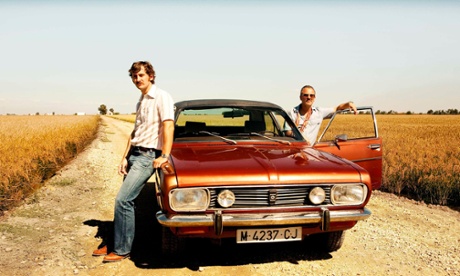
The genius of Marshland, Alberto Rodríguez’s serpentine Spanish crime drama, is to be found in its period setting, between the death of Franco in 1975 and the landslide election of the Spanish Socialist Workers’ Party in 1982, which solidified the newly democratic state. We are in La Transición. Everything is either dying slowly or taking a long time getting born; in the interim, strange bedfellows are popping up everywhere. The mismatched-cops archetype that underpins Marshland is hugely enriched by the ideological opposition between sour leftwing idealist Pedro (Raúl Arévalo) and cynical, ex-fascist life-force Juan (Javier Gutiérrez), two out-of-favour Madrid detectives exiled to the boondocks to find a serial killer.
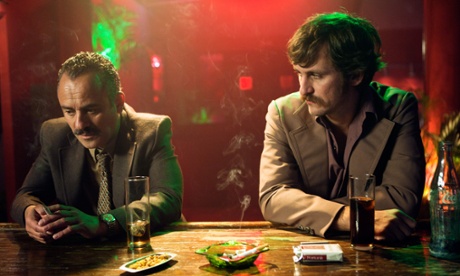
Pedro is the new Spain, sick of corruption and the persistence of Francoism in the police’s upper echelon, currently in bad odour for writing to the papers about his gripes, and he’s played by Arévalo like a blank slate awaiting the markings of bitter experience. Handily, Juan is all bitter experience, a disgraced veteran of the Political-Social Brigade, Franco’s Gestapo, and a heavy drinker who pisses blood, inwardly dogged by his past and his own vile deeds. When Pedro finds a crucifix in their hotel adorned with photos of Franco, Hitler and Mussolini, Juan shrugs, “Your new country…” But not Juan’s, apparently.
This pair, deeply at odds, are thrust into a mystery that delineates an entire rural society, discerning within it not just the persistence of the social and class divisions that Franco could never heal, but the enduring structural remnants of that other Spanish F-word, feudalism.
However, the history and politics merely enrich an already superbly confident thriller. Set in Andalucía’s fenland marshes, it ably deploys the region’s overpowering landscapes, in which everything seems visible but much remains hidden. The overhead drone shots are beautiful, abstracting that landscape into patterns reminiscent of fingerprint whorls, brain-scans or Mondrian paintings. Action-wise, there’s an inventively staged car chase, and the climax, in a reedy jungle of marshes under powerful driving rain, is more than worthy of its ancestor scene at the climax of Joseph H Lewis’s Gun Crazy. Sleek, wiry, intelligent: we can never have too many thrillers like this.