
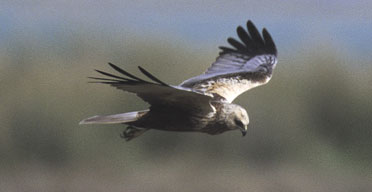
The marsh harrier, a bird of prey once driven to extinction in Britain, is now more common than at any time in the last 200 years, figures showed today.
A survey carried out by the Royal Society for the Protection of Birds and English Nature found numbers had increased by 131% in the last decade, reaching 360 breeding pairs. In 1971, there was only one breeding pair, at a reserve in Suffolk.
The recovery has been attributed to bans on the use of toxic farm pesticides, a crackdown on illegal shooting and egg collection, and the restoration of the bird's reed-bed habitat.
Marsh harriers' striking plumage and aerial courtship displays make them a bird watchers' favourite.
They were once a common countryside sight, but the drainage of wetlands for farming in 18th century resulted in a dramatic decline in numbers. Researchers believe there were fewer marsh harriers in 1800 than there are now.
The marsh harrier was also regularly shot by gamekeepers to such an extent that it was extinct in the UK between 1900 and 1920. Legal protection helped it recover in the 50s, only for pesticides such as DDT to cause a second decline in numbers.
DDT caused toxic chemicals to get into the food chain, resulting in the thinning of eggs of many birds of prey.
"Chemicals used to kill farmland pests almost certainly affected the marsh harrier's ability to hatch eggs and fledged young," Dr Mark Eaton, a research biologist at the RSPB, said.
"Now those chemicals are banned, and the survey results show how parts of our countryside have become suitable for marsh harriers once more."













