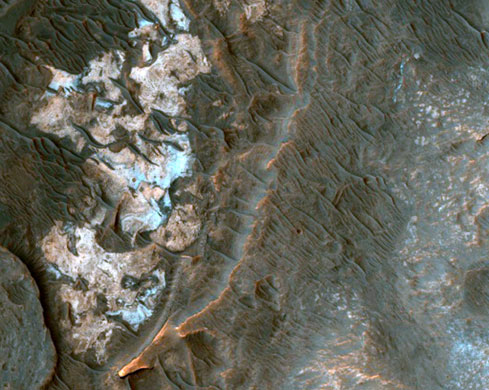
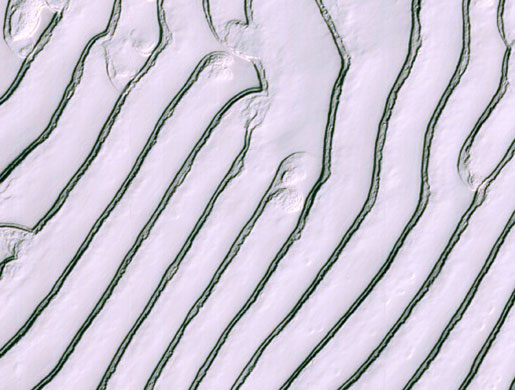
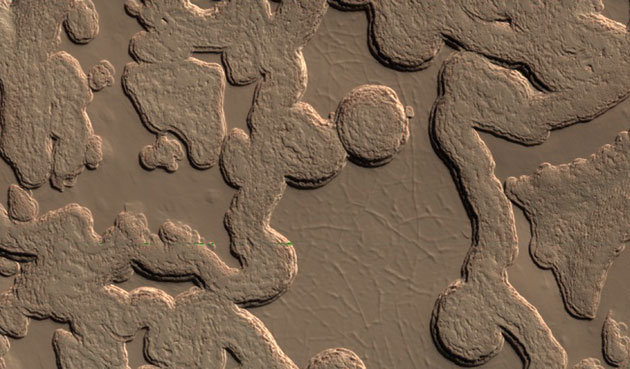
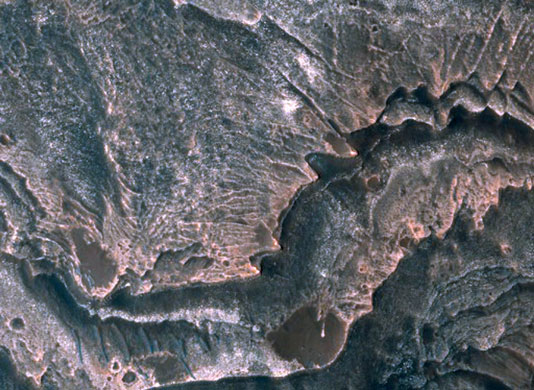
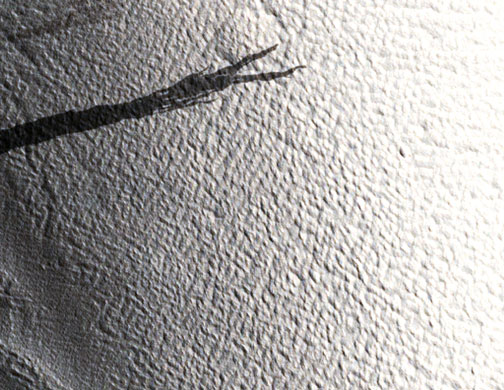
Image of the planet Mars, showing possible inverted meanders in a filled channel west of Ladon VallesPhotograph: guardian.co.ukThe sawtooth pattern in carbon dioxide icePhotograph: guardian.co.ukThe south pole residual capPhotograph: guardian.co.uk
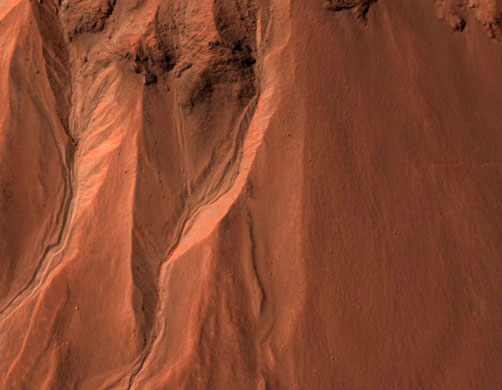
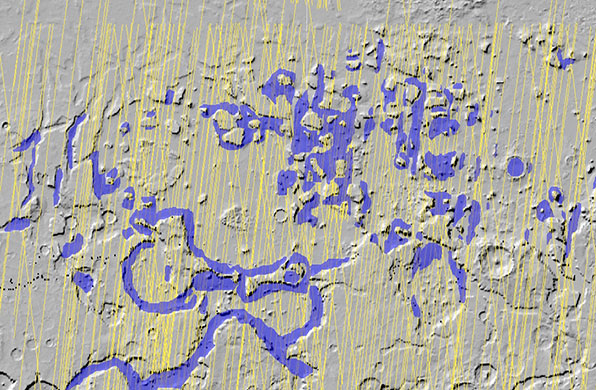
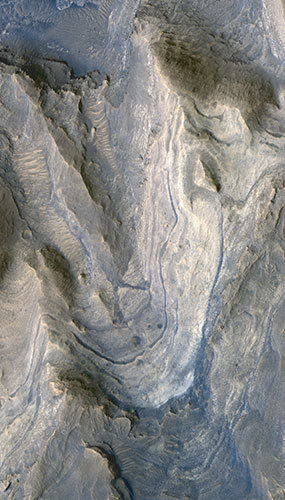
Gullies at the edge of Hale craterPhotograph: guardian.co.ukPossible blocky deposit in Melas ChasmaPhotograph: guardian.co.ukAn image of Mars showing the Ulysses FossaePhotograph: guardian.co.ukPossible Evaporites near Fan in Coprates regionPhotograph: guardian.co.ukThis map of a region known as Deuteronilus Mensae, in the northern hemisphere, shows locations of the detected ice deposits in blue. The yellow lines indicate ground tracks of the radar observations from multiple orbits of the spacecraftPhotograph: guardian.co.ukLayers of rock exposed in the lower portion of a tall mound near the center of Gale Crater on Mars exhibit variations in layer thickness and range between dark and light tones. The crater's mound of layered material is over 4 kilometers (2.4 miles) high, making it more than twice as thick as the stack of rocks exposed in the Grand Canyon on Earth. Gale Crater is approximately 152 kilometers (94 miles) in diameter.
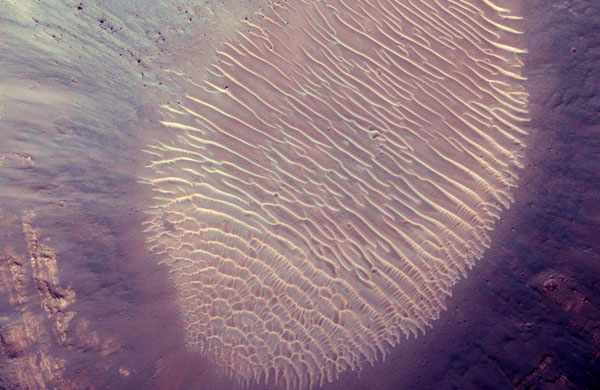
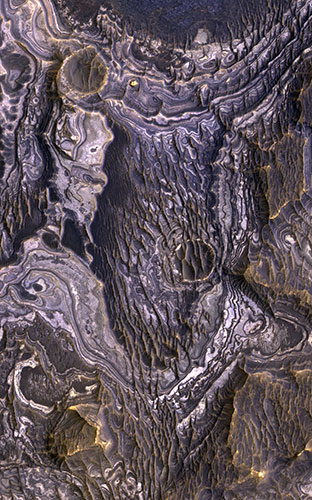
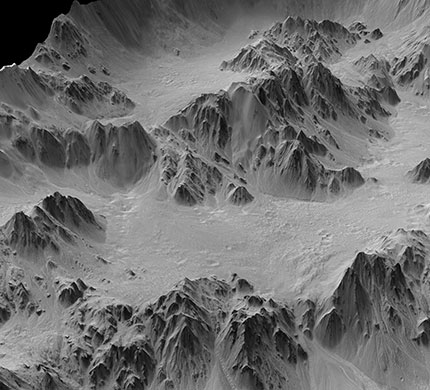
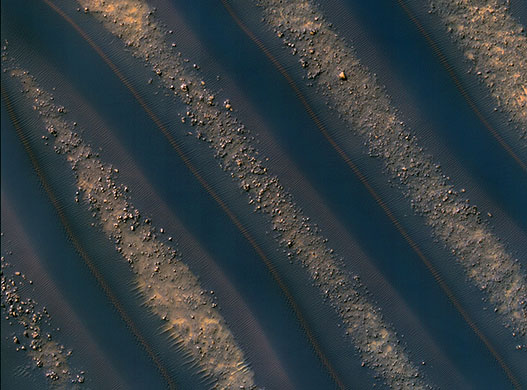
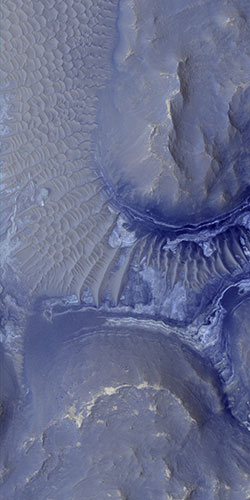
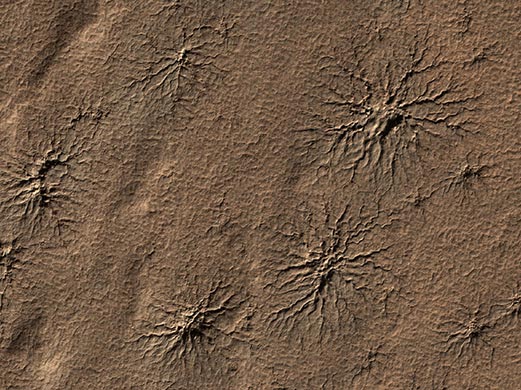
This view of layering in the mound's lower formation covers an area about 950 meters (3,100 feet) widePhotograph: guardian.co.ukThis view shows color variations in bright layered deposits on a plateau near Juventae Chasma in the Valles Marineris region of Mars. A brown mantle covers portions of the bright deposits. The view covers an area about 1.2 kilometers (three-fourths of a mile) across.Photograph: guardian.co.ukA digital terrain model generated from a stereo pair of images provides this synthesized, oblique view of a portion of the wall terraces of Mojave Crater in the Xanthe Terra region of Mars. This view shows the ponding of material backed up behind massive wall-terrace blocks of bedrock. Hundreds of impact craters on Mars have similarly ponded features with pitted surfaces. These "pitted ponds" are thought to result when material melted by the crater-causing impacts is captured behind the wall terracesPhotograph: guardian.co.ukDunes of sand-sized materials have been trapped on the floors of many Martian craters. This is one example, from a crater in Noachis Terra, west of the giant Hellas impact basinPhotograph: guardian.co.ukLayers in the lower portion of two neighboring buttes within the Noctis Labyrinthus formation. Dune fields blanket the ground in the upper left of the image and a portion of the ground between the buttes. Exposures of brighter and darker materials are also visible in the portion of that area not covered by the dunesPhotograph: guardian.co.ukSpider-shaped features known as araneiform in the south polar region of Mars are carved by vaporizing dry ice in a dynamic seasonal process
Photograph: guardian.co.uk
Sign up to read this article
Read news from 100’s of titles, curated specifically for you.