In my day finding a partner was a simpler business. Booze was generally involved, as a way to lower inhibitions, and possibly underwear. If you liked each other the next day you saw them again, until you got bored, or you – or they – liked someone else better, and you went your separate ways. Next!
Then, at a certain age, you started thinking of maybe staying with someone, for like … ever. Having a family perhaps; getting married, if that was your thing. So the next person who came along who you thought you could possibly not get bored of, even after the conversation and the sex and all that had dried up a little, that was it – you were with them, for keeps. True love, it was – and still is – called.
Then the internet arrived, plus apps for your phone, which made everything more difficult. Because suddenly the choice went from friends and friends of friends and people at this party/club/bar/barn dance to basically everyone in the whole world. Which sounds brilliant, because surely there’s someone out there who is absolutely perfect for you. But in fact it makes people more anxious and less likely to settle, because they are always worrying that there’s someone better just a swipe away. The paradox of choice, it’s called.
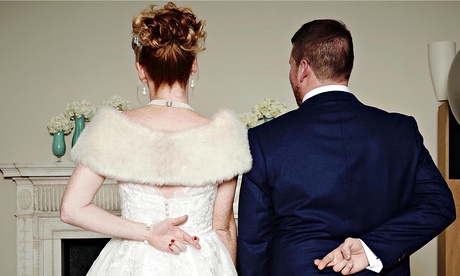
Now there’s Married At First Sight (Channel4), which is better, because there’s a large number of potential partners, making a perfect match and true love likely, statistically – but the choice and anxiety is taken away from you and handed over to the experts. A couple of possible downsides: you’re doing it in front of a TV audience, which might not be for everyone (but was fine for the 1,500 people who applied to take part); and you get married to the person who has been picked for you the first time you meet them – which might be a bit crazy, if you’re old-fashioned and you think you should get to know someone a bit before marrying them. Not too crazy, though, for the Rev Nick Devenish, who is involved in the project. I imagine he must have struggled with his conscience a little before signing up.
Basically it’s an arranged marriage for the 21st century, then, to someone selected specifically for you, by science. I’d like to have had the science explained a bit more. Like Dr Mark Coulson’s psychological test: 300 questions to translate people’s characters into hard data. How does that actually work, and how is a match then ranked as a percentage? I can understand Dr Jo Coker looking into applicants’ emotional histories. And social anthropologist Dr Andrew Irving getting people to record themselves at the weekend, so he can match people who do similar things, though it doesn’t seem all that scientific. We do see people spitting into test tubes, and are told that a symmetrical face equates to good genes, but there’s very little explanation of these so-called DNA matching techniques. Is it good science, or not? And even if it is, and two people are a great match, on paper, in science, what if she doesn’t like the way he smells, or he just finds her a bit annoying? Where’s the science for that, huh?
It’ll certainly be interesting to find out, next time, what Emma and James, and Kate and Jason, make of each other – at their weddings, when they meet. Shame about Jack and Sam (she pulled the plug when her family freaked out); I thought – highly unscientifically, admittedly – that they were the best-suited couple.
After the wedding, there’s a honeymoon, and five weeks of living together. Then they can decide to stay together or get divorced. I’m guessing some people might say it belittles the institution of marriage, but the people involved seem to be doing it for the right reasons, and if Devenish is happy ... Will he change the vows I wonder – “I will love and honour you for the next five weeks”?
It’s certainly entertaining television – Don’t Tell the Bride meets Take Me Out with the ante upped. And then upped again, seriously upped.
Right, I’m off to the seaside for a week, which according to Coast (BBC2) is not just going to be nice, it’s going to have actual biological benefits. So much science today. And it’s going to do wonders for my scrofula too.
Must remember to pack long grey socks, for the kids to wear on the beach, as Nick Crane did when he was a child, in this photo he shows. Aw, sweet, they suit him.