I’ve been thinking a lot about equality this week (I work at the Guardian: that’s what we do for kicks round here). But before I get into that, I’d like to talk a little bit about marriage. My parents raised me on MGM musicals and fairytales. While my little sister was the classic tomboy who insisted on wearing dungarees and corduroy, I only wore dresses, the more froufrou the better. Photos of us as children look like a literary meet-up between Scout from To Kill A Mockingbird and Barbara Cartland. To this day, I am still a total sap for romantic comedies.
All of which is a long way of saying that I was always a girly girl. But one girlish fantasy that never appealed was the fantasy of a wedding day. I never moonily signed my name with a different surname, and I never looked at wedding dresses – even the most froufrou ones – with anything but a sense of relief that I wasn’t the one who’d have to wear it.
I am not a commitment-phobe; I live with someone and we have two children, which feels like a far more tightly bound knot than a signed piece of paper, even if the law disagrees. My (married) parents have an exceptionally happy relationship, so there is no past trauma there. But the institution seems like a fairytale, in the sense of being outdated rather than happily ever after.
Which is why I, of all people, should be cheering on Charles Keidan and Rebecca Steinfeld, the British couple campaigning for heterosexuals to have the right to civil partnerships. Because, of course, they’re totally right: long-term couples should have the same legal rights and protections as married couples – and don’t even get me started on the tax benefits. No one can seriously object to this, unless they’re one of those weirdos who thinks marriage is so fragile it might be damaged if more people were allowed to make their own chosen statement of commitment (hello, David Cameron). Admittedly, if heterosexual civil partnerships did exist, I probably wouldn’t get one, but only because “civil partnership” is one of the least sexy phrases in the English language, right up there with “tax return” and “system update”.
Keidan and Steinfeld have framed their case as an equality issue. “We are being treated differently because of our sexuality,” Steinfeld said after their defeat at the court of appeal, flanked by signs calling for “straight equality”. It was around about there that they lost me. There are excellent arguments to be made for straight civil partnerships, but claiming that poor heterosexuals are being treated unfairly compared to their gay brethren is not one upon which I can expend too much energy. As a legal tactic, I can see the thinking; as a moral one, it’s a little too reminiscent of those people who demand to know why there isn’t a Men’s Hour on Radio 4.
Just as a reminder, civil partnerships were coined as a sop to gay couples who wanted equality without the state having to endanger the holy institution of matrimony by letting in the terrifying homosexuals. That this tactic has now gone full-circle, with many heterosexuals wanting civil partnerships, should serve as a reminder of the utter pointlessness of trying to legislate your way around full equality. (Also, typical annoying straight people: eagerly infiltrating their gay friends’ superior social lives.)
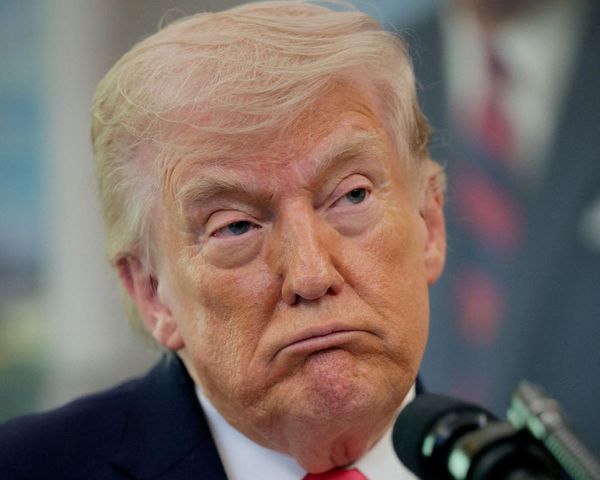
It is pretty breathtaking how quickly those who are blessed with privilege claim to be the underdog nowadays. Last week journalist Toby Young was apparently so horrified at the number of Oscar nominees of colour that he argued the push for diversity was unnecessary, because “if anything, the Academy of Motion Picture Arts and Science is guilty of positive discrimination”. (Love that “guilty.”) Because God forbid there should be one year in which white people don’t win everything. Donald Trump built the most improbable political career in American history by telling straight white men that they’re the nation’s real victims. The briefly feted professional prat Milo Yiannopoulos built a career on claiming to speak for the underdog, that underdog being the famously silent demographic of white misogynistic Islamophobes.
Arguing for heterosexual civil partnerships is not a civil rights issue, but nor is it as far-fetched as a Trump campaign. For a start, I’d be perfectly happy if Keidan and Steinfeld succeed – not because gay people have it and I don’t, but because the shape of people’s lives, across all demographics, has changed radically in the past half-century. Of course society should recognise that, instead of trying to squash us all into outdated cookie-cutter moulds. But that includes recognising one’s own privileges, and not suggesting there is a parallel with others who have long had to fight for more.