In the City, the FTSE 100 has closed firmly in the red, down 43 points at 7,107.
Here’s CNBC’s take on Robert Lighthizer’s testimony on the US-China trade dispute:
China needs to do more than just buy more U.S. goods before the two countries strike a permanent trade deal, U.S. Trade Representative Robert Lighthizer told the House Ways and Means Committee on Wednesday.
“If we can complete this effort — and again, I say’ if’ — and can reach a satisfactory solution to the all-important and outstanding issue of enforceability, as well as some other concerns, we might be able to have agreement that does turn the corner in our economic relationship,” Lighthizer said.
“We can compete with anyone in the world, but we must have rule, enforced rules, that make sure market outcomes and not state capitalism and technology theft determine winners.”
More here.
Robert Lighthizer’s key message to Congress is that a US-China trade deal has to be wide-ranging.
Ie, it must address concerns such as intellectual property theft and the loss of US manufacturing jobs:
"I don’t think it should just be a purchasing agreement." - Amb. Bob Lighthizer admits US-China agreement needs to be about more than just buying more Ag products, etc.#trade #China pic.twitter.com/BYzOcjaxl2
— Heather Long (@byHeatherLong) February 27, 2019
Lighthizer: "We have lost -- not all just to China -- but since China joined the WTO, we've lost 5 million manufacturing jobs … It would distress me if that was the result of economic forces. But it’s not. It's the result of state capitalism." @CNBC
— Carl Quintanilla (@carlquintanilla) February 27, 2019
This suggests Lighthizer wouldn’t be happy if President Trump simply accepts a broadbrush agreement with president Xi, just so a deal can be chalked up.
Lighthizer makes clear the current China talks are just the start of a long process: “I’m not foolish enough to think that there’s going to be one negotiation" that’s going to completely change China's ways or the U.S.-China relationship.
— Megan Cassella (@mmcassella) February 27, 2019
Trump trade chief Robert Lighthizer has massive support on an aggressive approach to China in the House Ways and Means from both Rs and Ds. If Trump caves to China to juice the stock market, he will face problems in Congress.
— Matt Stoller (@matthewstoller) February 27, 2019
Greece urged to crack on with reforms or lose €750m
In a busy day for geopolitical worries, Greece – the euro zone’s perennially weak link - is also back in the spotlight.
In a hotly awaited report the EU Commissioner for economic and financial affairs, Pierre Moscovici – usually a stalwart supporter of all things Greek – had some tough words for the country today.
Moscovici warned that Athens was lagging dangerously behind in implementing pre-agreed reforms with the foreign lenders that in the past decade have bailed it out three times and to the tune of almost €300bn.
If Athens doesn’t press ahead with the measures by the next euro group meeting of euro area finance ministers in March, €750m in monies due from bond profits will have to be forfeited, according to the Commission which has been monitoring Athens’ post-bailout progress. The report is expected to be high on the agenda of the euro group when it next gathers on March 11.
“Concerning Greece, the second Enhanced Surveillance Report … shows significant progress but also some areas in which further efforts are needed, and I urge the authorities to complete these in time for the next Euro Group,” Moscovici tweeted.
Concerning #Greece, the second enhanced surveillance report published today shows significant progress but also some areas in which further efforts are needed, and I urge the authorities to complete these in time for the next #Eurogroup
— Pierre Moscovici (@pierremoscovici) February 27, 2019
The installment is part of €4.8bn of profits on Greek bonds held by the euro zone.
There are 16 reforms the leftist government has failed to complete, not least developing a fully functional legal framework to deal with the economy’s biggest problem: non-performing bank loans.
Lighthizer: Much work still needed on US-China trade talks
Newsflash: US trade representative Robert Lighthizer has just given the markets a jolt, with a downbeat assessment of the US-China trade war.
Testifying to a Congressional committee, Lighthizer says China represents the most severe challenge ever faced by US trade negotiations.
Much work still needs to be done, he warns - another example of the geopolitical issues facing the global economy.
Lighthizer says it’s “too early” to predict the outcome of recent negotiations, although “significant progress” has been made. This suggests the two sides are still further away than hopes.
Significantly, Lighthizer says that China can’t simply address America’s concerns by agreeing to buy more US goods, and that any deal must be properly enforceable as previous deals haven’t been complied with.
This isn’t being well-received in the markets; the Dow is now down almost 150 points at 25,907 points.
*LIGHTHIZER SAYS MORE CHINA PURCHASES ALONE NOT ENOUGH FOR DEAL
— Katherine Greifeld (@kgreifeld) February 27, 2019
hello CNH! pic.twitter.com/axDb4VuXDP
Dow down over 150 points as Lighthizer says there is no greater challenge in the trade space than China; purchases alone are not enough for a deal
— TheStreet (@TheStreet) February 27, 2019
Shocked face. Lighthizer pouring water on US/China deal.
— stewart hampton (@stewhampton) February 27, 2019
Just in: US factory orders barely grew in December, rather weaker than expected.
The Commerce Department has reported that orders for US-made goods rose by just 0.1% during the month, while demand for machinery and electrical equipment declined.
That follows a 0.6% decline in November. Economists expected a 0.6% recovery in December, so this isn’t a great signal.
Breaking -- December factory orders up 0.1& vs. 0.6% estimate
— TheStreet (@TheStreet) February 27, 2019
Michael Cohen’s hearing is underway - follow it live here:
Michael Cohen testimony gets under way as Trump's ex-fixer speaks out – live https://t.co/OMHoZelXrq
— The Guardian (@guardian) February 27, 2019

Geopolitics is also weighing on Wall Street, as trading begins in New York.
The Dow Jones industrial average has dropped by 65 points, or 0.25%, to 25,993.29 at the open. The S&P 500 also dipped 0.2%, while the Nasdaq lost 0.3%.
WW [Weight Watchers] is being hammered, down 30%, after issuing a grim profits warning last night. It expects earnings to more than half to $1.25-$1.50 per share, down from $3.19 last year, after seeing subscriber numbers decline.
Eurozone outlook weakens as corporate loan growth slows
In another worrying sign (which I missed earlier) growth in corporate lending within the eurozone has slowed dramatically.
New loans to businesses only grew by 3.3% in January, down from 3.9% in December and sharply below forecasts of 4%.
That suggests that banks are becoming more reluctant to lend to businesses, or that bosses are too nervous to seek new loans to fund their plans. Either way, a bad sign - especially as the European Central Bank has just halted its stimulus programme.

It could encourage the ECB to launch a new loans programme, to spur banks into lending again (a so-called TLTRO, in which banks can borrow cheaply from Frankfurt to support the real economy).
Economist Sean Richards says today’s money supply figures suggest the eurozone’s economic outlook is deteriorating.
He points out that ‘narrow money’ (the amount of cash in circulation or on overnight deposit) has also slowed:
The narrow money supply measure proved to be an accurate indicator for the Euro area economy in 2018 as the fall in its growth rate was followed by a fall in economic (GDP) growth. It gives us a guide to the next six months and the 0.4% fall in the annual rate of growth to 6.2% looks ominous.
More here: The economic outlook for the Euro area looks even weaker
City firms slash no-deal Brexit odds
Following this week’s Brexit developments, asset manager Columbia Threadneedle reckons the UK is highly unlikely to crash out without a deal next month, Reuters reports.
Columbia’s asset management team reckons No-Deal only a 5% probability, down from 10%-20% previously.
They also suspect the PM’s Withdrawal Deal only has a 20% chance of success (despite signs that hard-line Brexiteers are softening), making an Article 50 extension a 75% shout.
Citigroup has a similar view:
#Brexit No Deal odds drop due to Conservative & Labour pivots, Citi says. PM May has changed her stance on an A50 extension allowing an opportunity for MPs to vote for one on March 14, while Labour are now backing a referendum on the Withdrawal Deal as their preferred safety net. pic.twitter.com/OxbNJMDxQ0
— Holger Zschaepitz (@Schuldensuehner) February 27, 2019
After an edgy morning, the UK’s blue-chip FTSE 100 index is deeper in the red - down 53 points or 0.75% at 7097.
The EU-wide Stoxx 600 index is down almost 0.5%, with consumer goods, tech, industry and mining sectors falling the most.
Connor Campbell of SpreadEx says:
The day’s geopolitical stew left a bitter taste in the mouths of investors, with a uniform shade of red coating the European boards.
Tensions ahead of the Vietnamese summit between Donald Trump and Kim Jong-un, the lack of tangible progress between the US and China despite the trade talk deadline delay, the ongoing and never-ending Brexit disaster, the prospect of an explosive testimony from Michael Cohen, an aggressive flare-up in relations between Pakistan and India: there were plenty of reasons for the markets to be in a bad mood.
Pound hits fresh highs
Hope that Britain will avoid crashing out of the EU without a deal have pushed sterling to a new 10-month high against a basket of currencies.
The pound just burst through $1.33 against the US dollar for the first time since last July, when Theresa May outlined her Chequers plan, leading to the resignation of Brexit secretary David Davis and foreign secretary Boris Johnson.
++++ Sterling up 1 cent to $1.33, highest since Chequers ++++
— George Trefgarne (@GeorgeTrefgarne) February 27, 2019
It also just hit €1.17 against the euro, a new 21-month high.
Theresa May’s u-turn yesterday, agreeing to let MPs vote on an Article 50 extension, has reassured the City by lowering the risk of a disorderly Brexit next month.
And perhaps significantly, leading Brexiter Jacob Rees-Mogg has softened his opposition to her Deal.
Amid a flurry of Latin, Rees-Mogg suggested the Irish Backstop doesn’t need to be abandoned altogether. Instead, a new appendix setting an end-date might be sufficient, he said.
Could this help May get her deal through? Maybe.... but we should remember the EU has previously refused to make the backstop time-limited.
The drop in Italian consumer morale this month is also a worry - suggesting its recession-hit economy may still be shrinking.
🇮🇹Manufacturing sentiment fell further in February, reaching its lowest level since August 2016. Consumer sentiment also surprised to the downside, with larger than expected decline.
— Nadia Gharbi (@nghrbi) February 27, 2019
Lack of stabilisation in surveys increases the risk that recession continues into Q2 2019 pic.twitter.com/1NfMFfkANp
Back in the City, fashion chain Ted Baker has plunged 11% after hitting shareholders with a profits warning.
It blamed currency moves, and a write-down on old stock. The company was also rocked by the “forced hugs” investigation into CEO Ray Kelvin conduct....
Economist Sam Tombs blame the Brexit crisis:
The Economic Sentiment Indicator for the U.K. now is at its lowest level since June 2013. Just look at how it has tumbled since it became clear the Withdrawal Agreement would not be signed off smoothly: pic.twitter.com/98GpC9i90r
— Samuel Tombs (@samueltombs) February 27, 2019
Here’s some reaction to the drop in UK and eurozone economic confidence:
It's the uncertainty that's killing us. Business confidence in the UK drops much lower than the euro area's Economic Sentiment Index in February. pic.twitter.com/nfojL9atUc
— Frederik Ducrozet (@fwred) February 27, 2019
Worrying news on #Eurozone as #European Commission reports that #economic sentiment fell for 8th month running in February (albeit slightly) to be lowest since November 2016. #Consumer confidence up & also up for #services & #retail. But #manufacturing & #construction down
— Howard Archer (@HowardArcherUK) February 27, 2019
Economic sentiment in Ireland rose in Feb, according to the @EU_Commission, after a plunge in Jan, although consumer confidence fell further. EA sentiment slipped again, albeit marginally, but most striking was the fall in the UK, taking it below long run average.
— Daniel McLaughlin (@drdanmclaughlin) February 27, 2019
As #Eurozone economic sentiment falls once again, the silver lining is that consumers and the service sector look much better, but manufacturing continues to be the headachehttps://t.co/YOlCBpOepv
— ING Economics (@ING_Economics) February 27, 2019
Updated
UK economic confidence hits five-year low
Just in: Economic optimism in the UK, and across the eurozone, has fallen again as Brexit, trade wars and economic slowdown fears all bite.
The European Commission has reported that economic sentiment in the UK fell sharply last month, hitting its lowest level in over five years.
It slumped from 103.7 points to just 99.2, a fall of 4.5 points, dragged down by weak consumer confidence and a jittery services sector.
🇬🇧Economic sentiment in the UK is at the lowest level since June 2013 and is now significantly below the equivalent euro area index. #Brexit uncertainties are weighing on consumers and, in particular, businesses $EURGBP pic.twitter.com/LMf2p0RPns
— Danske Bank Research (@Danske_Research) February 27, 2019
Economic sentiment in the euro area hit a two-year low, dragged down by Italy and France.
The EC reported that industry confidence deteriorated for the third month in a row, with managers more pessimistic about their production expectations, order books, and stocks of finished products.
Services firms became more confident, though, while consumer confidence also edged up a bit. You can see the results here.
Updated
David Madden of CMC Markets confirms that geopolitical tensions are weighing on the City today:
Equity markets are in the red this morning as geopolitics is playing on traders’ minds. President Trump is set to meet with the North Korean Leader, Kim Jong-un, to discuss the denuclearisation of the Korean Peninsula. Investors are still wondering when will the US-China trade spat will be resolved.
We heard this week that tariffs on Chinese imports won’t be hiked in March, but the trade dispute still needs to be finalised, and we are still a long way from the end result.
Emerging market shares rattled
Emerging markets have been nudged lower since Pakistan announced it has shot down two Indian jets today.
It’s not a major selloff, though. The Karachi index is still the worst performer, down over 1%, while India’s Sensex is down 0.2%
Pierre Veyret, technical analyst at ActivTrades, say investors worry that the Kashmir crisis could escalate.
Geopolitical tension between Pakistan and India have strongly impacted equities from Tokyo to London today, with investors fearing a further escalation.
Almost all European indices are trading in negative territory, especially in Athens and London, where benchmarks are breaking significant support levels. In Frankfurt, the DAX-30 index is still trading inside its short-term bullish trend started at the beginning of this month.
Here’s the logic behind the M&S/Ocado deal:
Take that #Waitrose...
— Chris Bailey (@Financial_Orbit) February 27, 2019
Ocado shares +4%, M&S -7% (on the money raising) pic.twitter.com/MHm4H2kU5j
Marks & Spencer making fundamental changes to business plan with Ocado JV. Price is a re set dividend and a rights issue to finance. Will be interesting for Ocado customer loyalty switching from Waitrose but early take appears very supportive of this move
— Paul Kavanagh (@PaulJKavanagh1) February 27, 2019
But some Ocado shoppers may not take the change well....
Just 24hrs after confirming they’re in talks @Ocado / @marksandspencer reveal details of joint venture. M&S paying £750m for 50%, launching Sept 2020 when Waitrose deal ends.
— Harry Wallop (@hwallop) February 27, 2019
Ocado get holds of M&S customer base details.
Wife (@ocado shopper) wails: ‘This is a crisis. I can’t afford M&S food for weekly shop. And my mental health can’t cope with Waitrose’s shonky delivery system. HOW WILL WE EAT?’
— Harry Wallop (@hwallop) February 27, 2019
@Ocado You’ll be losing us as weekly customers with a delivery pass following your decision to dump Waitrose. By comparison, M&S don’t provide a full range of lines, no own-brands and their food is too expensive and poorer quality. No thanks. I suspect this won’t end well for you
— Simon Fynn (@simonfynn) February 27, 2019

Back in the City, shares in Marks & Spencer have tumbled by over 8% after it finally secured a joint venture with online grocer Ocado.
The deal is mean to give M&S some much-needed heft online. But it comes at a hefty price - it’s paying £750m for a half-share in the new project. So, M&S is tapping investors for cash with a £600m rights issue, and also slashing its dividend by 40%.
The idea is to sell M&S food and drink, plus Ocado own-branded goods and various other brands via Ocado.com, replacing the previous tie-in with Waitrose.
So, M&S finally gets a decent crack at the online shopping market, and Ocado gets a cash injection to build more distribution outlets and keep growing.
Laith Khalaf, senior analyst at Hargreaves Lansdown, thinks the deal makes sense:
‘This deal is a case of the old meeting the new. M&S has clearly decided if you can’t beat them, join them, and in a digital age it simply can’t afford to ignore the online audience for food.
M&S basket sizes are small, under £30, which makes the economics of online delivery especially challenging, because customers are shopping for special occasions or food for that night, rather than a full weekly grocery shop. By teaming up with Ocado, where basket sizes are over £100, that makes an online proposition viable.
US stock markets are also expected to be subdued, with the Dow Jones industrial average being called down over 100 points (or 0.4%).
Fed chair Jerome Powell failed to provide many fireworks in his testimony to the Senate yesterday, as he pledged to be patient before considering further interest rate hikes.
Powell also warned that the US economy faces ‘headwinds’ - a reminder that geopolitical problems abroad can hurt growth.
Dow futures point to lower open ahead of Trump-Kim summit https://t.co/d7o3RJnGzR
— CNBC (@CNBC) February 27, 2019
European stock markets have opened lower, with the Stoxx 600 index dropping by 0.36%.

Paul Donovan of UBS Wealth Management says:
Tensions between India and Pakistan have escalated in Kashmir. This sort of event can often lead to a short reaction in financial markets, but the consequences are largely confined to the countries concerned and have limited lasting effect.
Anit Mukherjee, a former Indian Army major and assistant professor at the S. Rajaratnam School of International Studies in Singapore, has told Bloomberg News that the clashes in the disputed Kashmir region are very worrying:
“This is unprecedented territory, we haven’t had tit-for-tat air strikes between India and Pakistan since the 1971 war,”
“We don’t know what will come from this. But it seems like Pakistan has given a response. And there have been casualties - captures, deaths.”

Introduction: Geopolitical tensions push shares lower
Good morning, and welcome to our rolling coverage of the world economy, the financial markets, the eurozone and business.
After yesterday’s surge in sterling, the City is rather more subdued this morning as investors return to worrying about geopolitical issues.
And there’s plenty to concern us all today.
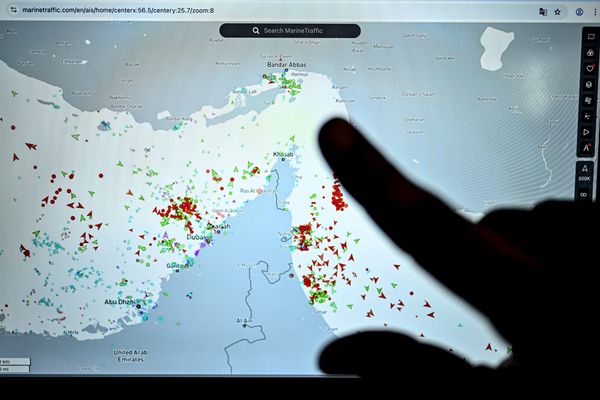
The tensions between India and Pakistan in Kashmir have escalated, with Pakistan claiming to have shot down two Indian jets this morning. This follows Delhi’s attack on what it claims was a terrorist training camp over the border.
With the two sides exchanging mortar fire across the border, the situation is rapidly becoming more serious.
Indo-Pak air combat over LoC. Unclear which side has shot down whose fighter jet/helicopter, but plane debris is shown by Indian TV channels- helicopter or fighter jet, Indian or Pakistani. Surely Gov needs to speak.
— K. C. Singh (@ambkcsingh) February 27, 2019
As I feared. Sounds like #Pakistan has retaliated to #India airstrikes by launching their own strikes and may have shot down Indian plane. Two nuclear armed antagonists allowing this to escalate uncontrollably
— Robin Bew (@RobinBew) February 27, 2019
The Karachi stock market has plunged 3.3% so far today, following the reports of jets being downed (Delhi hasn’t yet confirmed that it’s lost the planes). The Karachi 100 index of top Pakistani companies shed around 1,300 points to 37,531, as traders worried that the conflict could worsen.
Meanwhile, KARACHI stock exchange KSE100 Index fell by +1100 points 😂😂😂#Pakistan #PakistanArmy #markets pic.twitter.com/UVRgrOxq9T
— Ruchita Maheshwari (@Ruchi_Mahi) February 27, 2019
Delhi’s stock market is also in the red, down 0.5% this morning.
Elsewhere, Donald Trump will be sitting down with his “friend”, North Korea’s Kim Jong-un, at their summit in Vietnam. The US president is hoping for a denuclearizion breakthrough....
...However, that meeting has been dramatically overshadowed by new testimony from the president’s former lawyer, Michael Cohen.
Cohen is due to tell Congress that Trump - who he dubs “a racist, a conman and a cheat” - was aware that WikiLeaks would publish emails stolen from the Democratic National Committee and Hillary Clinton’s campaign.
My colleagues Sabrina Siddiqui and Adam Gabbatt explain why it matters:
The remarkable allegations by Cohen go further than what has been made public thus far by the special counsel investigation into potential collusion between the Trump campaign in Moscow.
Cohen will also suggest his instructions to lie to Congress about a possible Trump Tower deal in Moscow during the 2016 campaign came from the president – albeit not directly.
So, this could easily overshadow the meeting:
City trader will also be watching parliament closely, as MPs prepare for next month’s votes on whether to pass Theresa May’s Brexit deal, extend Article 50, or leave without a deal.
Sterling is hovering close to yesterday’s 21-month high against the euro, at €1.165, as investors expect Brexit to be delayed.
But Lukman Otunuga, research analyst at FXTM, warns that there could be more volatility ahead:
While the Pound is likely to extend gains amid the current optimism, the question if for how long? It is quite frightening how sensitive and explosively volatile the Sterling has become to Brexit headlines, and this is likely to intensify as the March 29 deadline looms.
We’ll also get new economic data from the eurozone, US trade data, and another appearance by top US central banker Jerome Powell.
The agenda
- 10am GMT: Eurozone consumer and economic confidence stats for February
- 1.30pm GMT: US advance trade balance for December
- 3pm GMT: Fed chair Jerome Powell testifies to Congress
Updated