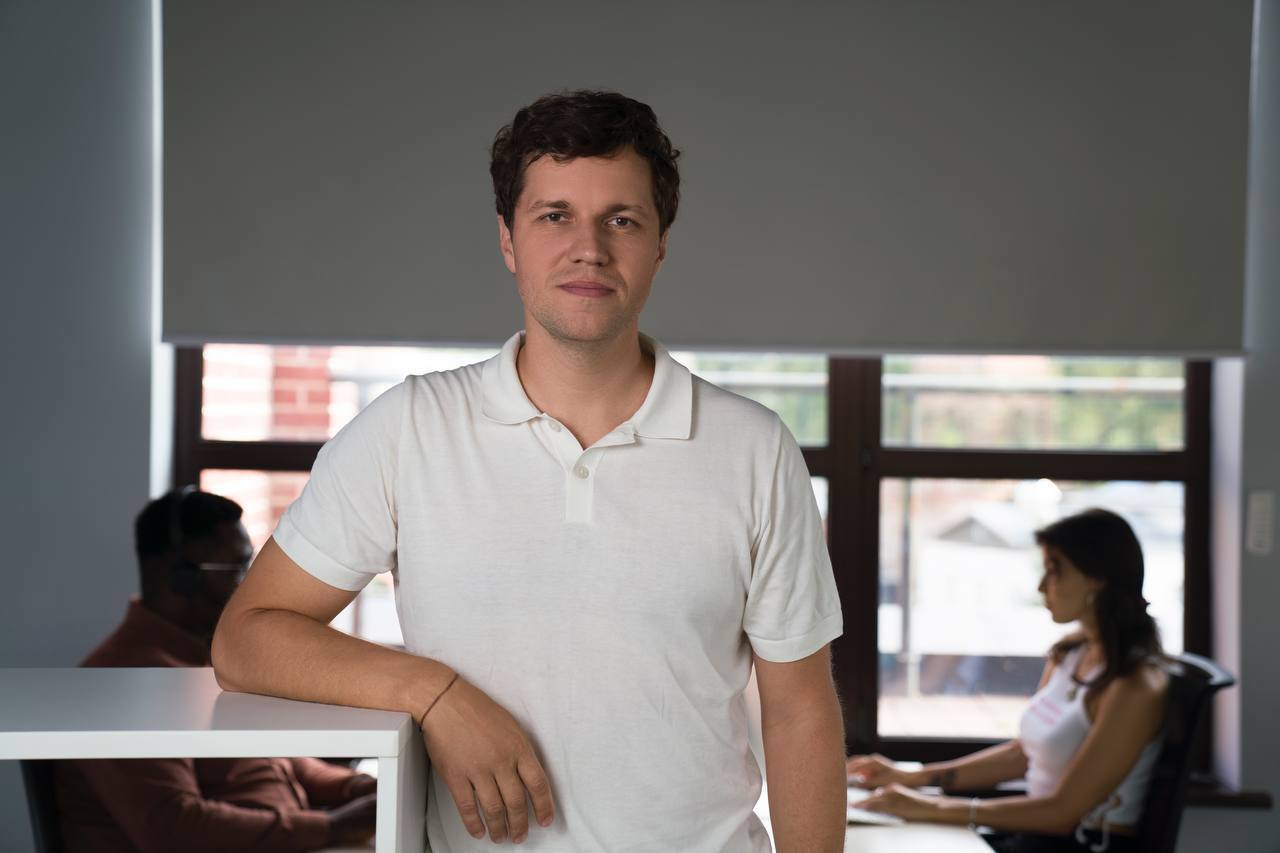
In modern fintech, there is almost no room for random decisions: technology must be accurate, strategy calculated, and scaling verified to the micron.
Aleksei Eroshenko is a rare example of an entrepreneur who has managed to go from launching a local microcredit service in Russia to managing an international instant lending ecosystem operating in Mexico, Nigeria, India, Vietnam, and preparing to enter Europe and Africa. 10+ years of expertise, revenue of over $100 million per year, millions of users, hundreds of thousands of operations per day, each item is based on systematic work, strategic risk management and the ability to see opportunities where others see limitations.
Aleksei, I would like to start by asking not about facts, but about logic. Why did you join fintech? Was it an opportunity, an ambition, or a challenge to yourself?
— To be honest, a combination of everything. In the early 2010s, fintech was almost a wild field, microcredit was just taking shape in Russia, and I was very attracted to the idea of making a service that works faster than banks and at the same time predictably. I'm not romanticizing the startup path, but that phase was a time of experimentation.: We built an agency company, automated the application process, and created a platform that no one had ever tried to assemble in this form before. It was probably important for me to prove that a technological loan product can be both high-speed, scalable and sustainable. And then, I just couldn't stop.
You said that the first success came when your product, the credit pipeline, appeared. What was the main moment of the transition?
— The point of no return, when we realized that other people's decisions limit more than they help. Any system designed for small volumes breaks down under load. And at that moment we were already thinking of hundreds of thousands of operations. We have invested a year and a half in our own architecture: scoring, communications, recovery, document flow, everything was written to withstand growth, not just work. This is the foundation that we still use in different countries, but we are adapting it to local regulation and the consumer model.
The transition to international markets is a step that many would be afraid of. Why did Vietnam become the first destination?
— Because it is a market with a high digital drive, a young population and a low entry threshold in terms of regulation. We came there not with the idea of "repeating Russia", but with the intention of rebuilding the service to suit the local economy and user behavior. Eight months after the launch, we issued the first loan, and a few years later we became the top 2 in the country in the instant loans market. Now the service serves millions of users every month, and this is the result of a systematic approach, not luck.
When a product becomes No. 1, development hits the ceiling. How do you solve the issue of further growth?
— Zoom only. Even the 140 million market has a limit. That's why we're moving to new countries: Mexico, Nigeria, India. The model is simple: we test the product, achieve the target default level, and then proceed to exponential growth. Mexico is already profitable, Nigeria is close to market scale, and India is in the final stages of Central Bank approval. At the same time, we are conducting legal preparations to enter Spain, Peru, Colombia, and South Africa. It's not about expanding for the sake of expanding — it's about increasing market capacity.
Your role in the company is already more strategic than operational. What does it mean to you to be CEO in international markets?
— My task is to grow. Not in a pretentious sense, but literally: to see opportunities, find resources, discover new countries, attract capital, ensure compliance. The company operates profitably, but international scaling requires an amount of about $150 million to issue loans in the countries where we enter. I see myself as the head of growth: I have to see three moves ahead, take into account macroeconomics, politics, inflation, and consumer culture. This is no longer a startup where energy decides everything. Strategy decides here.
You work in markets where risk is a constant environment. How do you manage it?
— Risk is not the enemy, if you know how to count it. We have dozens of scoring models, behavioral data analysis, and the predictability of defaults at the level of statistical patterns. We don't give out a loan, we make a mathematical decision. And when we see that the risk is acceptable, we scale up. When not, we rebuild the product, change the funnel, and look for new types of data. Fintech is about flexibility, not excitement.
How do you see the service of the future?
— Deeper in terms of amounts, longer in terms of terms, closer to a classic bank loan, but faster and more technologically advanced. Internally, we are already working on products with greater capital intensity, focusing on Merchant Cash Advance, business lending for future revenue, especially for the United States. In the long term, the market will move towards smart, adaptive, personality-driven solutions. Credit will cease to be a number, it will become a service.
And the last question. Is your goal numbers or influence?
— Numbers are a way to measure the impact, but the goal is different. I want our products to make access to lending transparent and fast for millions of people who do not have access to a classic banking service. If fintech can become a bridge between need and opportunity, then it makes sense. Then he creates development, not debt.