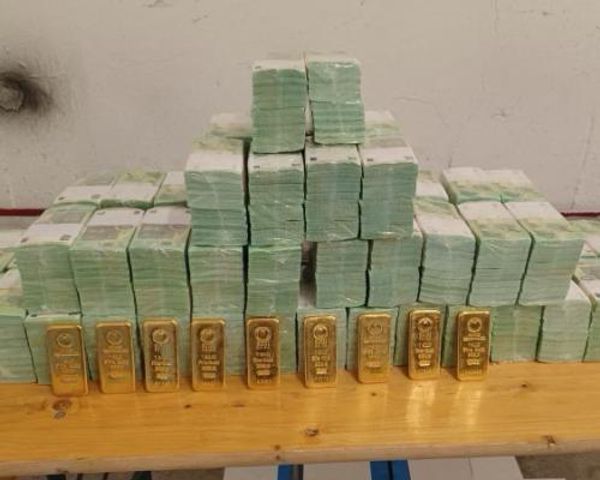
Newsflash: Saudi Arabia’s credit rating has just been cut by one notch, to AA-, by Fitch.
Fitch also left Saudi Arabia with a negative outlook, meaning further cuts are possible.
It cited the “negative implications” of cheaper oil on the country’s fiscal stability, and also pointed to rising tensions with Iran.
BREAKING: Saudi Arabia ratings cut by Fitch, which says outlook remains negative https://t.co/wx9kCQwAFW pic.twitter.com/hdRW81pEih
— Bloomberg (@business) April 12, 2016
ECB's Weidmann defends Draghi

Has peace broken out at the European Central Bank, between president Mario Draghi and his more hawkish colleague Jens Weidmann?
Weidmann, who heads up Germany’s central bank, has leapt to Draghi’s defence against critics - including many Germans – who oppose his monetary easing and record low interest rates.
Speaking to the Financial Times, Weidmann argues (persuasively) that it’s too simplistic to just talk about ‘savers’ suffering from low borrowing costs. Employees, taxpayers, and anyone with debts are benefitting from the current situation.
Weidmann is understood to have opposed some of Draghi’s attempts to stimulate growth and inflation in the euro area. But he’s adamant that politicians should keep their noses out:
“It’s not unusual for politicians to have opinions on monetary policy, but we are independent,”
“The ECB has to deliver on its price stability mandate and thus an expansionary monetary policy stance is appropriate at this juncture regardless of different views about specific measures.”
More here: Bundesbank’s Weidmann rebukes Draghi critics in Berlin
#ECB's Weidmann sounding less hawkish than usual here. From @FT interview with @senoj_erialc https://t.co/YjZ8oRGrmT pic.twitter.com/u6sKcNUnYb
— Maxime Sbaihi (@MxSba) April 12, 2016
This might ruffle some feathers in Berlin. Last Friday, German finance minister Wolfgang Schäuble blamed Draghi for the rise of the eurosceptic AfD party, and declared that central banks should raise interest rates.....
UK house prices keep rising
British house continue to outpace both the headline inflation rate and average earnings.
New figures show that UK house prices increased by 7.6% in the year to February 2016.
That’s down from 7.9% in the year to January 2016:

Once again, strong demand in London (+9.7%) and the South East (+11.4%) drove the market, while other regions were more subdued.
House price annual inflation was 8.2% in England, 2.8% in Wales, -0.8% in Scotland and 2.4% in Northern Ireland.
As average UK house prices rise 7.6%y/y, Scotland remains the only part of the UK where prices are falling. pic.twitter.com/7YLaoaEZxu
— RBS Economics (@RBS_Economics) April 12, 2016
Here’s our news story about the rise in UK inflation in March:
Brexit fears could push inflation higher
The recent weakness in the pound, which has fallen 6% since last October, has also pushed inflation higher (by driving up the cost of imports).
Dimitris Hiotis, partner at pricing experts Simon-Kucher & Partner, reckons this trend could continue ahead of June’s EU referendum.
With the judgement day on Brexit looming, the sterling has continued to depreciate in recent months, which has increased the cost of imports to the country.
As we move closer to the referendum on June 23rd, and with the latest polls showing it to be a close run race, we expect sterling to depreciate further and therefore cause additional inflationary pressures in the coming months.
The Institute of Directors (whose members largely oppose Brexit) agrees.
IoD chief economist Michael Martins argues:
“The slight rise in inflation is likely connected to depreciation of the pound as uncertainty surrounding the EU referendum increases and international investors begin to sell off sterling. This is not a one-month phenomenon – core inflation, which strips out volatile factors like energy and food, increased to 1.5% in March, after averaging 1.1% over the last 8 months.
“While the Bank of England has been keen to see prices rising as a spur to economic growth, if pay rises do not shadow increased inflation, real wages will decline, putting pressure on people’s wallets and holding back increases in productivity. Real wage increases are now under 2% (1.9%), running just ahead of core inflation.
This rise in inflation doesn’t mean that the UK economy is healed, argues TUC General Secretary Frances O’Grady:
“Despite a small rise, the overall picture is still of very low inflation. It indicates that the economy is still not at full strength, with too much underemployment and too little wage growth.
“With the global economy slowing down, the government cannot just sit by. We need investment in skills, infrastructure and public services to promote growth for the long term.”
Mike Cherry, National Chairman at the Federation of Small Businesses (FSB), has urged the Bank of England to resist any temptation to raise interest rates at this week’s meeting.
He reckons his members have enough on their collective plates:
“Small firms are currently dealing with a raft of challenges, including the National Living Wage which came into effect this month, driving up costs and driving down modest profit.
A recent FSB survey showed small business confidence hovering at its lowest level since 2013. Despite inflation edging up last month, our members welcome this ongoing period of low inflation which has helped to keep other operating costs manageable.
Inflation rise sparks interest rate hike debate
Economists are split over when the Bank of England might take the plunge and raise interest rates, now that inflation is creeping towards its 2% target.
Ian Stewart, chief economist at Deloitte, reckons the BoE is “miles away from raising rates”, given the state of the UK economy.
Stewart argues:
The Bank’s big problem is sustaining growth and getting inflation up.
“Inflation may have bottomed, but the mounting risks in the global economy, and the continued risk of deflation, means that interest rates are likely to stay on hold until next year.”
But Kallum Pickering of German bank Berenberg reckons the first hike could come in November - unless Britain votes to leave the EU, of course.
Looking ahead, we expect the headline rate to increase to 1.6% by the final quarter of the year. Beyond the modest dent to GDP growth in the first half of this year as a result of the financial market rout and Brexit uncertainty, underlying fundamentals point to robust growth at around trend (0.5% qoq) in the second half of the year driven by strong consumer spending and recovering business investment.
The on-going acceleration in inflation, alongside consumer credit growth at a decade high, household saving at a historic low and the labour market at full employment begs the question if near-zero rates are still appropriate.
Indeed, data for household spending, borrowing and saving point to some overheating in the domestic economy. Therefore, as long as the UK votes to stay in the EU we expect the Bank of England to hike rates by 25 bps in November. We see a 35% chance of a Brexit.
Confused about how inflation is calculated? Or wondering why some economists have been fretting about deflation?
Our video explainer has the answers...
You can see the inflation report here, on the Office for National Statistics website.
Today’s rise in inflation may undermine the notion that UK interest rates could stay on hold until 2020.
Samuel Tombs at Pantheon Macroeconomics certainly thinks so, saying:
Inflation pressures are continuing to build, challenging the consensus view in the markets that the MPC will leave interest rates on hold until the end of the decade. The rise in the headline rate entirely reflected an increase in core inflation to 1.5%, from 1.2% in February. About half this increase came from airfares, the rest from stronger inflation in the clothing and restaurant sectors.
Airfares were reportedly boosted by Easter in late March, but we have our doubts that all of their rise is temporary.
Ben Brettell, senior economist at financial services group Hargreaves Lansdown, also believes the Bank of England will sit tight at this week’s monetary policy meeting.
Naturally policymakers will need to remain mindful of the risk that inflation overshoots at some point. However, the UK economy is battling a number of significant headwinds at present. Consumer spending, aided by low inflation, low unemployment and rising wages, has been the engine of economic growth lately. But recent surveys suggest consumers reined in their spending in March - perhaps the first sign of nerves ahead of June’s EU referendum.
All in all, the economic picture remains highly uncertain and I expect no action from Threadneedle Street for some time yet.
Britain’s inflation rate is still far too low to prompt an interest rate rise, says Maike Currie, investment director for personal investing at Fidelity International:
Today’s increase is unlikely to spur the Bank of England into considering raising interest rates on Thursday with widespread consensus that this week will see the 85th consecutive month that the bank keeps interest rates on hold at their emergency level of 0.50%.
Bloomberg columnist Mark Gilbert is struck by the surge in air fares last month.
@business @lucy_meakin Surge pricing not just for UBER, it seemeth: pic.twitter.com/PPr9PGhljm
— MARK GILBERT (@ScouseView) April 12, 2016
Here’s some details from today’s UK inflation report:
Transport:
prices, overall, rose by 1.7% between February and March this year compared with a rise of 0.7% between the same 2 months a year ago. By far the largest upward effect came from air transport where the timing of Easter contributed to fares rising by 22.9% between February and March 2016. Fares rose by 2.7% between the same 2 months in 2015.
There was also a smaller upward effect from rail passenger transport with fares rising this year but falling a year ago. These upward effects were partially offset by a downward contribution from motor fuels with petrol prices rising by 0.9 pence per litre this year compared with a larger rise of 3.8 pence per litre a year ago.
Clothing and footwear:
prices, overall, rose by 1.0% between February and March this year compared with a fall of 0.1% between the same 2 months a year ago. Last year was the first time that prices had fallen between February and March since the CPI started in 1996. Normally they rise as they continue to recover following the January sales period. The upward contribution this year came from price movements across a range of women’s outerwear.
Restaurants and hotels:
prices, overall, rose by 0.5% between February and March 2016 compared with a rise of 0.2% between the same 2 months a year ago. The upward effect came principally from restaurant and café prices rising by more than a year ago.
UK inflation: The key charts
After falling into negative territory last year, Britain’s inflation rate has now moved towards the Bank of England’s 2% target:

And this chart confirms that higher air fares cancelled out the impact of cheaper fuel.

Updated
Pound hits one-week high after inflation data
The pound has jumped by over half a cent against the US dollar, to around $1.43.
Traders are calculating that higher-than-expected inflation figures could mean UK interest rates rise earlier than expected.
Updated
Britain’s core inflation rate, which strips out energy, food, alcohol and tobacco, has hit 1.5%.
That’s the highest rate since October 2014, indicating that inflationary pressures are building.
The early Easter holiday has helped to push inflation up.
Holiday air fares rose in March compared to 2015 (when Easter was later).
This is the highest UK inflation rate since December 2014, as measured by the Consumer Prices Index anyway.
Updated
UK inflation rate hits 0.5%
Breaking: Britain’s annual inflation rate has jumped to 0.5% for March, up from 0.3% in February.
That beats forecasts of a smaller rise, to 0.4%.
More to follow.....
The IMF has already cut its forecasts for growth this year several times, as RBS’s economist team point out.
Today’s World Economic Outlook, due at 2pm BST, may include further gloom.
New IMF forecast figs today. Pessimism over 2016 global growth has steadily grown. Will there be another shaving? pic.twitter.com/S7inT589TY
— RBS Economics (@RBS_Economics) April 12, 2016
Greek bailout talks on hold, again (again)
Hopes that Greece and its creditors could make a breakthrough have been dashed overnight, probably to no-one’s great surprise.
Talks between the two sides were adjourned early this morning, and will resume next week once the IMF’s Spring Meeting has concluded.
Finance Minister Euclid Tsakalotos told reporters that:
“The Greek government and the four institutions agreed there was progress,”
But clearly not enough progress to allow the first review of Greece’s bailout to be wrapped up. There are still significant differences between the two sides, on issues such as pension reform and how to tackle bad loans.
Tsakalotos says they’re hoping for a deal by April 22nd.
Endless talks. Delays. Postponements. It’s all sounding a bit 2015....
First "deadline" missed, onwards to the next one. Stop me if you've heard this one before #Greece https://t.co/Ltj2PlCE54
— Nick Malkoutzis (@NickMalkoutzis) April 12, 2016
Updated
EU regulators demand greater tax transparency from multinationals
Tax avoidance by multinational corporations will be forced into the open under proposals to be unveiled by European regulators later today following the Panama Papers revelations.
The European commission will put forward legislation requiring large multinationals operating in Europe to disclose where they make profits and where they pay tax on a country by country basis.
Companies trading in Europe, including large subsidiaries of non-European businesses, would also have to publish how much tax they pay outside the EU with specific information about tax paid in problematic jurisdictions.....
Here’s the full story:
Luxury sector hit by LVMH terror warning

Shares in luxury goods makers are sliding across Europe this morning, following disappointing results from France’s LVMH Moët Hennessy Louis Vuitton SE.
Last night, LVMH warned that last November’s terrorist attacks in Paris had hit sales in the last quarter.
It reported a 4% rise in sales to €8.62bn; analysts had expected €8.73bn.
LVMH, which owns champagne house Moët & Chandon and cognac label Hennessy, as well as Louis Vuitton, told shareholders:
“The U.S. market is strong and Europe remains well oriented except for France which is affected by a fall in tourism.”
LVMH’s shares have fallen by 3.5% this morning, while Hermes has lost 1.5% and Burberry has shed 1.7%.

Troubled UK supermarket chain Tesco has cut back one of its overseas ventures, as it looks to bolster its position back home.
Tesco has sold an 8.6% stake in southeast Asian online retailer Lazada to China’s Alibaba Group, raising just over £90m (and giving Alibaba a controlling stake).
That could give CEO Dave Lewis a little more firepower for price cuts, in his battle against discount supermarkets.
The City isn’t too impressed, though - Tesco’s shares are down 1.6%.
London’s stock market has opened cautiously, with the FTSE 100 index dropping by 8 points in early trading.
Mining shares are up, partly helped by the weaker dollar.
But retailers are falling after a new survey showed that sales fell last month, as wet weather put shoppers off.
Updated

Jack Lew, the US treasury secretary, has turned the tables on the International Monetary Fund by arguing that it must do more to help the global economy recover.
Lew called out the IMF in a speech last night, saying it must be ‘modernised’.
He urged it to:
...intensify scrutiny of critical issues like exchange rates, current account imbalances, and shortfalls in global aggregate demand
In other words, he wants the Fund to criticise countries who fuel currency wars or destabilise the global economy by running large trade deficits [such as Britain] or surpluses [Germany, perhaps].
Quite a challenge to the IMF, which likes to use its Spring Meetings to tell everyone else whet they’re doing wrong.
Lagarde: Global tax body isn't the answer
IMF chief Christine Lagarde has poured cold water on hopes that a global tax authority could be introduced, to combat tax evasion.
Speaking in Washington overnight, she warned that the idea of an intergovernmental UN tax body – promoted by Oxfam – faced major obstacles from governments.
Lagarde argues:
“We need to be aware of the massive hurdles and obstacles along the way because taxation for the last century or so has been defined, conceptualised, designed, implemented on a purely territorial sovereign basis.
And if anything, levying taxation is considered as an attribute of sovereignty, and anything that takes away from that is going to be very strongly opposed by many countries in the world, many forces.”
Having said that, Lagarde concedes that the current situation really won’t do.
“I think it’s an area where we all have to think outside the box because there are too many boxes in that tax field and thinking outside the box might be of great interest.”
More here:
Introduction: UK inflation and IMF growth forecasts

Good morning, and welcome to our rolling coverage of the world economy, the financial markets, the eurozone and business.
It’s an important week for the global economy, as policymakers head to Washington for the Spring meetings of the International Monetary Fund and the World Bank.
The IMF will be setting the scene today, with its latest World Economic Outlook (at 2pm London time) – and it’s likely to warn that economic conditions have weakened again.
Economists expect the Fund to downgrade its growth forecasts, along with another warning that governments must do more to improve economic conditions.
We also get the latest UK inflation figures at 9.30am BST.
Inflation remains a rare and illusive beast in advanced economies, but analysts reckon the UK consumer prices index could rise to 0.4%, from 0.3%. A stronger reading might give the pound a lift.
We’ll also be watching Italy, where the government has just hammered out a €5bn fund to support its weaker banks. It also committed to improving bankruptcy rules, to make it quicker and easier to resolve a failing business.
Officials are hoping that the plan will ease concerns over the stability of the Italian banking sector, following sharp declines in bank shares recently.
And tax is also on the agenda. The European Commission is expected to announce plans to force multinational companies in Europe to reveal all their profits, and tax bills, filed in offshore havens.
The plan, which has been in the works for months, has been given renewed impetus by the recent Panama Papers revelations. Here’s a preview:
Updated