And finally... Greece’s prime minister has hailed the deal.
Alexis Tsipras tweeted that
Today Greece is turning a page. We have an agreement that corresponds to the sacrifices of the Greek people.
Σήμερα η Ελλάδα γυρίζει σελίδα. Έχουμε μια συμφωνία που ανταποκρίνεται στις θυσίες του ελληνικού λαού. (1/2)
— Prime Minister GR (@PrimeministerGR) June 15, 2017
He added that:
With unity and determination we move forward for fair growth and the healing of the wounds of the crisis.
Με ενότητα και αποφασιστικότητα προχωράμε μπροστά για τη δίκαιη ανάπτυξη και την επούλωση των πληγών της κρίσης. (2/2)
— Prime Minister GR (@PrimeministerGR) June 15, 2017
Stirring stuff. But some analysts aren’t convinced that the deal is quite that sweeping - given there’s still no concrete pledge for meaningful debt relief.
Wolf Piccoli of Teneo Intelligence argues that Greece is still in a fix:
#Greece secured a Eur 8.5bn loan tranche. Else is pretty much hot air. Country remains stuck in a vicious cycle. Good luck with it.
— wolf piccoli (@wolfpiccoli) June 15, 2017
And that’s a good moment to wrap up. Good night! GW
Updated
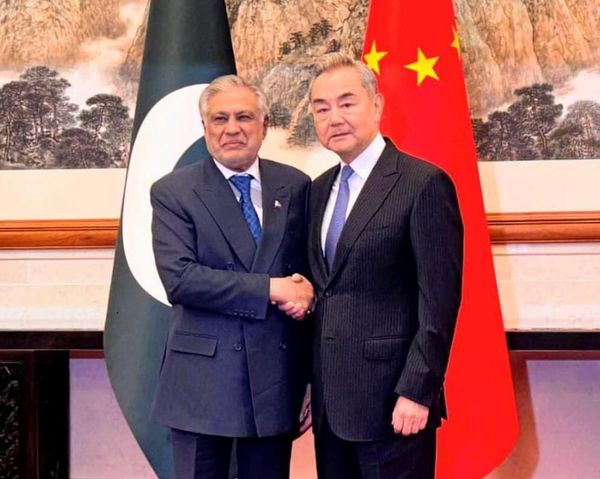
Here are some photos from today’s eurogroup meeting in Luxembourg, where the Greek bailout deal was agreed:


Updated
Here’s Marketwatch’s explanation of how the IMF is finally coming on board and joining the Greek bailout....
Christine Lagarde, managing director of the International Monetary Fund, on Thursday unveiled a plan that will unlock some new funding for Greece.
Lagarde said she would ask the IMF board to back “the approval in principle” of a new IMF loan for Greece.
The deal will unlock some IMF funding thus “reducing serious stress on the Greek economy,” Lagarde said. Greece is facing debt repayment in July.
On the debt relief issue, the eurozone finance ministers have agreed to consider extending the maturity of some Greek bonds.
That’s a way of providing debt relief without actually writing the loans off. So something of a fudge, really - but one that all sides can live with.
Reuters explains:
To accommodate the IMF’s need for more specifics on debt relief, the euro zone finance ministers said in a statement that in 2018 they would be ready to consider extending the maturities and grace periods of their loans to Greece by a range from zero to 15 years. The average maturity now is 30 years.
But they did not go any further than that and the IMF said it was not enough to calculate Greek debt sustainability.
AFP on the Greek debt deal
The AFP newswire have a good write-up of tonight’s deal, by Alex Pigman.
Here’s a flavour:
Eurozone agrees Greek bailout payment, IMF comes on board
Eurozone ministers struck a long-delayed bailout deal with Greece on Thursday to unlock badly needed rescue cash, but warned Athens would have to wait for debt relief.
After hours of talks in Luxembourg IMF chief Christine Lagarde and the eurozone’s 19 finance ministers greenlit a payout of 8.5 billion euros to meet debt payments due in July and avoid another summer of Greek crisis.
Payment of the latest tranche of Greece’s 86-billion euro ($97-billion) has been held up for months by a row over its needs for debt relief pitting bailout-weary Germany against the IMF.
“I am pleased to announce we have achieved an agreement on all elements,” Eurogroup head Jeroen Dijsselbloem told a news conference.
“I think this is a major step forward,” he said.
In a breakthrough, Lagarde agreed in Luxembourg that the Washington-based IMF would join Greece’s massive bailout, but said any payouts depended on the eurozone coming up with a full debt relief plan.
“Nobody claims that this is the best solution. This is a second best solution, but it’s not a bad solution,” said Lagarde, a former French finance minister.
The deal averts a repeat of the summer of 2015 when Greece spectacularly defaulted on an IMF loan, and allows Athens to meet seven billion euros of debt repayments due in July.
Athens all week insisted it would veto the deal, bitter that the latest disbursement would come without firm debt relief commitments after it delivered on tough reforms.
As a consolation, in a compromise negotiated by France, Greece won a certain amount of clarity from the eurozone on debt relief.
Debt relief “will be implemented at the end of the programme, conditional on its successful implementation” in 2018, said Dijsselbloem, who is also Dutch finance minister.
The eurozone would now draw up an “exit strategy” over the next year “to enable Greece to stand on its own feet again”, Dijsselbloem said.
by @alexrpigman @afp #Eurozone agrees Greek bailout payment, #IMF comes on board https://t.co/jcQH2cVXNY via @yahoosg
— Lachlan Carmichael (@Lachlan1959) June 15, 2017
Here’s the official line from the International Monetary Fund:
Lagarde: IMF taking constructive approach to help Greece, consistent with "two legs": reforms and debt relief https://t.co/P2XqdZka0Y pic.twitter.com/3JSwSDs2hA
— IMF (@IMFNews) June 15, 2017
The IMF has long been pushing the eurozone to admit that Greece needs debt relief to put the country’s finances on a sustainable level.
European Council president Donald Tusk has also applauded the news:
Finally good news for Greece. It was well deserved.
— Donald Tusk (@eucopresident) June 15, 2017
European commissioner Pierre Moscovici has welcomed tonight’s agreement to extend Greece its next bailout loan:
Tonight, #Greece can see the light at the end of its long tunnel of austerity. From tonight, the watchwords are jobs, growth and investment.
— Pierre Moscovici (@pierremoscovici) June 15, 2017
But there is scepticism too. Carsten Brzeski of Dutch bank ING points out that there isn’t any debt relief yet, and the IMF still haven’t put any money in.
Good old European muddling through on #Greece. Debt relief? Maybe later. IMF participation? In principle. Next tranche? Sure.
— Carsten Brzeski (@carstenbrzeski) June 15, 2017
Greece’s finance minister, Euclid Tsakalotos, says tonight’s deal provides ‘light at the end of the tunnel’.
He explains that the eurogroup has given greater clarity about the medium-term debt relief which Greece can look forward to once its bailout programme has been successfully completed in summer 2018.
The eurozone is committed to helping Greece stand on its own two feet, Tsakalotos adds.
However, Tsakalotos also hints at some unhappiness, suggesting that Greece deserves even more given what it has endured, and achieved.
.@tsakalotos there is a new emphasis on growth and investments #Greece
— Nektaria Stamouli (@nstamouli) June 15, 2017
Now much greater clarity for both Greeks+markets is it as much clarity as much Greeks deserve? Perhaps not says @tsakalotos #eurogroup
— Eleni Varvitsiotis (@Elbarbie) June 15, 2017
Germany’s finance minister, Wolfgang Schauble, says the Bundestag will consider whether to back this deal on Friday.
That’s because the eurogroup’s decision needs to be ratified by national parliaments.
Schauble told reporters in Luxembourg that the deal will help improve Greece’s economy.
“Greece has to become competitive to get access to debt markets so it can stand on its own two feet.
“For that Greece has to carry out reforms.”.
Greece reaches a deal over bailout funds
A late newsflash: Eurozone finance ministers have reached a deal to unlock €8.5bn in urgently needed loans.
The eurogroup reached the deal tonight, ending months of uncertainty, giving Greece the financial assistance it needs to meet debt repayments this summer (yes, Greece is bring lent more money so it can pay older loans back).
It will be split into three payments - the first, in early July, will cover debt repayments and various arrears.
#ESM's Regling: 3rd tranche of 8.5 billion for #Greece to be split into 2 instalments. 1st of 7.7 bil to be disbursed early July.#eurogroup
— Elena Becatoros (@ElenaBec) June 15, 2017
In a statement, the eurogroup welcomed the measures Greece has taken under its economic reform programme (which include painful austerity, tax rises and spending cuts).
Importantly, the International Monetary Fund has moved closer to finally supporting Greece’s bailout (which was agreed almost two years ago and expires in August 2018).
It is proposing to join the bailout this summer, but would not actually disburse any money until there is an agreement on Greek debt relief.....
Here’s the details:
Acknowledging the staff level agreement reached with Greece on policies, IMF management will shortly recommend to the IMF’s Executive Board the approval in principle of Greece’s request for a 14-month Standby Arrangement. The IMF welcomes the further specification of the debt measures given today by Member States, and agrees that it represents a major step towards Greek debt sustainability. The IMF arrangement will become effective with resources made available in accordance with its terms, provided that the programme stays on track, when IMF staff can assure to the IMF’s Executive Board that there is an agreement on debt relief measures, that, appropriately calibrated at the end of the programme, would secure debt sustainability.
On debt relief, the Eurogroup have confirmed their commitment to an early pledge to address Greece’s debt pile - but any move would only come after this current bailout.
IMF chief Christine Lagarde says this is limited progress; not ideal, but enough to avoid a summer crisis.
#IMF MD @Lagarde:This is not the best solution but the 2nd best. The best one would have been the absolute agmt on debt relief for #Greece
— Efi Koutsokosta (@Efkouts) June 15, 2017
IMF head Lagarde expresses "hope" that the discussion over specific debt relief measures for Greece "can soon be brought to conclusion.”
— Katerina Sokou (@KaterinaSokou) June 15, 2017
Afternoon summary
Time for a quick recap
The Bank of England has surprised the markets by revealing that three policymakers have voted to raise interest rates. At her final meeting, Kristin Forbes pushed for borrowing costs to rise from 0.25% to 0.5%, and was supported by fellow MPC members Michael Sanders and Ian McCafferty.
The three hawks have highlighted the Bank’s concerns about inflation, which jumped to 2.9% earlier this week. But there other five members are more concerned about the UK economy.
Our economics editor Larry Elliott argues that the doves are right:
Households are spending less, the housing market is weak, new car registrations have plunged and wage growth has fallen back, even though more people are in jobs.
On balance, the arguments in favour of leaving rates where they are look more compelling than the arguments for raising them
The latest economic data has highlighted why the Bank is worried. UK retail sales volumes fell sharply last month, contracting by 1.2%. On an annual basis, Britons bought just 0.9% more stuff than a year ago -- the smallest rise in four years.
City traders were jolted by the news, sending the FTSE 100 and 250 indices down sharply today.
Furniture maker DFS added to the anxiety by reporting that its sales have fallen materially in recent weeks. Its shares plunged by a fifth following this morning’s profits warning.
Over in Luxembourg, eurozone finance ministers are discussing whether Greece has done enough to receive its next bailout tranche. There’s optimism that a deal could come tonight....
City bigwigs won’t be heading to Mansion House for their annual black tie shindig; the dinner has been cancelled due to the Grenfell Tower disaster.
The Greek prime minister Alexis Tsipras has signalled he is hopeful that tonight’s eurogroup meeting will produce what members of his government often like to call “white smoke.”
Emerging from a tripartite summit of Greek, Israeli and Cypriot leaders in Thessaloniki, the leftist leader told the country’s news agency:
“In the end the good [guys] win.”
The cryptic sound-bite is being interpreted as the first sign of concrete optimism from the leader over Greece’s debt deal.
The Greek media is now reporting it is only a matter of time before the bailout review is formally wrapped up. The big question, it says, is the message euro area ministers will send to markets regarding mid-term debt relief.
No signs of a breakthrough at the Greek debt talks yet...
That moment when a Eurozone official tells you they haven't started talking about Greece. #Eurogroup
— Alex Pigman (@AlexRPigman) June 15, 2017
Markets hit by retail gloom
Britain’s FTSE 100 has ended the day down 55 points, or 0.75%, at 7419, after a downbeat session.
Hundreds of millions of pounds was wiped off the value of Britain’s biggest retailers, after this morning’s weak retail sales figures. That included Next (-6%) and Marks & Spencer (-4.5%).
Traders were worried by the news that retail sales shrank by 1.2% in May, and only grew by 0.9% over the last 12 months - the weakest rise in four years.
The FTSE 250 has a steeper selloff, shedding 2% or 421 to 19,553. That looks like the biggest one-day fall since last July.
Laith Khalaf, senior analyst at Hargreaves Lansdown, says this pessimism highlights why the Bank of England shouldn’t raise interest rates right now.
‘Sentiment towards UK retailers is remarkably fragile at the moment, and any signs of a consumer squeeze are being seized upon as a reason to take a big red pen to the share prices of companies in this sector. Retailers are undoubtedly facing tough times as inflation looks set to hit household budgets, however the market’s extreme response smacks of a knee-jerk reaction to one piece of retail sales data, when only a month ago these same figures were being celebrated for their resilience.
Against this background the Bank of England looks out of step to be seriously considering raising interest rates, when economic data is pointing towards a consumer slowdown. Indeed the central bank has itself highlighted weaker consumer spending as a key risk to the UK economy, so now this particular chicken is coming home to roost, it’s strange that the Bank of England is thinking about releasing the foxes. For the moment the balance of power still rests with the doves in the MPC however, and it’s worthy of note that expectations of an interest rate rise have been confounded for many years now.’
Other European markets also ended in the red:

Back in the UK, Sam Hill, RBC’s senior UK economist, has argued that the next UK interest rate move will be DOWN, even though three Bank of England policymakers voted to raise them today.
Hill believes that slowing consumer spending is a risk to economic growth. Business spending could falter too, in the face of political uncertainty.
So he believes governor Carney should highlight this uncertainty, and downplay the chances of a rate hike, when he next speaks (tonight’s Mansion House speech having been cancelled, of course).
Our view is that Carney should downplay the signal sent by the hawkish external members in light of the precarious position of the consumer and the uncertain post-election aftermath.
Indeed, despite the vote split from the June meeting, we retain a forecast for more stimulus in Q1 2018, in the form of a Bank Rate cut to 0.1% and an additional £50bn of QE Gilt buying.
Over in Athens, pensioners have been holding anti-austerity protests - and sound unimpressed by the prospect of Greece finally getting its next bailout loan approved today.
Helena Smith reports from the Greek capital:
Today’s euro group is starting on a note of optimistic with even Greece’s embattled finance minister saying he is hopeful that today’s proceedings will end well. But whatever emerges this evening will be far from what the increasingly embattled Greek government had in mind.
As euro area finance ministers prepared for this afternoon’s crucial Euro group, pensioners from across Greece gathered before the country’s parliament in Syntagma square to protest against the extra cuts they now stand to suffer following legislation of additional austerity measures last month.
Most, like Nikos Agnagnostopulos, were in their eighties. “I came into Athens from the Peloponnese because the fight has to go on,” he said.
“As a builder I paid into my fund for nearly 50 years and now they have reduced my pension by 50%. With the next round there will be nothing left.”
Prime minister Alexis Tsipras’ leftist-led coalition agreed to pre-legilsate cuts that as of 2019 will see some pensions being reduced by a further 18 percent in exchange for 7.5 bn euro in loan disbursements that single currency finance ministers are expected to sign off today. With maturing debt due next month, the tranche is vital if Greece is to, once again, avert default. But the emergency funds are a far cry from the debt relief Tsipras insists is absolutely necessary if the recession-hit Greek economy is ever to recover.
“At the very least we are expecting what they agree to give us to be bigger than the forthcoming debt owed,” said one Syriza MP adding that a bigger tranche would automatically stimulate the real economy.
“We were told [by Tsipras] in no uncertain terms that the qui pro quo for supporting measures that went beyond those initially agreed in this [bailout] programme would be debt forgiveness. A lot of us are enraged that while we have kept to our side of the deal, they [creditors] have not kept to theirs.”
Ahead of the today’s meeting Tsipras had urged lenders to “respect the rules” in op eds penned for the French daily Le Monde and German Die Welt. “We expect our lenders to respect the rules that they, themselves, came up with,” he wrote. “ To respect my country. To respect Greece.”
More than 2,000 elderly protesters have marched through central Athens to protest further pension cuts#Athens #pensioners #protesting pic.twitter.com/EJawRBPCUk
— Ιoanna (@ioannaspn) June 15, 2017
Greece close to debt deal

Optimism is building that Greece and its creditors might finally reach a deal over its bailout today.
The eurogroup meeting is getting underway in Luxembourg, and several ministers have expressed hopes that Athens might finally get its next aid tranche. This loan has been held back for months, as creditors demand more
German Finance Minister Wolfgang Schaeuble told reporters:
“I remain confident that we will find an agreement today on the payment of the latest tranche.”
However, Schauble also dampened hopes of a breakthrough on debt relief today.
French Finance Minister Bruno Le Maire was also upbeat, saying:
“It’s a question of goodwill and it’s a question of willingness. If everyone around the table makes a very slight and positive move in the right direction we should be able to find an agreement today,”
The IMF’s managing director, Christine Lagarde, is also attending the meeting:
#IMF's @Lagarde on arrival for #Eurogroup meeting: "Hopefully differences will narrow enough so that it can help the process" on #Greece. pic.twitter.com/qm4dfYjwJU
— Elena Becatoros (@ElenaBec) June 15, 2017
The head of the Royal Statistical Society is jubilant that UK data will no longer be released early to selected insiders.
Huge success for @RoyalStatSoc and partners - @ONS to end #prereleaseaccess to statistics from 1st July https://t.co/fI48Mf1kQd
— Hetan Shah (@HetanShah) June 15, 2017
Back in March, the WSJ’s Mike Bird exposed how UK government bonds moved in suspicious ways before UK data was released, suggesting that statistics were being leaked.
On average, between April 2011 and December 2016, U.K. government-bond futures correctly anticipated the rise or fall that ultimately happened when economic data were published, according to an analysis prepared for The Wall Street Journal by Alexander Kurov, associate professor of finance at West Virginia University.....
Some senior British statisticians and policy makers have long feared that the U.K.’s wide, early distribution of data creates a much greater risk of leaks and the potential that people could trade on data ahead of their release.
For U.K. unemployment data, for instance, 118 people have prerelease access, according to the Office for National Statistics.
The beautiful print graphic pic.twitter.com/FS9jgKjg0m
— Mike Bird (@Birdyword) March 13, 2017
ONS finally tightens data releases after leak fears
Important news! The Office for National Statistics is stopping releasing data 24 hours early to scores of politicians and officials.
From July 1, the ONS will end its current ‘pre-access’ system, which allowed early access to official surveys.
This follows pressure from economists and journalists, and persistent concern that the data has been leaked to City traders who have profited by buying or selling the pound in advance.
The UK’s national statistician, John Pullinger, says that previous efforts to tighten early access haven’t worked, so the whole system must end.
On the basis of all the information now available to me I consider that the public benefit likely to result from pre-release access to ONS statistics is outweighed by the detriment to public trust in those statistics likely to result from such access.
U.K. STATISTICS AUTHORITY TO END EARLY ACCESS TO DATA FOR GOVT no more leaks!
— FxMacro (@fxmacro) June 15, 2017
And now... UK STATISTICS AUTHORITY CHAIRMAN SAYS ONS PLANS TO END GOVERNMENT MINISTERS' PRE-RELEASE ACCESS TO OFFICIAL STATISTICS FROM JUL 1 https://t.co/OyRK0HwbuK
— Andy Bruce (@BruceReuters) June 15, 2017
Lena Komileva of G+ Economics makes a very good point.
The Bank of England doesn’t actually have to raise rates to influence the markets. It can make signals, and encourage investors to change their views, through a narrow vote on the MPC.
She says:
It is an open question as to whether either Saunders and or McCafferty would have predicted a rate hike at today’s meeting had they still been in their former roles as a market and industry economist respectively. This is to say that, with monetary “hawks” likely to remain in the minority, even in the face of a strong inflation overshoot, the importance of the wider vote split is in the market signalling, not in the probability of an actual rate hike near term.
Just in: The Mansion House Dinner has been cancelled, due to the Grenfell Tower disaster.
Mansion House dinner is to be cancelled
— Jill Treanor (@jilltreanor) June 15, 2017
Statement from City of London Corporation “In the light of the tragedy at Grenfell Tower we are cancelling tonight’s Mansion House Dinner”
— Jill Treanor (@jilltreanor) June 15, 2017
City of London cancels Mansion House dinner altogether, adding: “Our thoughts are focussed with the victims and their families and friends.”
— Ed Conway (@EdConwaySky) June 15, 2017
Updated
Samuel Tombs of Pantheon Economics argues that it would be a mistake to raise UK interest rates now.
In case no one has said it yet on twitter... it would be madness to raise interest rates now when wages growth is below 2%.
— Samuel Tombs (@samueltombs) June 15, 2017
Via Barclays, here’s a chart showing which Bank of England policymakers are hawkish, dovish, or firmly on the fence.

Barclays also predicts that interest rates will remain on hold until 2019.
Minutes of the meeting mention higher-than-expected core inflation and investment intentions, in addition to firming global growth and extra imported inflation stemming from the depreciation in the currency.
Those MPC members who voted for a hike emphasised tighter labour market conditions and risks of a more pronounced inflation overshoot. Despite the change in vote split, we remain of the view that no interest hike will be delivered in the course of the next two years.
UK chancellor Philip Hammond will not give the traditional Mansion House speech tonight, following the awful Grenfell Tower disaster.
In view of the Grenfell Tower tragedy, I have withdrawn from giving the Mansion House speech tonight. My thoughts are with local community.
— Philip Hammond (@PhilipHammondUK) June 15, 2017
Hammond had been planning to use the speech to warn against a ‘hard Brexit’.
Updated
Ben Brettell, senior economist at Hargreaves Lansdown, says the Bank appears to be running out of patience with inflation:
Set against a backdrop of disappointing retail sales, slowing growth, shrinking real wages and heightened political uncertainty, it was somewhat surprising that three MPC members voted for higher rates at this week’s policy meeting.
Economists had expected a 7-1 split, with the soon-to-depart Kristin Forbes the lone voice calling for higher rates. In fact she was joined by Ian McCafferty and Michael Saunders in believing intensifying inflationary pressures justify an immediate 25 basis point increase.
It seems the willingness of the MPC to ‘look through’ higher inflation and leave rates on hold is wearing thin, and if inflation continues to surprise we could see higher rates by the end of the summer.
Almost every share on the FTSE 100 is down right now.
Right now, shares of HSBC and LSE only ones trading higher on FTSE 100. pic.twitter.com/Oozuf9xP5b
— Carla Mozee (@MWMozee) June 15, 2017
The jump in the pound has sent the FTSE 100 into a spin.
The blue-chip index has tumbled by 90 points, or 1.2%, to 7383. Retailers and housebuilders are among the top fallers, along with multinationals like miners (whose share price benefits from a weak pound).
Updated
This is the first time since 2011 that three MPC members have voted to raise rates (six years ago, the hawks were Andrew Sentance, Martin Weale and Spencer Dale). That was a 6-3 vote.
It’s also the closest vote since 2007 - when the BoE was divided 5-4.
Currently there are only eight MPC members, as deputy governor Charlotte Hogg hasn’t been replaced yet. So is the Bank really close to raising rates?
Probably not. For starters, this is Kristin Forbes final vote on the MPC, and her successor may take a different view of the situation.
It’s also hard to imagine that Hogg’s replacement would break ranks and oppose governor Mark Carney, who of course voted to leave rates on hold today.
But few City experts predicted such a close vote today, so who knows.....
So the £ has risen against the $
— Mark Broad (@markabroad) June 15, 2017
Next month one of the hawks - Kristin Forbes - leaves. Who will they bring in? pic.twitter.com/FlhXzMkWpC
Hawks and Doves battle at the Bank of England
The minutes of today’s meeting show how the Bank of England is split between policymakers who believe inflation should be reined in, and those who believe the economy is too weak to bear higher rates.
Many policymakers fear that hiking rates could crush economic growth, and that it would be better to let inflation keep climbing.
As the minutes put it:
Attempting to offset fully the effect of weaker sterling on inflation would be achievable only at the cost of higher unemployment and, in all likelihood, even weaker income growth.
But Kristin Forbes, Michael Saunders and Ian McCafferty -- three independent members of the MPC -- believe that inflation needs to be tackled, as it heads towards 3%.
This is the key section of the minutes, which shows how the three hawks and five doves tussled over what to to:
Overall, the degree of spare capacity in the economy appeared limited but, at the same time, the inflation overshoot relative to the target could be more pronounced than previously thought. This lessened the trade-off that the MPC was required to balance and, all else equal, reduced the MPC’s tolerance of above-target inflation. The Committee discussed the appropriate response of monetary policy.
Given this change in the trade-off, there were arguments in favour of a moderate tightening in monetary policy. Headline, core and some domestically focussed inflation measures had picked up further. Inflation was projected to overshoot the target by more than previously expected, and to remain above it throughout the three-year forecast period. Slack in the labour market appeared to have diminished, and demand for labour remained strong. Growth in business investment and net trade appeared on track to compensate for weaker consumption. The withdrawal of part of the stimulus that the Committee had injected in August last year would help to moderate the inflation overshoot while leaving monetary policy very supportive.
But there were also arguments in favour of leaving the policy rate unchanged. A slowdown in household consumption, and GDP as a whole, had recently begun, and it was too early to judge with confidence how large and persistent it would prove to be. Although consumer confidence had held up, there had been further signs of a slowing housing market and new car registrations had fallen sharply. It was as yet unclear to what degree weaker consumption would be offset by other components of demand. A period of slower than expected growth could see a margin of slack re-opening. Wage growth had remained subdued, despite low unemployment.
Bank between a rock and hard place - not much spare capacity & inflation overshoot likely to be larger than they assumed. pic.twitter.com/MZ1c0SHvyE
— Duncan Weldon (@DuncanWeldon) June 15, 2017
From the Bank of England, my colleague Katie Allen reports on today’s split:
The Bank of England edged closer to raising interest rates this month as a deeper split emerged among its committee of policymakers, with three of the eight voting for an immediate rate rise to keep inflation in check.
The 5-3 split vote to keep interest rates at their record low of 0.25% will surprise financial markets. Most City economists had expected just one member, Kristin Forbes, would maintain her previous vote for rates to be raised to 0.5%. Instead she was joined by Ian McCafferty and Michael Saunders.
Their call for higher borrowing costs follows figures this week showing inflation had risen further above the Bank’s target. In May inflation hit 2.9% as measured by the consumer prices index (CPI), well above the Bank’s 2.0% target. The May pick-up was driven in part by the pound’s weakness since the Brexit vote, which has made imports to the UK more expensive.
The other five members of the monetary policy committee, including Bank governor Mark Carney, felt interest rates should stay at their current low to help support growth at a time when Britons’ incomes are being squeezed by rising prices and meagre wage growth. The drop in living standards has hit consumer spending and knocked overall economic growth. Figures this week showed workers were suffering the biggest squeeze on their pay since 2014.
Minutes from the Bank’s rate-setting meeting released on Thursday cited a range of views on the committee. They noted inflation was now expected to overshoot the Bank’s target by more than previously expected. Supporting those voting for a rate rise, there were also signs that growth in business investment and net trade was on track to make up for weaker consumption.
The minutes added that for some policymakers it was time to start scaling back the massive package of support launched in the wake of last summer’s referendum, that included a rate cut and more electronic money printing.....
The pound has jumped by almost a cent to $1.278 as traders react to the shock news that three BoE policymakers want to raise interest rates.
Sterling pops on BoE vote pic.twitter.com/YZ5iMWshym
— Neil Wilson (@neilwilson_etx) June 15, 2017
Jump in sterling on 5-3 vote at BOE against a rate hike. 7-1 vote was expected. pic.twitter.com/ZEoVHItLip
— Mike Bird (@Birdyword) June 15, 2017
Updated
SPLIT at the Bank of England!
Here we go: The Bank of England has voted to leave interest rates unchanged at their current record low of 0.25%.
But it’s a split vote, with three policymakers voting to hike rates!! They were outvoted by five policymakers who wanted to leave interest rates unchanged.
Kristen Forbes, Ian McCafferty and Michael Saunders are the three hawkish members who wanted to raise rates to 0.5%.
This is the first time since 2011 that three MPC members have voted to raise interest rates.
The MPC also left its QE stimulus programme unchanged (which means it holds £435bn of bonds).
More to follow!!
Updated
Retail analyst Steve Dresser sees a flock of Brexit chickens coming home to roost...
Nearly a year on from Brexit and it's all coming apart as projected. Non food sales down, DFS struggling, inflation outpacing wages.
— Steve Dresser (@dresserman) June 15, 2017
Bank of England decision: A preamble
It’s nearly time for the Bank of England to announce its decision on interest rates, and release the minutes of this month’s monetary policy committee meeting.
City experts are united in expecting no change on policy at noon today - but they’ll be keen to read the Bank’s views on the economy, especially as inflation hit 2.9% this month.
Bank of England rate announcement at 12pm
— Sigma Squawk (@SigmaSquawk) June 15, 2017
No QIR & decision widely expected to be unchanged#gbpusd pic.twitter.com/OWeWXk86uW
“The political chaos in Westminster, uncertainty over the UK’s economic outlook and ongoing Brexit concerns” are all good reasons for the Bank to leave interest rates unchanged, says FXTM Research analyst Lukman Otunuga.
With the central bank highly unlikely to make any changes to monetary policy amid the instability, investors will most likely direct their attention towards Mark Carney for insights on how he plans to tackle the various challenges that the UK political climate and Brexit developments have presented.
While inflation in the UK has hit a four-year high at 2.9%, wage growth remains subdued and this creates further headaches for the BoE. Although raising interest rates to cool inflation is seen as a practical strategy, it may simply end up pressuring borrowers ultimately eroding business confidence and pinching consumers further.
Updated
Here’s our news story on the retail sales figures:
Last summer, Britons defied expectations by spending more in the shops after the Brexit vote.
That trend is over, says Andrew Sentance, senior economic adviser at PwC, who fears that UK growth is weakening as consumers are forced to cut back.
Here’s his comment on today’s retail sales figures:
This is further evidence that the surge in consumer spending, which sustained UK economic growth since the EU referendum, has come to an end. With prices rising more rapidly, shoppers find their money does not go so far and they are therefore reining in their spending.
“We should expect this subdued growth of consumer spending to continue while inflation remains around 3 percent - and there is a risk it could go even higher. The result is likely to be relatively sluggish economic growth this year and next - with GDP rising by around 1.5% in 2017 and 2018, the weakest period of growth since the euro crisis in 2011 and 2012.”
Pound falls as economic data weakens
The weak retail sales figures have knocked the pound down by half a cent, to $1.2702.
Jane Foley, top foreign exchange strategist at Rabobank, says sterling is suffering from a “horrible dynamic” of political uncertainty and bad economic data.
She’s speaking on Bloomberg TV now, saying:
If you look at the economy, it is looking like it might weaken quite notably.
This week we’ve seen really high inflation [2.9%], weaker than expected earnings growth [1.7%], and to cap it all, very weak retail sales.
The possibility of a softer Brexit is giving the pound some support, she adds, but it’s not at all clear how those negotiations with the EU will pan out.

This is turning into a bad morning for the UK retail sector....
Retail shares getting battered after DFS prof warning & terrible ONS stats. Next, M&S, Kingfisher, Dunelm, AO, Dixons Carphone etc all down
— Simon Neville (@SimonNeville) June 15, 2017
Seems all the hedged $ positions the retailers gleefully told us about a year ago have ended and prices up sharply. Brexit effect in action
— Simon Neville (@SimonNeville) June 15, 2017
The bad news for UK shoppers is that price are going to keep rising -- and their wages probably won’t keep pace.
Ian Gilmartin, Head of Retail & Wholesale at Barclays, says retailers may have to pass on rising impost costs to customers.
Inflation is really starting to kick in, with prices in the sector increasing at the highest rate for more than five years and expected to rise further. Coupled with lower wage growth, it’s likely that consumer spending power will continue to weaken and it appears that retailers are going to have to navigate some choppy waters in the coming months.
There are no easy solutions. With persisting currency challenges and rising supply chain costs, many retailers simply have to pass on some of this to their customers through price increases. Striking the right balance on price point between what is viable from a cost perspective and what is acceptable to the consumer is now the crucial strategic decision for retail heads to consider.”
Ranko Berich, head of market analysis at Monex Europe, also blames rising inflation:
“The writing has been on the wall for several months now, but May’s Retail Sales figures confirm that consumer spending in the UK is finally slowing down. There’s no mystery whatsoever about what the cause is: inflation is biting into household budgets. With prices set to rise further, it’s likely the slowdown seen in May will continue.
Here’s another retail sales chart, highlighting how UK consumers spend more in the shops in May but got rather less.

The ONS says price hikes are hitting sales volumes.
Increases in average store prices may explain this slowdown. Food stores saw the biggest increase in prices since November 2013 and non-food stores the biggest increase since October 2011.
Sign up to our email
Guardian Business has launched a daily email.
Besides the key news headlines that you’d expect, there’s an at-a-glance agenda of the day’s main events, insightful opinion pieces and a quality feature to sink your teeth into each day.
For your morning shot of financial news, sign up here:
EY Item Club: More pain to come
UK consumers will remain under the cosh for some time as inflation pushes higher, warns Howard Archer, chief economic advisor to the EY ITEM Club.
Here’s his take on the UK retail sales slowdown:
- May’s retail sales relapse points to increasingly squeezed consumers again reining in their spending after a temporary loosening of the purse strings in April
- Retail sales figures dilute hopes that consumer spending will make a significantly improved contribution to GDP growth in the second quarter after a sharp first-quarter slowdown
- With inflation poised to move above 3% imminently and earnings growth weak, there looks to be more pain to come for consumers.
Retail sales fall: What the experts say
Economists and City traders are alarmed by the weak UK retail sales last month.
Alan Clarke of Scotia Bank says we should focus on the 0.9% annual rise in sales volumes - the weakest rise in four years - rather than the 1.2% month-on-month slump.
He writes:
Since late-2016, the growth rate has slumped from over 6% y/y to below 1% y/y currently. That is exactly what should have happened given the unpleasant cocktail of:
- slower employment growth;
- slower wage inflation; and
- much higher CPI inflation.
There is plenty more where that came from.
Naeem Aslam of Think Markets blames the surge in inflation, due to the slump in the pound since last June’s EU referendum.
The retail sales data out of the UK was trashy and it shows how reluctant the consumers have become in terms of their spending.
Consumer spending has been feeble and wage growth is lacklustre also as it was confirmed by the average earning index data yesterday. Investors have been feeling the pinch due to the higher inflation, the concussion of Brexit.
Rupert Seggins points out that the retail sales figures have been choppy since last summer.
Monthly UK retail sales growth data are very volatile. But not great that May saw a fall of 1.2%m/m. Seven monthly falls since June. pic.twitter.com/YetbgG8CuD
— Rupert Seggins (@Rupert_Seggins) June 15, 2017
Mizuho Bank are also concerned that Brexit is now hurting the UK economy:
Another "Brexit bite" for UK economy. "Early stages, but yesterday's wage data & today's retail sales speak volumes" - Mizuho's Neil Jones
— Jamie McGeever (@ReutersJamie) June 15, 2017
UK retail sales slide as inflation hits spending
Breaking: Retail sales volumes across the UK plunged by 1.2% in May as inflation bites deeper into household budgets.
This is a deeper fall than the 0.8% decline expected, and will fuel worries that the UK economy is faltering.
It means that retail sales were only 0.9% higher than a year ago - the weakest rise since April 2013!
The Office for National Statistic blames rising prices (inflation jumped to 2.9% in May).
Ole Black, ONS Senior Statistician says:
“The year-on-year growth in the quantity bought for retail sales in May 2017 was at 0.9%. We have not seen lower growth on the year since April 2013. Increased retail prices across all sectors seem to be a significant factor in slowing growth.”

Volumes of all item types fell in May, apart for petrol. If you strip out fuel sales, then retail sales fell by 1.6% in the month.
U.K. May retail sales, excluding fuel, fall by a worse-than-expected 1.6%#Brexit #PaySqueeze
— Peter Hoskins (@PeterHoskinsTV) June 15, 2017
This chart show the full impact of inflation -- Britons spent 4.1% more in the shops than last year, but only took 0.9% more stuff home with them.

European stock markets have all lost ground this morning, as traders digest last night’s US interest rate hike.
The French and Spanish markets are leading the way, down almost 1%.

Investors aren’t surprised that the Federal Reserve hiked borrowing costs - last night’s rate hike was priced in. But they are a little disconcerted that Fed chair Janet Yellen sounder quite hawkish; sweeping aside concerns about low inflation, and predicting that the employment market would keep recovering.
Clear Treasury say:
The overriding theme we took from the meeting is that Yellen is planning to plough ahead with normalising Monetary policy despite recent inflation as she bets that the ongoing strength of the labour market will ultimately prevail.
Connor Campbell of SpreadEx is also concerned by DFS’s profits warning:
DFS Furniture looked pretty damn tatty this Thursday, the stock plunging 22% to trade below £2 for the first time since the aftermath of last year’s Brexit referendum. The retailer blamed the ‘uncertain macroeconomic environment’, in part linked to the chaos of the UK general election, for the substantial drop in demand, going on to state that it believes the issues are ‘market-wide’.
It is going to be interesting in the coming weeks to see how much of an effect the current political landscape and, of course, rapidly shrinking wages, has had on the UK retail sector’s second quarter.
Britain’s FTSE 100 is down 0.6%, or 45 points, in early trading as shares in retailers fall.
DFS getting smashed, FTSE down as retailers in the red - looks like readacross from DFS woes
— Neil Wilson (@neilwilson_etx) June 15, 2017
And here’s the DFS tumble again:
20% Off! DFS plunges after profit warning. pic.twitter.com/sA9yow7v2j
— Peter Hoskins (@PeterHoskinsTV) June 15, 2017
Updated
DFS profit warning spooks the City
DFS’s profit warning has sent shares in other retailers sliding too.
That includes high street group Next (down 3.3%), DIY chain Kingfisher (down 2.5%) and joinery group Howdens (down 5%). They’d all be vulnerable if consumers really are cutting back on spending.
[Next have also just been downgrade by Credit Suisse]
Rival sofamaker SCS has slumped by 10%, as traders deduce that it could also be suffering.
Neil Wilson of ETX Capital says DFS’s woes are a sign of larger problems in the economy.
Undoubtedly the uncertainty around the general election and Brexit means people are delaying big ticket purchases.
The relative resilience of the UK in the six months after the referendum, and comparative slowing thereafter, seems to be mirrored in the fortunes of DFS.
Retail analyst Nick Bubb adds:
We have been noting for a while now that the Electricals market has been quite weak and now the cloud over “big ticket” retailers has increased, with DFS warning that they have seen “significant declines in store footfall leading to a material reduction in customer orders” in recent months.
Updated
DFS shares slump 22% after profit warning
Ouch! Britain’s biggest sofa chain has just hit the City with a profits warning, sending its shares tanking.
My colleague Julia Kollewe explains:
DFS Furniture told shareholders that it had suffered a big drop in customer orders as the retail environment weakened more than it had expected. DFS said customers were holding off buying furniture generally because of the uncertainty caused by last week’s general election and the macroeconomic environment - hinting at last summer’s Brexit vote.
This means 2017 profits will miss City forecasts, DFS warned. It now estimates Ebitda (earnings before interest, tax, depreciation and amortisation) at £82m-£87m, down from City forecasts of around £95m.
Shares have plunged by over a fifth in early trading to a 11-month low, from 252p to 198p. Quite a reduction!

Demand for big-ticket items such as sofas often fall when economic conditions worsen, so this could be another sign that consumers are reining in their spending - especially now that real wages are falling.
Garry White of stockbrokers Charles Stanley isn’t completely convinced by DFS’s excuses:
DFS issues profit warning "linked to customer uncertainty regarding the general election". I call that b*ll*cks.
— Garry White (@GarryWhite) June 15, 2017
Not sure what ‘bullocks’ have to do with it. Maybe Garry is thinking of DFS’s range of leather sofas.....
Updated
The agenda: Bank of England and Greek debt talks
Good morning, and welcome to our rolling coverage of the world economy, the financial markets, the eurozone and business.
There lots to keep the City busy today, with Britain’s central bank and Greece’s debt talks jostling for attention.
After the Federal Reserve raised interest rates last night, it’s the Bank of England’s turn to set monetary policy. The City expect that the Bank will vote 7-1 to leave interest rates unchanged,.
The Bank’s latest view on the UK economy will be pored over – especially as last week’s general election has plunged us into a deep political crisis.
New retail sales figures are released this morning too, which are expected to show that consumers cut back last month.
RBC Capital Markets say:
Retail sales volumes in May are expected to reveal a decline versus April, where the outturn was particularly strong as a result of good weather during the month which contained Easter.
The great and the good of the City will be ironing their best shirts tonight, for the annual Mansion House speech. Chancellor Philip Hammond is the star turn, and will use his speech to argue for a Brexit that’s good for business.

In the eurozone, Greece will make one more push to persuade its creditors that it’s done enough to unlock fresh aid funds.
Eurozone finance ministers will meet this afternoon, to discuss whether Greece has delivered on its austerity targets, and should receive its next loan.
The situation is now getting quite tense; Athens faces debt repayments in July, and prime minister Alexis Tsipras is already talking about the need for a ‘political solution’ to be hammered out by eurozone leaders. Germany, though, wants to leave it in the finance ministers’ court.
The real prize, of course, is debt reduction - but Greece’s creditors are struggling to agree on what needs to be done to make its debts sustainable. So it could be another frustrating Eurogroup meeting.
Here’s the agenda:
- 9.30am BST: UK retail sales for May
- 10am BST: Eurozone trade figures for April
- 12pm BST: Bank of England decision on interest rates
- 12pm BST: Bank of England publishes minutes of today’s meeting
- 2pm BST: Eurogroup meeting begins in Luxembourg
- 9pm BST: Mansion House speeches
Updated