Forget the budget. The financial markets are not remotely interested in what George Osborne has got cooked up for Wednesday. Forget Greece. The money men assume Europe will find a way of kicking the can down the road, as it usually does.
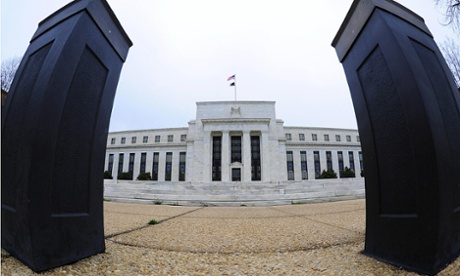
No, what’s really exercising the markets is the two-day meeting of the US Federal Reserve. And they are all a-flutter over one word: patient.
Up until now, America’s central bank has said it can be patient about starting to “normalise” monetary policy in the world’s biggest economy – code for the moment when it starts to increase interest rates for the first time since the global financial crisis.
If, as Wall Street expects, the Fed drops the word “patient” from its guidance to the markets, it will be a significant moment. It will put the world on notice that the years of zero interest rates are coming to an end. Dealers are already pencilling in the date of the first rise in the cost of borrowing: 17 June.
The thinking goes like this. 2014 was the year the Fed stopped providing fresh stimulus to growth through the money-creation programme known as quantitative easing. Against a backdrop of robust growth and strong job creation, 2015 will be the year when the Fed would start to tighten. Monetary policy takes time to work, so the US central bank will act early to insure against the risk that all the policy stimulus of the past seven years leads to a surge in inflation.
But it no longer looks as simple as that. The recent economic data from the US has been surprisingly weak. Sure, jobs are being created, but there is no evidence of wage growth picking up. Consumer spending, industrial production, investment, the housing market: all have disappointed.
At the same time, the dollar has been heading higher on the foreign exchanges. A more expensive currency cuts the price of imports and bears down on inflation, which is already negative.
So will it or won’t it? If the question is whether the word “patient” will be dropped, the answer is probably yes. The Fed thinks the halving of global oil prices is responsible for the fall in headline inflation to -0.1%. Part of the slowdown in the economy in the past couple of months is due to the harsh winter. All things being equal, cheaper oil should boost consumer spending power and growth. It will be no surprise at all should the Fed decide to give itself a bit more wriggle room.
But if the question is whether dropping “patient” means rates going up in June, then that’s a different matter.
Three factors may stay the Fed’s hand. The first is that a stronger exchange rate is the equivalent of a tightening of monetary policy, making an interest rate rise less necessary. The second is that the softness of the economy does not seem to be entirely weather-related and, in the case of wages, appears to be structural. The third is that the Fed can keep interest rates low for longer and risk inflation, or it can jack up interest rates soon and risk recession. All the Fed’s recent history suggests it will take the former option.