There’s a ongoing debate in marketing as to whether there’s such a thing as a truly original piece of work. Generally, the consensus is no, but that doesn’t stop us from being disappointed when an idea we believed to be ours is found to have been delivered already.
Rarely, however – if ever – has that exact idea run before. What’s more likely is that a version of it, some aspect or critical detail, feels familiar. This fear of unoriginality plagues the creative ego and can leave some clients feeling cheated that they are not, in fact, buying an idea that is the first of its kind.
Other industries don’t suffer from this sense of inadequacy or constant need to break the mould. In fact, it’s often quite the opposite. For instance, filmmakers and musicians are comfortable talking about their influences. Liam and Noel Gallagher have never been shy about admitting their love of The Beatles. Their song structures, melodies and chord sequences all owe obvious musical debts.
Scanning the marketing landscape today, influence is visible everywhere. Take McVities, which has upped its game in the past 12 months with some funny, loveable work. The very real-looking animals plus an 80s soundtrack seem to be clear and direct descendants of the Cadbury Gorilla - and are even in the same category. Airbnb’s floating house has enjoyed lots of press coverage, but the brand is far from the first to chuck a giant, random object into the Thames for the sake of PR.
In many ways we encourage each other to imitate. I even have a collection of case studies from the Account Planning Group on my desk, which was delivered with the (only slightly ironic) three word introduction: “Read. Envy. Steal.”
As a sector, we train together, beckoning each other to share our ideas on internal platforms as the hallowed examples from which to learn. But we quickly point fingers if the lesson is too visible in any subsequent work.
The fact is that true originality is a charming notion, but it’s something that rarely actually happens in the real world. Great ideas don’t just pop up; they have to come from somewhere. It’s a truth acknowledged by Mark Twain when he wrote:
All ideas are second-hand, consciously and unconsciously drawn from a million outside sources, and daily used by the garnerer with a pride and satisfaction born of the superstition that he originated them…”
Unwittingly or otherwise we are all “garnerers”. In marketing there may be the odd mould-breaker – no more than one every few years who kick-starts a new trend in creativity – but the vast majority build upon or remix existing thinking.
We shouldn’t be too worried for two reasons. First, consumers don’t notice or care. In fact there’s a ton of evidence that they enjoy and respond to familiar structures and cues – just look at Hollywood. Second, building on existing work actually raises the standards everywhere, and fast. Referencing and understanding comparable campaigns provides validation – it means we can look at how and why they were a success and improve on the formula.
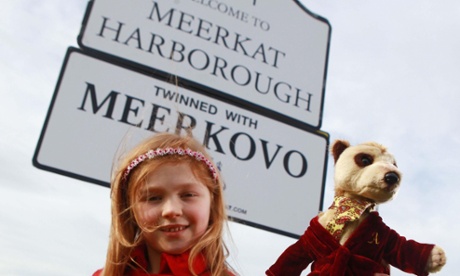
Take Aleksandr the Meerkat. Playful and creative in his own right, but whose greatest value to the marketing industry is surely the change he inspired across the rest of his category. Whilst the Churchill dog came before, it was the complete package of Aleksandr that inspired competitors to imitate, in tone, and with brand icons. The result: consumers were finally given a way of differentiating and engaging with this deeply functional category.
Looking back over some recent impressive pieces of communications, it becomes clear that originality is not necessarily their key value. By focusing on brilliantly crafted executions, work can always feel fresh and exciting. Lidl’s recent, outstanding, creative is, technically, an evolved Pepsi Challenge. The amazing 24 hours of Happy campaign for Pharrell is a neat user-generated content idea that strongly echoes the Nike Human Chain. Even Felix Baumgartner wasn’t the first man to jump from the edge of space (he was just the first one to do it for the sake of marketing).
While any credible creative will always seek to be the lone revolutionary, taking a more relaxed approach to being part of the reactionary majority will help us make the most of our version. By being less focused on the near impossible mission of total originality, we could instead spend time learning how to improve something that’s tried and tested.
Jo Hudson is a creative planner at PrettyGreen
This advertisement feature is brought to you by the Marketing Agencies Association, sponsors of the Guardian Media Network’s Agencies hub