PYEONGCHANG, South Korea _ I was born in Hawaii and didn't own a pair of shoes, long pants or a jacket until I was 7.
I grew up in Northern California and for three decades lived in San Diego, where last week, in late January, I played a round of golf in 80-degree weather on a course with sweeping views of the Pacific Ocean.
I've skied twice in my life and not at all in 20 years. I've never been on a snowboard or ice skates. Like everyone else in San Diego, I zip up a goose down jacket and toss a couple logs onto the fireplace when temperatures have the audacity to dip below 60 degrees. I wear flip-flops a lot.
I don't like winter.
I love the Winter Olympics.
These are the eighth I have covered for the Union-Tribune, and they have come to be my favorite of the major sporting events, and I've been to nearly all of them: Summer Olympics, Super Bowls, World Series, World Cups, Final Fours, NBA Finals, college football bowl games, U.S. Opens of golf and tennis.
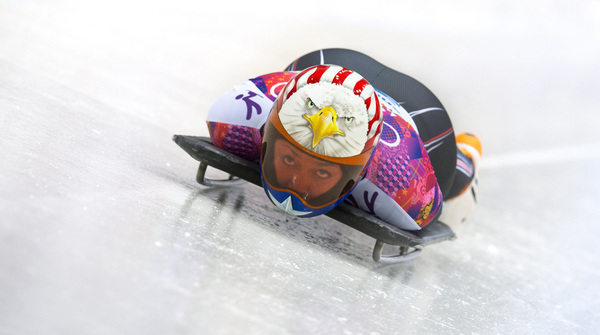
There's just something intoxicating about the rumble of a bobsled, the whoosh of a speedskater, the thump of a ski jump landing, the swish of a curling broom, the spray of ice after a triple Lutz, the hollow jangle of cowbells along the giant slalom course. Something about the bizarre marriage of guns and cross-country skiing in biathlon, or grabbing a skeleton sled and hurtling headfirst down a twisting tube of ice, or the loneliness of the start house at the top of the downhill.
The Summer Olympics long ago became too big, too consuming. Eleven thousand athletes, 205 countries, 306 medal events, millions of spectators, dozens of venues, heat, humidity, smog, traffic. They overwhelm you, suffocate you, swallow you. LeBron James is playing basketball, Rickie Fowler is golfing, the Williams sisters are playing tennis, Simone Biles is on the balance beam, Michael Phelps is in the pool ... all at once, overshadowing the real Olympians in sailing, wrestling, rowing, archery.
The Winter Olympics are more digestible. You can wrap your arms around them, hug them.
They, like their big brother, have grown in recent years yet still have fewer than 3,000 athletes competing in 102 medal events. There are just seven sports (and 15 disciplines within them). On the first Saturday in Pyeongchang, a mere five gold medals will be awarded. That's it.
They also arrive at an optimal time in the gridlocked U.S. sports calendar _ after the Super Bowl and before the draft, in the dog days of an endless NBA season, before March Madness, before baseball's Opening Day, before golf's majors and horse racing's Triple Crown.
Most of the country (not San Diego) is indoors, fatigued from winter, bored of playing cards or pool in the basement, flipping channels in search of something, anything different. And here come four guys in skin suits and helmets madly pushing a bobsled, then trying to jump in _ legs, torso, arms, head.
Four guys you've never heard of. That's another charm of the Winter Games, the sheer anonymity and innocence of it all.
Most winter sports are blissfully obscure for the other 206 weeks of the quadrennium, and limited to nations with the requisite facilities and climate. That shrinks the talent pool considerably (how many competitive U.S. lugers are there in a nation of 327 million _ 20?), allowing an average college track athlete to make an Olympic team pushing a bobsled.
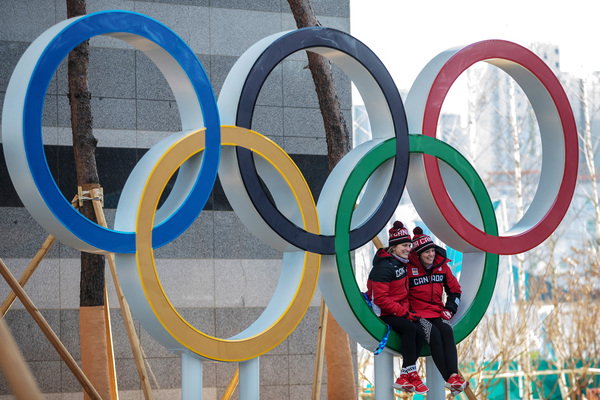
But that's OK. It returns the Olympics to their humble roots, to the nobility of amateurism, the ideal of not winning but competing well, regardless of the fame or finance. There is a certain purity to curlers stealing a smoke between rounds, to a ski jumper sleeping on couches and driving a beater car and working odd jobs to chase a five-ring dream.
The best Winter Games I've covered were in 1994, in Lillehammer, Norway, the first staged opposite the Summer Games instead the same year.
Opening Ceremony was held on a frigid night in the ski jump stadium, with quarter-sized snowflakes tumbling from the heavens, with everyone wearing white ponchos to match the pristine landscape. The torch was to arrive via a ski jumper, and the guy chosen for the task crashed during rehearsals and was injured. They went to the second-stringer, suddenly thrust onto the world stage carrying the sacred flame while a proud nation held its breath.
He flew from the clouds, wobbled and stayed on his feet. A nation exhaled, and fortune continued smiling for the next 16 days.
These were the Olympics of Tonya Harding and Nancy Kerrigan, and even the media circus that surrounded them couldn't soil the winter wonderland of rural Norway, of icicles hanging from timber roofs. The men's 4x10-kilometer relay of cross-country skiing, Norway's national sport, drew 35,000 spectators to the finish stadium ... and another 70,000 who hiked into the forest along the course with temperatures hovering above zero.
Norway lost the gold medal to Italy, by four-tenths of a second after 101 minutes of racing. The forest went quiet momentarily, then erupted in noise as the other teams finished.
"It was so loud I couldn't hear my coach," U.S. anchor Luke Bodensteiner said of his entrance into the stadium. "I was racing for 13th place, and it just like I was going for the gold."
At the speedskating oval, Norway's Johann Olav Koss won three gold medals and donated his government bonus to the relief effort in Sarajevo, a former Olympic host city ravaged by war.
The International Olympic Committee, of course, has done its best to ruin the Winter Games since. The year after Lillehammer, population 27,476, it shifted its model from quaint, alpine hamlets and began picking teeming metropolises. Salt Lake City, we know now, bribed its way to an Olympics. Then came Torino, Italy. Then Vancouver, Canada.
In 2014, the IOC sold its soul to Vlad Putin and Sochi, Russia _ a $51 million construction boondoggle on the Black Sea with 65-degree afternoons and unabashed, state-sponsored doping so the hosts could top the medals table to further the Games' propaganda payback for an authoritarian regime.
Maybe the IOC came to its senses for 2018, returning the Winter Games to a remote, modest locale where you don't put on a sweater when you walk into the skating rink (you take off your parka). Maybe it purposely pushed out the NHL players from the men's hockey tournament to let a bunch of unknowns from backwater pro leagues slug it out for gold.
Or maybe, more likely, the South Koreans were the only folks who genuinely wanted to host these things any more and the NHL got fed up with the IOC's demands.
Either way, they _ we _ lucked into the coldest and least populated and most authentic Winter Olympics since Lillehammer. So there's hope.
The stench of doping wafts like rotten caviar, Russian athletes are competing under a neutral flag, and the world's most heavily fortified border is less than 50 miles away. Opening Ceremony is Friday in Pyeongchang. On Thursday in Pyongyang, North Korea is hosting a military parade with Kim Jong-un nodding his approval as ICBM missiles roll past.
It's messy, for sure, but nothing a curling broom can't sweep up.