It was almost one year ago that the coronavirus essentially shut down American sports.
On the night of March 11, word emerged that Utah Jazz center Rudy Gobert had tested positive for COVID-19.
By the following day, major college sports leagues, including the SEC and the ACC, were canceling league basketball tournaments. Professional sports leagues were going “on pause.”
Soon, the 2020 NCAA Tournament was called off.
In that surreal first weekend after the games stopped, I found myself viewing the only live sporting events I could find via Internet streaming — British professional basketball and a New Mexico high school basketball state tournament finals.
I watched such obscure events because I didn’t know when there would again be games to see.
Now, as we approach the one-year anniversary of last March’s great disruption, two sports-related sentiments seem clear:
1. Those of us who value sports should feel incredibly grateful that ways were found that allowed the games to return as soon as they ultimately did and to the extent they have.
In a time when American politics have been coarse and divisive and the pandemic has made so much of the other news grim and depressing, the revival of sports provided a chance to, fleetingly, think about happier things.
That was a service much-needed.
2. Having stands full of fans is unquestionably vital to the “experience of sports.”
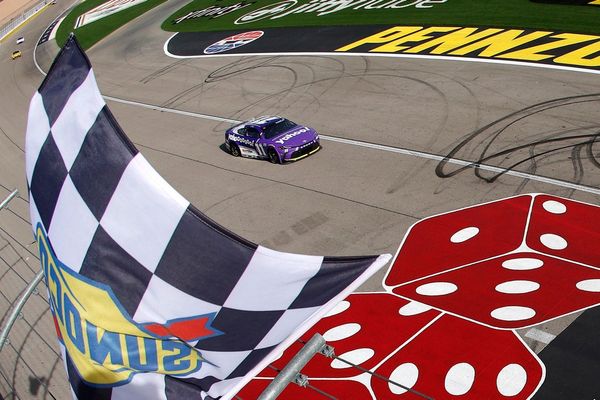
The first post-pandemic event I covered as a sportswriter was a NASCAR Sprint Cup Series race run at an empty-due-to-the-pandemic Kentucky Speedway.
A heart-thumping, four-wide pass on the final lap produced the race winner.
Yet rather than an explosion of noise from the grandstands, the heart-thumping, on-track drama happened in a vacuum.
It stunk.
So did a Kentucky Derby run in September in an almost-empty Churchill Downs.
A Derby without women in elaborate hats, with no men wearing crazy, horse-themed neckties and no college kids partying it up in the infield didn’t feel like an authentic “Run for the Roses” at all.
When University of Kentucky football returned a month late last fall, it was in front of crowds capped at 20 percent of normal capacity and with tailgating banned.
Walking into Kroger Field without the odors of burgers grilling, without overhearing different groups of Cats fans handicapping how UK might fare in the game to come, was experiencing Kentucky football Saturdays without some of the most evocative parts.
If you think about it, few teams in the country may have felt the absence of normal crowds this year more than the struggling Kentucky Wildcats men’s basketball squad.
With attendance capped at 20 percent in Rupp Arena and by varying degrees for games outside Lexington, the 2020-21 Wildcats (8-15 going into Saturday’s regular-seaon finale vs. South Carolina) were denied two of the biggest advantages Kentucky basketball teams normally have.
They did not play home games with the support of over 20,000 roaring Cats fans.
On the road, they did not benefit from the “blue gets in” phenomenon that often sees UK fans take over opposing venues.
“It affects the game here. Come on now,” Kentucky Coach John Calipari said early this season. “The fans here are a big reason that we have the kind of (success) at home we’ve had. Without them, it hurts us.”
Across the various sports at all levels, the players do not seem to show as much emotion, as much joy in playing, in games contested with small or no crowds. That, too, is a loss for those viewing the games.
Before the pandemic, we had entered an era in which sports attendance was softening.
As high-definition television technology has improved, the home experience of watching games has become so compelling that more and more fans have seemingly felt less and less reason to attend in person.
Moving forward, it is going to be fascinating to see what happens once the coronavirus vaccines hopefully allow for a “return to normal.”
Will there be:
A. A huge pent-up demand for the entertainment experiences that COVID-19 took away, causing throngs of fans to return to live-game attendance;
Or:
B. Will this past year when so few could go to sports events and more people got out of the habit of doing so only serve to enhance the trend of decreasing crowd sizes?
Those of us who plan to return to in-person sports attendance as soon as we safely can will all have different things bringing us back.
Myself, I can’t wait to again experience the electricity coming off the crowd in a sold-out Rupp Arena before Kentucky faces a team that UK fans see as a threat.
On entry to high school gymnasiums, I will relish the sound and smell of popcorn popping.
Heck, I can’t wait to again get stuck in traffic trying to get into Kroger Field before Kentucky football games — because that will mean the fans have returned in full force.
It is only then that sports can be said to have come fully “back.”