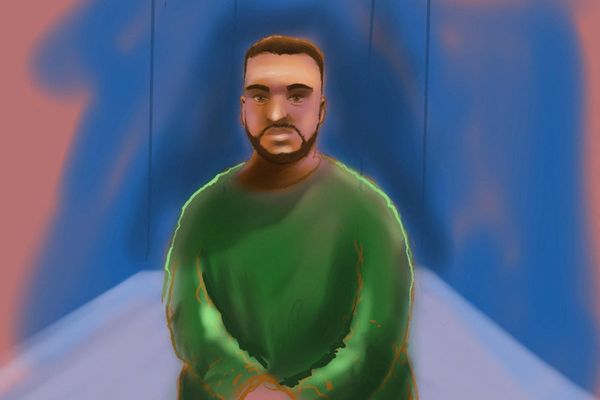
Shortly after Mark Sedwill announced he would be stepping down as the cabinet secretary and the national security adviser in September, he gave a speech in which he described his life before government. “I’ve had a gun in my face from Saddam Hussein’s bodyguards,” he said. “A bomb under my seat at a polo match in the foothills of the Himalayas; I’ve been hosted by a man plotting to have me assassinated; I’ve been shot at, mortared and even had someone come after me with a suicide vest.” So, as you might expect, what could have been an awkward two-hour appearance before the public administration and constitutional affairs select committee scarcely registered on his heart-rate monitor.
Not that the committee didn’t do their best to winkle out the dysfunctionality at the heart of government and discover how and why Sedwill had been forced out. Just that Sedwill was clear from the start that everything was going to be conducted entirely on his terms and that any revelations he were to make would be completely deliberate. And he certainly wasn’t going to be drawn on last week’s meltdown in No 10 which ended with the departure of both his old enemies, Dominic Cummings and Lee Cain. Oh that, he shrugged. These things happened all the time. Advisers came and went. And he certainly wasn’t bothered by some gobshite whose only weapons were 20,000-word blogs and imaginary hand grenades. What goes around, comes around.
The committee chair, William Wragg, tried to probe a little deeper. “You say you weren’t sacked, you didn’t resign and you weren’t made redundant,” he said, sounding more and more confused. “If that’s the case, why did you go?” Sedwill barely broke sweat in finding a non-answer. A civil servant’s gonna do, what a civil servant’s gonna do. It had been a voluntary agreement that he should leave in September even though he had never previously said he was planning to go at that time. It had been a spontaneous decision to leave right in the middle of the Covid pandemic and with less than four months to conclude a Brexit deal. He just wanted to give his successor as little time as possible to settle in during a national crisis.
But it is true that you were consistently being briefed against? Sedwill conceded that he had had a difficult time, but as all the briefings had been conducted anonymously he wasn’t able to confirm they had largely been orchestrated by Cummings, Michael Gove and other members of the Vote Leave team who were convinced that none of the senior civil servants really believed in the Brexit project. Though he was at pains to point out that he himself had been described as a fervent Brexiter and an ardent remoaner, so he must have been doing something right.
So it was all a bit of a mystery. But he had been assured by both prime ministers – Theresa May and Boris Johnson – under whom he had served that they would do their best to get to the bottom of it and prevent any more negative briefings. Though sadly, neither had been very successful at that.
Like most top civil servants, Sedwill is a master of misdirection and of saying very little of substance at some length. He wears you down by attrition as much as by force of argument. So when he tried to claim there was nothing particularly unusual in so many permanent secretaries in government departments all resigning or being sacked at roughly the same time, and that they were all just coming to the end of their five-year secondments anyway, there was very little pushback.
Labour’s Rachel Hopkins did ask if it should have been Gavin Williamson who got the sack over the exams fiasco in the summer rather than Jonathan Slater, his permanent secretary, but Sir Humphrey couldn’t possibly comment. These were delicate matters and the whole point of private conversations was that they should remain private. Which was as close as he could bring himself to saying that he would happily have seen the back of Williamson a second time, having persuaded May to fire him once before for leaking details of the cational security council.
Sedwill did find time to land Johnson in some trouble by observing that the report into claims of bullying by Priti Patel had been gathering dust on the prime minister’s desk for some time now. Though naturally he had no idea what it contained. There are some old scores that are just too tempting not to settle and there is no love lost between Sedwill and Boris. But after that the former cabinet secretary went out of his way to present himself and government as a model of moderation. I’d hate to imagine what a bad day at the office might look like.
Yes, he was sure there would be lessons to be learned about the government’s handling of coronavirus, though he was curiously vague as to how many – if any – of the proposals put forward in the Operation Cygnus pandemic planning exercise had been put in place. We did do OK on getting our fair share of PPE, he added, which was again not how many people will have remembered the events of last spring.
But that’s one of the joys he’d recently discovered about no longer being cabinet secretary. Quite apart from the £250k lump sum in the pension pot and the elevation to the House of Lords, he’s no longer really responsible for anything. No more crisis meetings. No more outbursts from second-rate special advisers. No more infighting. The hard rain that Cummings had promised had arrived. And it had fallen on Dom and the rest of his crew.