Six years ago on Friday marks the anniversary of the start of what was has come to be known as the credit crunch. The antics of the banks hit the front pages and all sorts of acronyms popped into everyday parlance – SIVs, or structured investment vehicles; CDOs, or collateralised debt obligations; and even CDOs squared (let's not go there) – as the City threw out explanations for the sudden seizure in the markets..
Two years later, Lord Turner, the former chairman of the now defunct Financial Services Authority, attacked the more arcane parts of the financial sector as "socially useless".
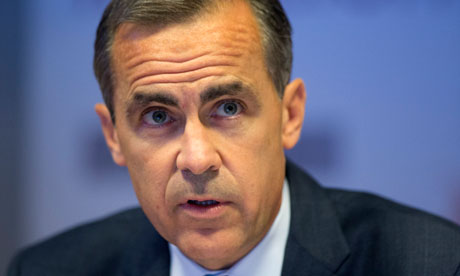
On Thursday it was the turn of the new top banking regulator, Mark Carney, the governor of the Bank of England, to wade into the debate about the worth – or worthlessness – of parts of the financial sector.
"I think finance can absolutely play a socially useful and an economically useful function but what it needs in order to do so, the focus has to be … on the real economy, what it does for businesses making investment, what ultimately it means for jobs in the economy," Carney told listeners to BBC Radio 4.
"It's finance that becomes disconnected from the economy, from society – finance that only talks to itself and deals with each other – that becomes socially useless," he added.
Six months ago he gave a speech in his native Canada – where he was chairman of the central bank – in which he talked about how teachers and farmers could see the progress of their students and their crops. But, he added at the time, "when bankers become disconnected from their ultimate clients in the real economy, they have no direct view of the impact of their work".
Examples might be the Libor trader just seeing numbers on a screen, not the consequences of their actions in manipulating the interest rate. The whizzy trader devising the CDO in the runup to 2007 no doubt had their eye on their bonus rather than thinking through the complexity of their invention.
With the "socially useless" charge, Carney will be hoping to steer banks towards focusing on lending to the small businesses that can begin to help create jobs for those 750,000 individuals he wants to see added to payrolls before he deems it safe to start raising interest rates.
But Carney had to admit cultural change was still needed to get banks to stop selling useless products to customers. He promised to "snuff" out bad practices – and, perhaps unwittingly, gave the public another measure against which to judge his success.