Marine species discovered on Gorringe seamount - in pictures
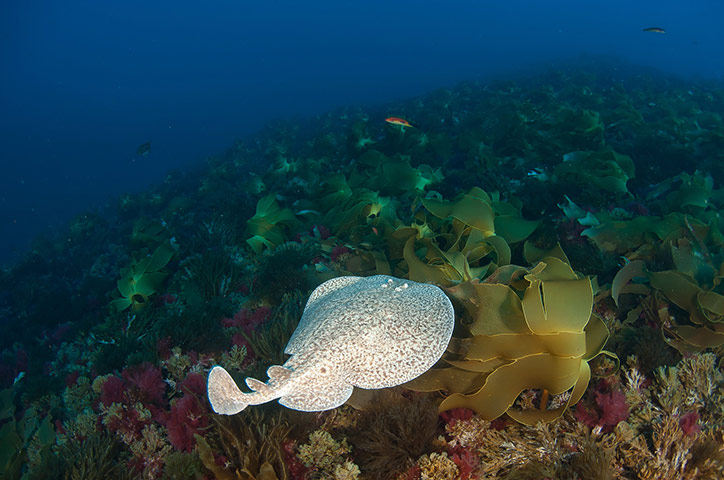
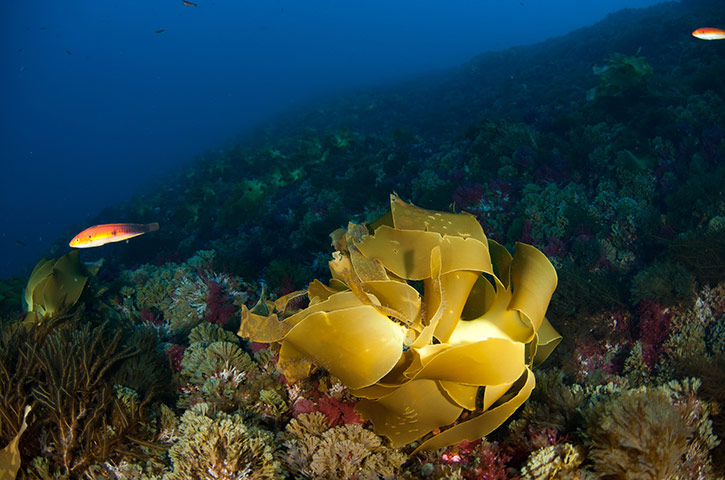
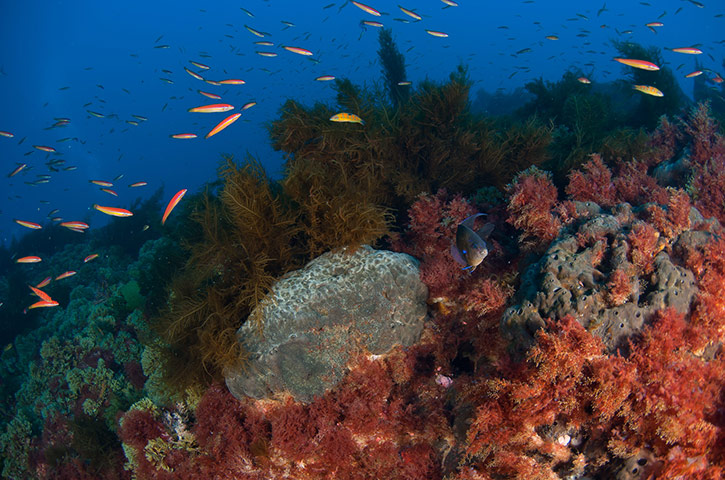
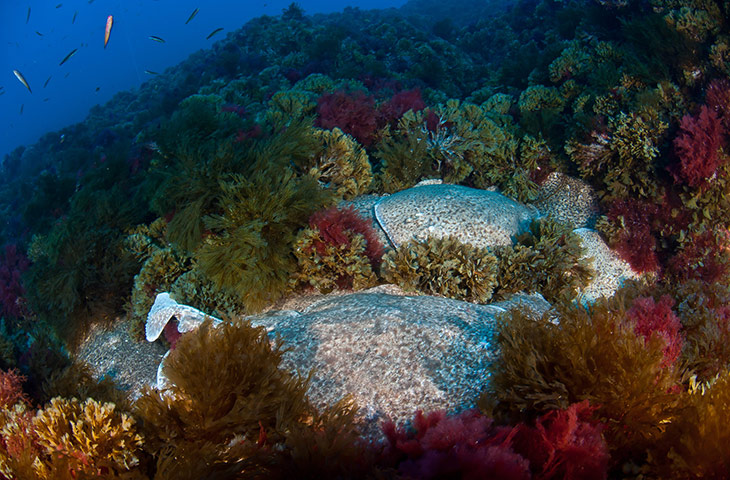
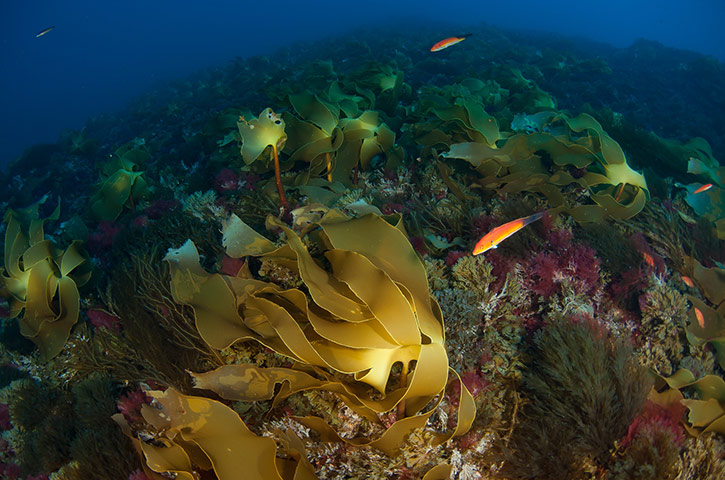
A marbled electric ray (Torpedo marmorata) in a kelp forest (Laminaria ochroleuca). The Gorringe seamount is located about 250km south-west of Cape San Vicente. Its summit is located about 30m from the surface and its base is more than 5,000m deep. There is a variety of species from near the sea's surface down to the dark depths. Due to its geographical location, the mount is home to species native to both the Atlantic and the MediterraneanPhotograph: Carlos Suárez/OceanaMediterranean rainbow wrasse (Coris julis) swin in kelp (Laminaria ochroleuca) above a rocky seabed covered with other algae. Seamounts are geological elevations that reach a minimum of 1,000m in height and can consist of different physical, geological and chemical properties. Seamounts can only exist where there are sea beds more than 1km deepPhotograph: Carlos Suárez/OceanaMediterranean rainbow wrasse, ornate wrasse (Thalassoma pavo) and Canary damsel (Abudefduf luridus) in rocky seabed covered with Greek bathing sponge (Spongia officinalis) and algae. Whether in isolation or as part of extensive ranges, there are possibly more than 100,000 seamounts around the world. At present, close to 30,000 of them have been identified, of which around 1,000 can be found in the Atlantic OceanPhotograph: Carlos Suárez/Oceana
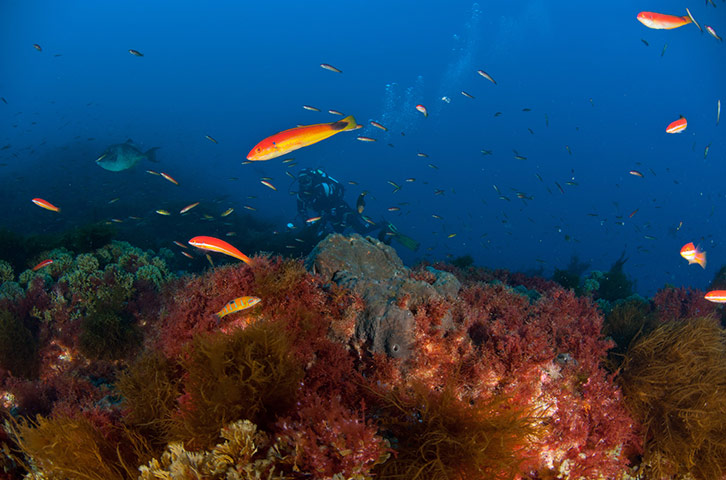
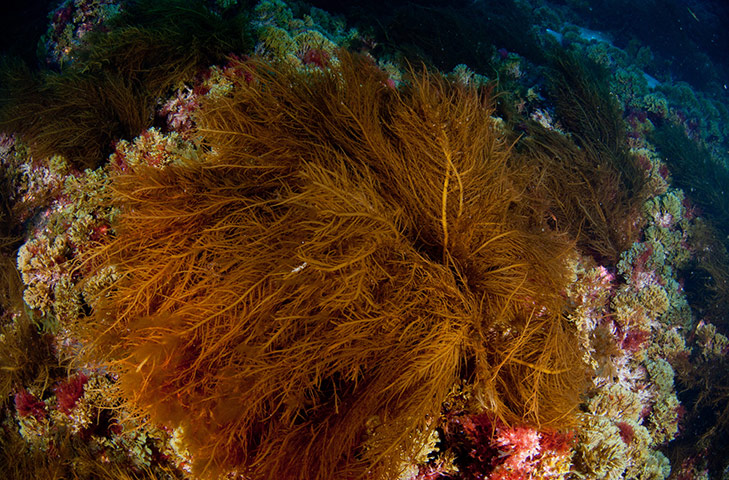
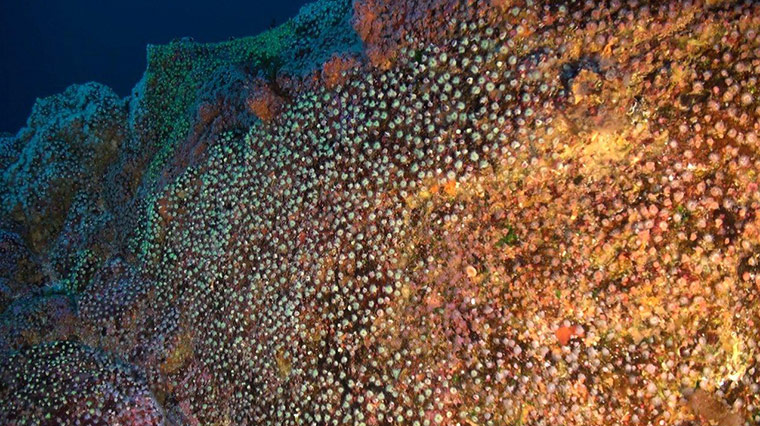
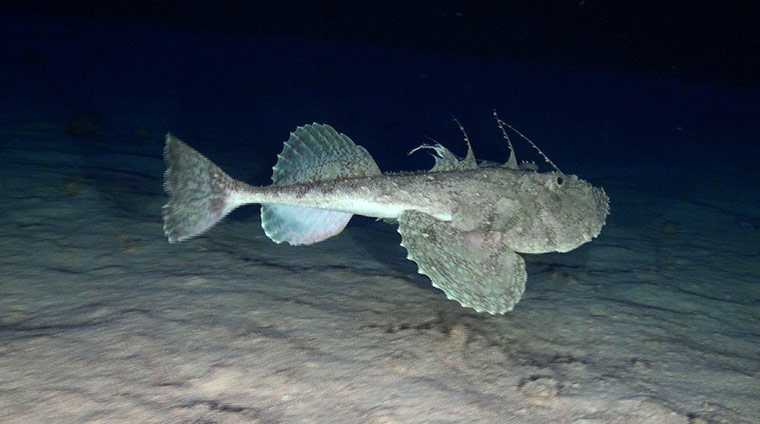
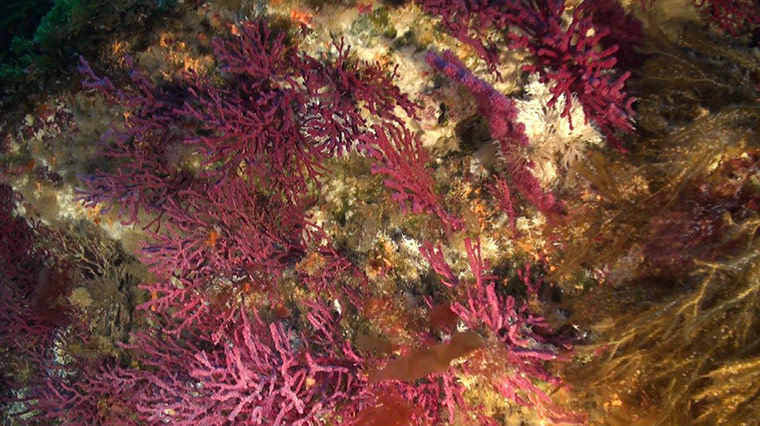
Mediterranean rainbow wrasse, ornate wrasse (Thalassoma pavo) and grey triggerfish (Balistes capriscus) in rocky seabed covered with Greek bathing sponge (Spongia officinalis) and algae, with an Oceana diver in the background. Despite the large number of seamounts, it has not been until recently that there has been an increase in scientific studies on them and they have been given the importance they deserve. Oceana says only 350 seamounts have been sampled and barely 100 have been studied in any detailPhotograph: Carlos Suárez/OceanaBown algae (Desmarestia ligulata) in rocky seabed. The seamount contains spectacular kelp forests that cover the top, and gorgonian forests along its slopes. The diversity of species, the high number of endemic species, as well as the high productivity around the Gorringe make this one of the most unique seamounts in the east Atlantic. Oceana says its protection must be considered as urgentPhotograph: Carlos Suárez/OceanaWall carpeted with jewel anemones (Corynactis viridis). Oceana is calling for the seamount to be included in the Natura 2000 Network, a European network of nature protection areas that aims to ensure the long-term survival of Europe's most valuable and threatened species and habitatsPhotograph: Carlos Suárez/OceanaA monkfish (Lophius piscatorius) Photograph: Carlos Suárez/OceanaMarbled electric rays (Torpedo marmorata) in rocky seabed covered with algae. The seamounts of the Gorringe bank were discovered in 1875 by the American exploration vessel USS Gettysburg, commanded by Captain Henry Honeychurch Gorringe, to whom the ridge owes its name Photograph: Carlos Suárez/OceanaGarden of red gorgonian (Paramuricea clavata). During the expedition, a team of specialists, marine scientists and divers collected photographs and video footage and an ROV (underwater robot) was used to record high-resolution images on the sea beds down to 600m depthPhotograph: Carlos Suárez/OceanaForest of kelp (Laminaria ochroleuca) in rocky seabed, with Mediterranean rainbow wrasse (Coris julis) aroundPhotograph: Carlos Suárez/Oceana
Sign up to read this article
Read news from 100’s of titles, curated specifically for you.