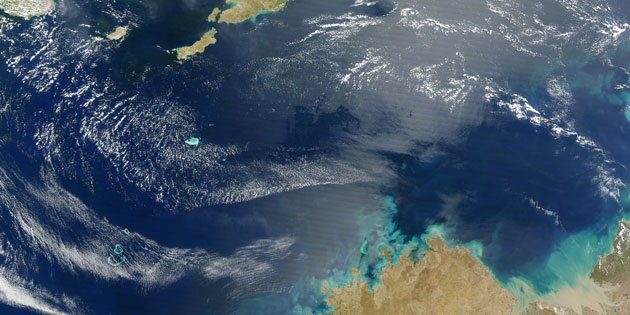
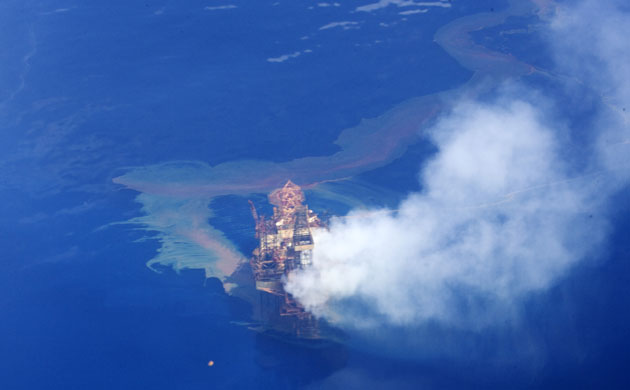
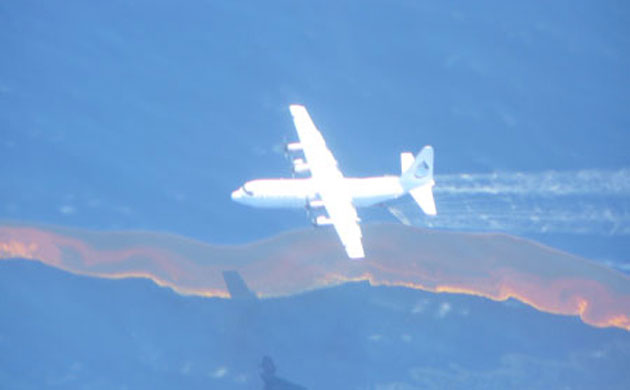
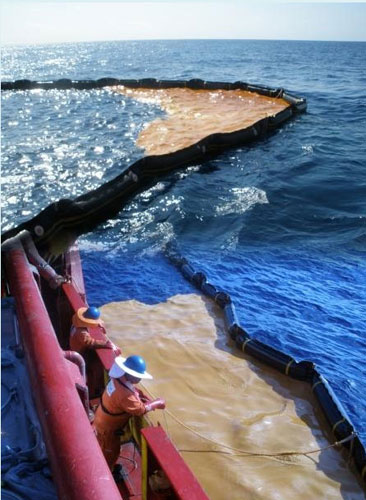
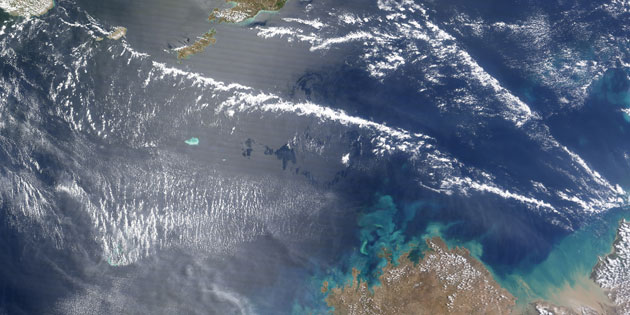
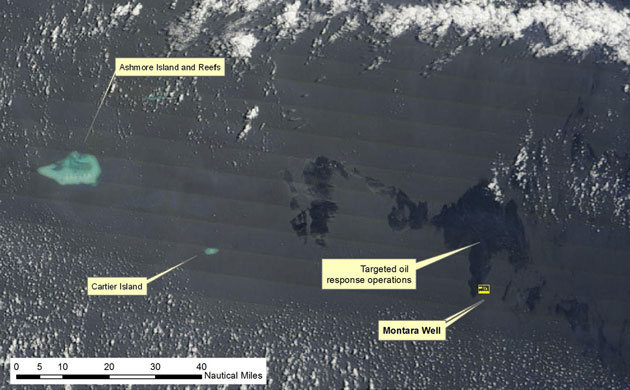
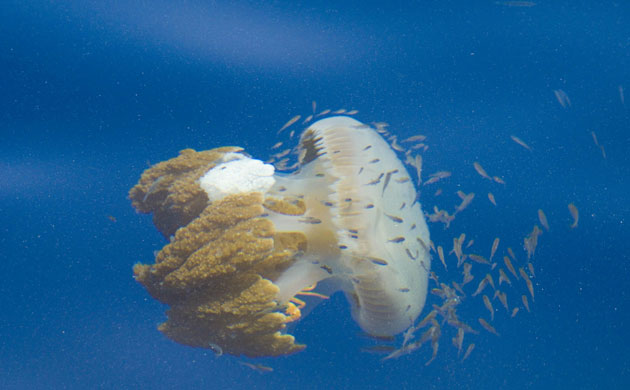
Dolphins, migratory sea birds, sea snakes and turtles have been found swimming in one of the worst oil spills in Australia’s history. As engineers launched a fourth attempt to staunch the 64-day old leak today, the WWF released a report warning that the slick, which is about 550km north of Darwin, is killing hundreds and possibly thousands of marine animals. Satellite images show a 25,000 square kilometre slick spreading across the surface of the ocean and spilling into Indonesian waters, threatening the marine reserves of Ashmore and Cartier reefsPhotograph: MODIS/Terra/NASASSince 21 August when the Montara offshore drilling rig, owned by the Thai oil company PTTEP, suffered a well head accident, around 403,000 litres of oil have been pumped into the Timor Sea at a rate of 300 to 400 barrels a dayPhotograph: /Kimberley Whale Watching/WWFThe Australian Maritime Safety Authority (AMSA) mobilised aircraft to try to break up the growing oil slick, spraying around 150,000 litres of chemical dispersant at a cost of around $5.3m, in an attempt to stop the oil from contaminating shoreline habitatsPhotograph: AMSA
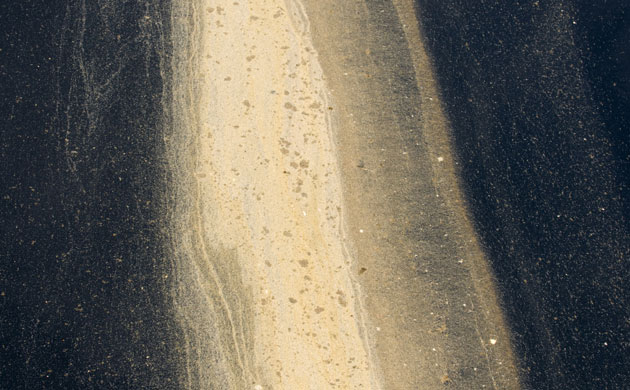
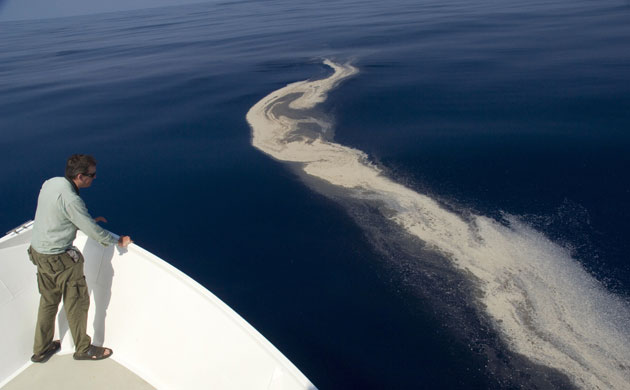
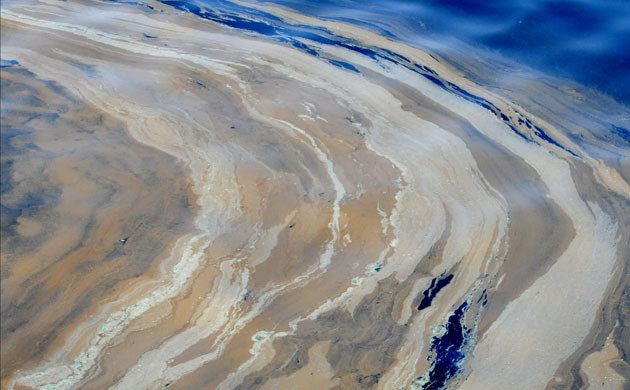
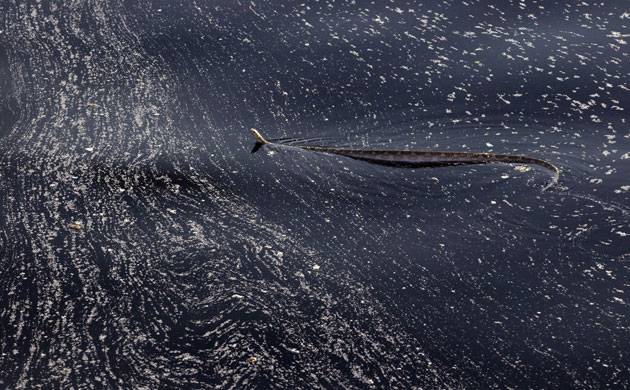
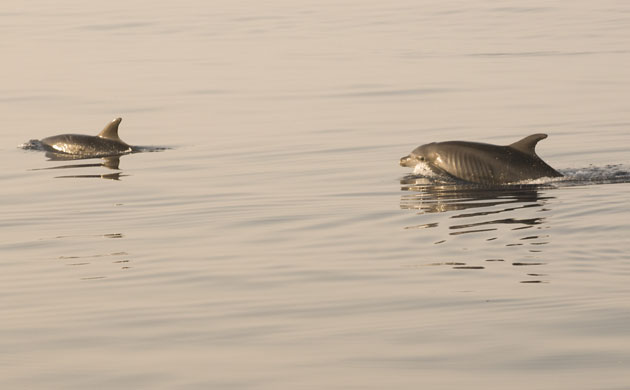
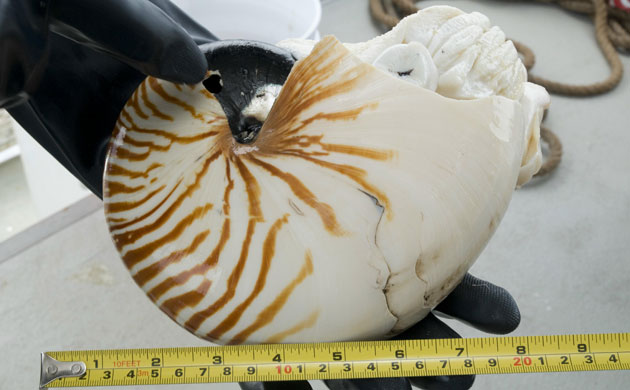
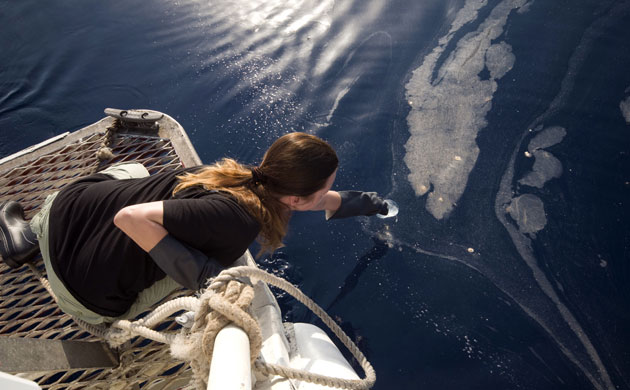
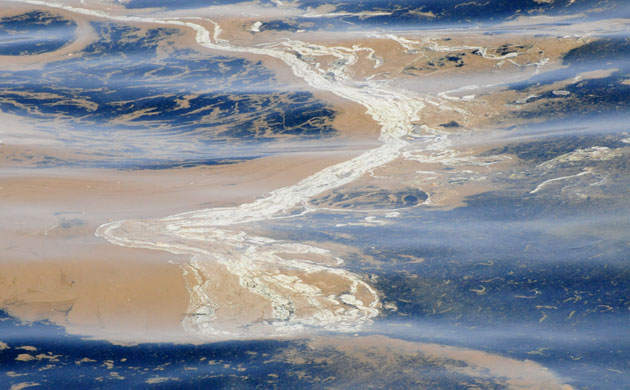
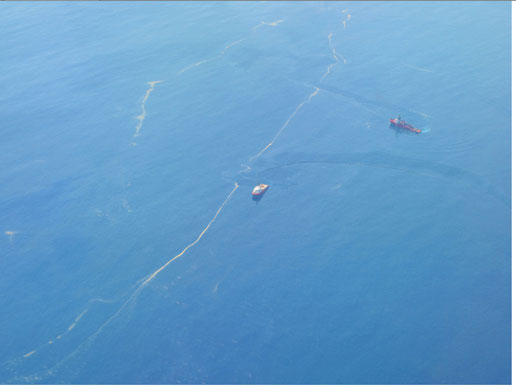
But while the dispersant potentially saves birds, marine mammals and other species from becoming coated with the oil, it disperses the slick further through the water, the WWF report warnsPhotograph: Chris Sanderson/WWFThe AMSA tries to contain the spill using boom and skimming equipment Photograph: AMSASatellite images show a 25,000 square kilometre slick spreading across the surface of the ocean. WWF director of conservation Dr Gilly Llewellyn, who conducted a three-day expedition through the polluted waters, said if the spill were closer to shore there would be global outrage. “There were times when we were literally in a sea of oil from left to right and as far as we could see ahead of us - it was heavily oiled water and it was sickening because in this we were seeing dolphins surfacing,” Llewellyn saidPhotograph: MODIS/Terra/NASAThis satellite image from 18 September highlights the extent of new and weathered oil in and around the Montara well head platform. Although the satellite imagery is not indicating the spill extending out to Ashmore or Cartier reefs, aerial observations have indicated the presence of a very light patchy sheen at Cartier and east of Ashmore. Sheen is of a silver colour in appearance and is around 0.0001 mm in thickness. While the sheen is not considered to be harmful if it comes into contact with the shoreline, it can still be a concern to birdlife in the areaPhotograph: AMSAEcological consultant Simon Mustoe observes bands of residue found in the water. The contamination appears on the water as a mirror-like oily sheen with scattered waxy particles which clump together and form swirlsPhotograph: Kara Burns/WWFWhen oil, gas and condensate began seeping into the Timor Sea PTTEP estimated it would take 50 days to plug the well in an area described by Tourism Australia as “one of the world’s last true wilderness areas”. Three previous attempts by PTTEP Australasia to plug the leak, 2.5km below the sea bed, by pumping it full of heavy mud, have failed Photograph: Debra Glasgow/WWFA sea snake swimming through a sea of oil sludge. The WWF expedition recorded 17 species of seabird, four species of dolphins and five marine reptiles in the oil slick areaPhotograph: Chris Sanderson/WWFA bottlenose dolphin. At least two bottlenose and a spinner dolphin showed signs of emaciation, though other animals appeared healthy. This pod was in an area of extensive light sheen with large low density wax particles, the WWF saidPhotograph: Chris Sanderson/WWFThe WWF says the most toxic effects are likely to be limited to within ten of miles of the well head where sedentary species such as fish, corals and sponges would be affectedPhotograph: Kara Burns/WWFA dead Nautilus found in water affected by Montara oil rig leakPhotograph: Kara Burns/WWFLlewellyn collects samples of water affected by Montara oil rig leak. “We recorded hundreds of dolphins and sea birds in the oil slick area, as well as sea snakes and threatened hawksbill and flatback turtles. Clearly, wildlife is dying and hundreds if not thousands of dolphins, seabirds and sea snakes are being exposed to toxic oil,” she said Photograph: Kara Burns/WWFThe paucity of research on the marine life in the area has hampered attempts to document the damage. There are just three, very limited, texts recording the marine species in these waters and much of the knowledge about the species is anecdotal, the WWF report saysPhotograph: Debra Glasgow/WWFAn aerial view of the clean-up operations. Llewellyn says experience from previous oil disasters suggests the damage will be long lasting. “We know that oil can be a slow and silent killer. Impacts from the Exxon Valdez disaster are still being seen 20 years later, so we can expect this environmental disaster will continue to unfold for years to come,” she saidPhotograph: AMSA
Sign up to read this article
Read news from 100’s of titles, curated specifically for you.