In the quest for gender equality on stage and screen, Shakespeare has not been an obvious starting point. Find a Shakespearean woman who is clever, strong and powerful and invariably she will end up mad (Ophelia in Hamlet), silenced (Silvia in The Two Gentlemen of Verona) or dead (Goneril and Regan in King Lear). Even when she is shown to have integrity, more often than not she is killed off by the final act (Juliet in Romeo and Juliet, Desdemona in Othello).
So bad is the Bard’s treatment of women, it could earn him a whole MeToo hashtag on Twitter. In 2013 the Royal Shakespeare Company turned to Jacobean dramatists for roles that would not leave the heroine as secondary characters drowned in a pool of blood or water by the final act.
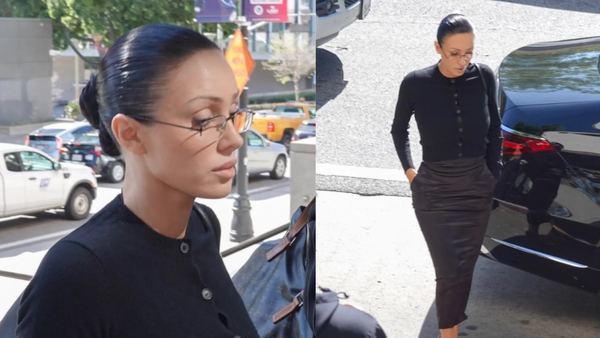
Which makes the prospect of I, Tonya star and Oscar nominee Margot Robbie producing a TV series with the Australian Broadcasting Company focused on Shakespeare’s women a difficult call.
For instance, how can the physical and psychological abuse endured by Katherine at the hands of her suitor Petruchio in The Taming of the Shrew be played for laughs, as originally intended? What might have produced belly laughs in Elizabethan England should have modern women running to their nearest refuges as fast as they can shout “coercive control”.
Even when his women are not victims of male caprice, Shakespeare only allows them freedom to express their true character if they slip into something more comfortable, ditching the stomacher and farthingale for a pair of breeches. But women being women diminishes them in his work. Thus the lively intellects of Viola in Twelfth Night, Rosalind in As You Like It and Portia in The Merchant of Venice are only taken seriously when they are mistaken for men. It is the 16th-century equivalent of Margaret Thatcher lowering her voice to be taken seriously.
And woe to the Shakespearean woman who defies this convention. To say and do things that “nice girls” should not while being dressed as a woman is a fast route to a thrashing or the grave. In a production like those planned by Robbie, which will include Australian women across all class, racial and sexual divides, one wonders how it will be possible to remain true to the spirit of the plays without pandering to outdated stereotypes.
A quick run through the most powerful and complex of Shakespeare’s female leads is telling. Lady Macbeth, whose machinations to help her milksop husband seize the throne have made her a template for malevolence, kills herself. That she is suffering post-partum depression is rarely acknowledged – how else can one read the childless woman’s declaration “I have given suck”, than that she has lost a child? Instead her childlessness marks her out as an abomination, an “unnatural” woman whose maternal instincts curdle into evil.
As for Cleopatra, who with Antony offers a tantalising glimpse of erotic obsession for the older woman, love serves ultimately to undermine her power not enhance it, making her another femme fatale who gets what’s coming to her.
These are Shakespeare’s bad girls, but the fate of the good ones is hardly more enticing for modern women. Miranda in The Tempest, Hermia in A Midsummer Night’s Dream and Hero in Much Ado About Nothing may not end up dead, but marriage renders them so safe and silent they may as well be. If the alternative is being buried in a living tomb of domesticity, one is tempted to think that Juliet had the right idea.

Robbie’s ambition with the TV series appears not only to be to improve the profile of Shakespeare’s women but roles for women in general. On that Shakespeare could do with some help. The actor Janet Suzman has complained that he wrote no soliloquies of note for women. Cleopatra’s speech after the death of Antony comes closest, she said, achieving the clarity of King Lear, but that it has not earned the same scholarly analysis as the eponymous heroes of the canon was telling.
In bringing Shakespeare’s women to the fore, a different goal for women in drama could be achieved. A simple analysis of the most influential playwright in the English language reveals his reliance on seven stock female characters that range from bawdy working-class women – the Nurse in Romeo and Juliet – and witty, unmarriageable women – Beatrice in Much Ado About Nothing – who need a man to put them in their place, to tragic, faithful lovers accused of adultery by men who regard women’s morals as little higher than a dog’s (see Desdemona).
These became standard Hollywood tropes that appear in everything from psychological dramas to romcoms. All have the ultimate message that a woman is safest in the home. Not just safe for themselves, but for society as a whole. That is one aspect of Shakespeare it would be good to see the back of.
• Danuta Kean writes about publishing and diversity