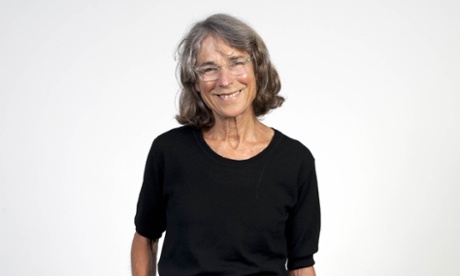
Is acting just for posh people? Are women and ethnic minorities seen enough on screen, as well as behind the camera? And can you succeed creatively if you don’t know the right people? The Guardian has been asking professionals across the arts, culture and creative industries all these questions, in Panic!, a partnership with Create, Goldsmiths and others – to try and work out just how diverse the British arts scene is.
A number of successful Goldsmiths alumni have filled in the survey, with their responses published on the Guardian’s website. Already surveyed are Moira Buffini and John Cale; now it’s the turn of Margaret Howell. She is one of the UK’s most established fashion designers, known for her clean lines and focus on timeless chic. Beginning in the early 70s, her minimalist style has become acclaimed across the world, particularly in Japan, where she has 90 stores.
Her responses, edited from the survey, are given below; if you want to take the survey yourself, click here.
What is your highest achieved level of education?
Post-16 qualifications (eg A levels, AS levels, Scottish Highers); GCSEs/CSEs/O-levels; Other: DIPAD Art & Design.
What was your course title?
Diploma in art and design.
Tell us a little about your decision to enter your current occupation in the cultural and creative industries. And if this isn’t your first occupation, tell us about that too.
I had never worked for anyone else and it wasn’t a conscious decision. But I had always enjoyed making my own clothes and when the chance came to make and sell, I went for it. At first I did everything myself.

Is there anything else that you think is important in getting ahead in your industry?
It’s vitally important to keep one’s head down and one’s feet on the ground; be aware of the dangers of fame and fortune in fashion; and manage growth rather than be managed by it.
Looking at your creative occupation as a whole, how important do you think each of these is in getting ahead?
Coming from a wealthy family: Not important at all
Having well-educated parents: Not very important
Being well-educated: Fairly important
Having ambition: Fairly important
Hard work: Essential
Knowing the right people: Not very important
Your talent: Essential
Your ethnic group: Not important at all
Your class: Not important at all
Your religion: Not important at all
Your gender: Not important at all
What kind of work did your first parent/caregiver do?
Middle or junior managers such as: office manager - retail manager - bank manager - restaurant manager - warehouse manager - publican.

What was this parent’s highest achieved level of education?
None.
What kind of work did your other parent or caregiver do when you were around 14?
Semi-routine manual and service occupations such as: postal worker - machine operative - security guard - caretaker - farm worker - catering assistant - receptionist - sales assistant.
What was your (other) parent or caregiver’s highest achieved level of education? (if applicable)
None.
Can you give an example of art or culture that you love?
I can think of many examples in both fields … the architecture of the Royal Festival Hall has helped it achieve its social and cultural purpose.
Where do you see yourself in five years?
Doing what I am doing now because I love it.
Please tell us more broadly about your experience in your industry. Is there anything else you want to tell us?
I learned to believe in myself and continue to do so through adversity; to know the importance of choosing the right people to work with; to keep control and a close eye on the details; to know when to be flexible and when not; and to stay grounded.