
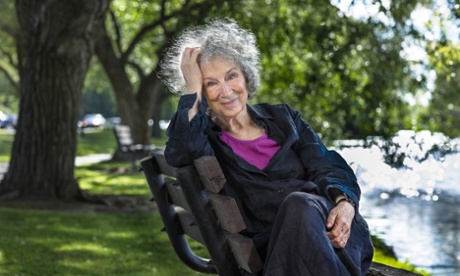
That's it for today!
Thank you to everyone who submitted questions – and to Margaret for joining us and answering so many of them.
Where did you get the idea of a best friend turning into a bully in Cat’s Eye? Is it something from real life?
 Guardian contributor
 Hello; it is soooo real life! But not only mine. You should've seen the stack of mail I got! The devious Cordelia is well-known around the world, it seems.
'I was just ignorant when I started out. I didn't see why I couldn't publish my writing … if I'd known the odds I might have been discouraged'
How did you find the confidence to believe in your writing and submit it to be professionally published, or was it something you always had?
Guardian contributor Hello: I think I was just ignorant. This was the 1950s. I was a teenager. I didn't see why I couldn't do things, so I did them. If I'd known the odds I might have been discouraged. But just this: if you don't try, nothing happens.
Updated
What was your reasoning and inspiration behind the meta-lecture at the end of The Handmaid’s Tale? What do you feel it adds to the story? (And did Offred get away and survive?)
Guardian contributor Hello: Offred herself can't know much about the genesis of the regime, so the meta-lecture fills us in; AND we know that the regime itself did not last. As for Offred, she got as far as Bangor, Maine, at least. Quite close to the Canadian border. And Maine itself was a famous rum-running destination in the 30s, so smuggling possibilities abound. There's hope,.
Do you think the story you wrote for Future Library (not to be read by anyone for 100 years) will date?
Guardian contributor
Sadira Sittampalam asks:
I am a huge fan of your work and I have read almost all your short stories. However, in recent years I’ve been noticing a decline in short story publications – which saddens me, as they are my favourite form of literature. What do you think about this decline, and how do you feel about the form itself? What purpose does it serve you? Do you think the growth of online writing platforms have something to do with this decline? And do you have any recommendations of any short stories that are personal favourites?
Guardian contributor Hello; Love the form.. and Alice Munro just won the Nobel Prize for her stories... my own recent collection is Stone Mattress. I think stories may be making a comeback.
I grew up on anthologies of stories. Mansfield, Hemingway, Porter, Checkhov, Gogol, Poe... many many more
Please tell us about the rumour of a new (and anticipated) novel based on Shakespeare’s The Tempest?
Guardian contributor Hello; yes, more than a rumour! To see the Hogarth Press Shakespeare project, go to their website. Jeanette Winterson is launching the first one – The Gap of Time _– this Wed., based on The Winter's Tale. Well done, it is! Mine will indeed be a revisiting of The Tempest. Such fun.
Updated
I’m a molecular biologist, and I loved Oryx and Crake – a fantastic novel. With the current revolution in genome editing, how do you feel the dystopia portrayed in the novel looks now in the light of the new technology? Must things necessarily turn out so wrong, or is there a more positive side to genetic engineering?
Guardian contributor Hello; thank you. Things are not fated to turn out wrong, and no one can predict the future. Genome editing could be a powerful tool for good. But any human tool is subject to misuse. This is a very powerful tool, and I am not alone in my pondering on possible negative twists and turns. I am following the ongoing story with considerable interest! (Dry land crops, coming to the fore?)
Updated
'Should my having a readership disqualify me from writing about matters of public interest? … The press is called The Fifth Estate for a reason'
When do you plan to quit lecturing Canadians about how our values are all wrong if we don’t agree with your personal viewpoints about politics? I mean, you are entitled to your views on anything, but you also need to remember that only you have a bully pulpit!
Guardian contributor Hello; Thank you for your question. It raises some important issues. First, I don't confine myself to Canadians. I write in many countries. Second, I'd like to see the place where I said anything like 'we are all wrong if we don't agree with your personal viewpoints," etc. I am quite careful to reference polls that indicate how many Canadians support (for instance) PAS. Third, do you think that my having a readership should disqualify me from writing about matters of public interest? Oddly, many people take that as a reason why ~I should do it even more
In a liberal democracy, people should indeed feel they can say what they like. But a lot of people are constrained from doing that, partly because they fear for their jobs.
I'm currently writing a piece called "Cheated of Our Public Science." Our public scientists aren't allowed to speak to the public about their findings, even though the work for the public, in the public interest, and are paid by the public. They can't write such a piece themselves.Do you think it's only my personal political view that this is wrong? Do you think there should not be any public science, and that data should be generated (and lied about) by the likes of Volkswagen? Do you think I ought not to publish the piece?
The press is called The Fifth Estate for a reason. It is a key component in a liberal democracy. The fact that it exists has allowed you yourself to make this comment.
Updated
'I based the regime in The Handmaid's Tale on history – nothing we haven't done, some time, some place'
I recently read The Handmaid’s Tale, and more than the Christian right in America it seemed to very accurately predict the likes of how ISIS and the Taliban treat women. Is that something that has occurred to you in more recent years?
Guardian contributor Hello: I think ISIS etc. are actually quite a bit worse; though same general floor plan, as it were. I have to say that I don't think the Gilead regime is Christian in any centrally meaningful sense of the term. Religious, yes; right, yes; but they do not love their neighbour as themselves, nor do they refrain from casting the first stone. I based the regime on history – nothing we haven't done, some time. some place. For more on that, see the Afterword in the book, as well as my essay on it in 'In Other Worlds: SF and the Human Imagination." I did visit Afghanistan in 1978... 6 weeks before the current cycle of wars and violence began.
Updated
Wanderlustandwallow asks:
In your recent essay in the Guardian, dated 19 September, you are talking about us “surrendering our hard-won freedoms too easily …” and that “digital technology has made it easier than ever to treat people like domesticated animals farmed for profit.” Because we leave a digital footprint wherever we go – a footprint we cannot escape because we have a social security card, a health card, a bank card and so on – shouldn’t we look to ourselves for the answers? We are making it easier for them by streaming all that information online – and the amount of information we reveal about ourselves voluntarily is stupefying. We reveal our phone numbers, birthdays, addresses, where we are, what we are doing, whom we are with, what we buy, what we eat, how much we spend and where we spend it. How and when did we become so gullible?
Guardian contributor Hello: This subject has been hotly debated for years. If you are interested, there is an org called The Citizen Lab that tracks government use of internet tech to control citizens and spy on them – around the world. Yes, our use of anything digital does indeed make us vulnerable to tracking and spying, and in some cases to arrest and execution. But it has now become very difficult to buy anything, own anything, stay in a hotel etc, without the use of cards and passwords. So I'm not sure it's just our gullibility. We're being corralled into internet fenced areas, because that's so much more convenient for certain kinds of companies. Also, it's often convenient for us. NB you can download programmes such as Ghostery that let you know when you're being tracked. And you can install – for instance – a VPN, with companies such as Avast, that secure your transactions somewhat better. But spying itself is as old as the hills... it's just become easier, online. Hint: we could go back to writing letters. Though that was never foolproof, either.
Updated
The cat in your poem Blackie in Antarctica “leaps from roof to roof wearing a dolls bonnet and a pinafore”. Can I ask if you put them on Blackie – and had the same struggle as I had when I dressed our lecherous old tom, Tiddles?
Did you know – as I read in my vets book on cats – “that all vets know tom cats will put up with anything from little girls”. I didn’t know. No wonder they never scratched us.
Guardian contributor Hello; Blackie was a real cat, as you may have gathered, but it was not I who put the doll's outfits on him. It was daughter and pals, age about 6. I myself did used to dress up my first cat, Perkolator, when I was @ 8. But she was a female cat. It is amazing how they put up with it, and dangerous for them if they ran away in the clothes... bonnet strings might have been treacherous. They may have thought of it as a kind of stroking. Attention was certainly being paid, in any case. (And I know, I shouldn't have done it.)
Updated
I realise that, in some ways, there’s not a lot to recommend our planet’s future prospects under climate change. And in the past, you’ve said that it’s now become a race between our technological development and ecological management, and the decline of the Earth’s resources and our changing environment. Has there been any progress that makes you optimistic about our chances of survival? Something that impresses me tremendously about your books is that they make me imagine a future so precisely – and you so frequently draw upon fact and nature.
Guardian contributor Hello; Funny you should mention it. If you look on the website Medium/Matter, you'll find a couple of things by me. One of them is called It's not Climate Change, it's Everything Change, which runs through some good and bad scenarios. The other is called The Carbonivore Fund, which is an imaginary fund with real tecchs in it; techs that remove carbon from the atmosphere. The list has got longer since I posted the piece. These are really hopeful. Enjoy.
Updated
Atwood on MaddAddam: 'I'm a somewhat annoying optimist … You'll notice I didn't kill everyone off at the end.'
Thank you for the MaddAddam trilogy – I loved it! Do you present us with dystopia because you’er a pessimist, or because you are an optimist and hope that by being presented with dystopia we will fight more forcefully for an utopia?
Guardian contributor Hello: You're most welcome! I am actually a somewhat annoying optimist, though of course I call it "realism." I think one (or I, anyway) writes (or write) such books so people will think through the consequences of certain kinds of choices and then not make them. All too often, we make choices short-term and are then ambushed by the results. So yes, the books are a kind of "Don't go there." You'll notice however that I didn't kill everyone off at the end. I did not for instance go into the consequences of a deadened ocean and have them all choke to death for lack of oxygen. Now that's optimism!
Updated
Did you ever have a name in mind for Ofglen in The Handmaid’s Tale? In A-level English, we had discussed whether it could be June. There was a chapter that began with the handmaids sharing their names and we met all of those named characters, except for June. It’s something I’ve always wondered about! (I know the film version used Kate, which seemed wrong to me; as with so many adaptations, however, much of it did …)
Guardian contributor Hello: I actually didn't, but the readers have pointed out the June connection, and it fits... so maybe her name is June. Well deduced, readers! I hadn't thought of that myself.
Updated
Sian Hill asks:
How did you feel about your name being on the International Baccalureate’s Prescribed List of Authors and about having A Handmaid’s Tale read by so many students all over the world who are studying English literature? My students here in Armenia would love to read your answer. You have a truly global readership in our school, as our students represent scores of different countries.
Guardian contributor Hello to Armenia! several of my classmates in the 1950s at high school were from Armenian families. One of them (Greg Kasparian) was the school captain.
It is of course very flattering that The Handmaid's Tale has been taught in so many schools, and also in the International Baccalaureate programme. I think that happens because the book generates a lot of discussion among students. The government in it is totalitarian, so I would hope some of that discussion would be about how to to avoid such governments. They tend to come in during periods of extreme social upheaval.
Updated
Yakarina asks:
Will you ever construct a dark poem again – like the red-headed single woman of 1700s Salem, who’s accused of being a witch, is hung by the neck in her cherry orchard and defies all odds by living until morning – and therefore can no longer be accused of being a witch? She then collected black cats in earnest.
This beautifully twisted bit of work has changed my life forever. Whenever I am sad, I think of her, hanging all night in her orchard, quietly looking at the stars and thinking …
Will you please write more poetry?
You are such a creative genius.
Guardian contributor Hello to everyone and thank you for your questions. I have chosen some of them for variety, but I hope to get around to more of them as well.
The poem sequence called "Half-hanged Mary" was based on a real person, Mary Webster, who was indeed left hanging all night and was still alive in the morning. This was possible because the drop – which breaks your neck – had not yet been invented. So Mary Webster must have had a tough neck, or possibly she was very thin. My grandmother sometimes said she was an ancestor of ours. (Her family name was Webster.) Mary Webster is also one of the people to whom The Handmaid's Tale is dedicated. Will I write more poetry like this? I don't know.. but you might also like "Marrying the Hangman," also based on a real woman, this time in early Quebec.
Updated
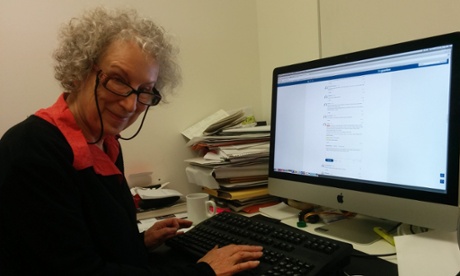
Margaret Atwood is with us now
Here she is at Guardian HQ in London.
Post your questions for Margaret Atwood
After emerging in the early 1970s, Margaret Atwood is sometimes dubbed a feminist writer. But while her explorations of female identity in the likes of Surfacing and Cat’s Eye are fierce, no one catch-all term can possibly sum her up.
She might equally be thought of as a science-fiction author, for her eerily possible fundamentalist dystopia in The Handmaid’s Tale and her futuristic Oryx and Crake trilogy, set in a world where genetic engineering has created a new type of human. She has written historical fiction, like the Booker-winning The Blind Assassin; she is also a poet, essayist, children’s author, librettist and inventor.
New novel The Heart Goes Last is similarly resistant to category. “Jubilant comedy of errors, bizarre bedroom farce, SF prison-break thriller, psychedelic 60s crime caper: The Heart Goes Last scampers in and out of all of these genres,” wrote M John Harrison in the Guardian.
Atwood is joining us to answer questions about it and anything else in her career, in a live webchat from 1pm BST onwards on Monday 28 September. Post your questions in the comments below, and the ten that she deems the best will receive a signed ebook cover of the novel.
Updated






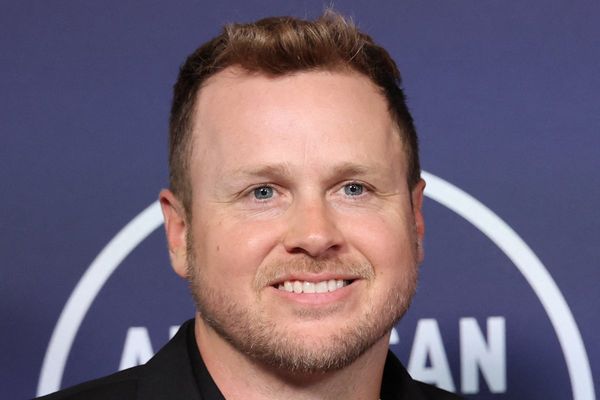







Hello: The person whose keyboard I have been using at The Guardian is telling me that it's time and he wants his life back... so thanks very much for all your questions. They were smart and varied and I wish I could have answered all of theeeeeeemmmmm... aargh!