2009
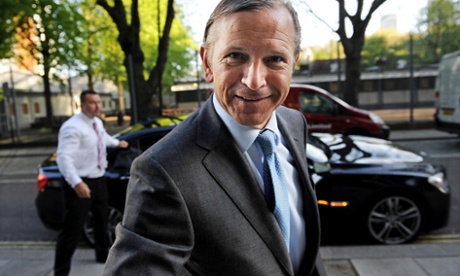
18 November – M&S announces that Marc Bolland will join as chief executive from Morrisons, where he increased sales and profits during three years at the supermarket chain. M&S shares rise more than 5% as the City bets the Dutch-born retailer has what it takes to revive the group. Bolland says the job is too big to pass up:
It was an opportunity that passed by which I could not miss.
2010
1 February – With Bolland yet to arrive, M&S reveals it agreed a £15m deal to lure him from Morrisons, including £7.5m compensation for bonuses and shares he had given up and a £4m “exceptional” share award. The large golden hello adds to uproar about bosses’ earnings as living standards fall.
4 May – Bolland joins M&S with expectations high that he can find a way through M&S’s problems, including ageing customers and competition from rivals such as Next in clothing and Waitrose in food. The chain’s woes are apparent in its share price, which has halved in the past three years.
7 July – Bolland announces his first set of trading figures and warns that George Osborne’s recent emergency budget is likely to dampen consumer spending. His downbeat comments send M&S shares down, despite the company notching up its third quarterly sales rise in a row.
14 July – M&S suffers a rebuke over Bolland’s pay at its annual meeting. More than 16% of shareholder votes failed to back the company’s remuneration report but the board holds firm on his contentious package.
10 November – Bolland unveils his strategy for M&S, promising to spend an extra £300m a year for three years to revamp UK stores and increase sales by £2.5bn. He scraps a clothing line for the over-50s, scales back stocks of branded food and ditches a push into selling appliances such as TVs. He also announces international expansion plans, nine years after M&S shut its European stores.
2011
6 April – Bolland warns that higher living costs are eating away at already low consumer confidence. Food sales rose 3.4% but like-for-like sales of general merchandise, including clothes, fell in its fourth quarter.
24 May – Annual profits up 13% narrowly beat expectations but general merchandise sales fell sharply towards the end of Bolland’s first full year in charge.
8 November – Pressure starts to build on Bolland as he reports weak sales just before Christmas trading begins. He says M&S was forced to cut prices to compete with rivals’ offers. Sales at stores open a year or more register their first quarterly fall for two years as like-for-like general merchandise revenue drops 2.5%.
2012
22 May – Annual profits fall for the first time in three years. Bolland slashes sales targets set out early in his tenure, blaming tough high street conditions caused by the stagnant economy.
Realism has prevailed. People don’t like targets you can’t reach.
10 July – Kate Bostock leaves role as head of general merchandise and Bolland brings in Belinda Earl, the high-profile former Debenhams boss, as style director to overhaul womenswear.
2013
10 January – After grim Christmas trading figures are leaked, Bolland faces questions about his future. He admits that a 3.8% fall in like-for-like general merchandise sales is “not yet satisfactory”. Persistently poor sales of womenswear are now a thorn in his side.
We are very confident on the strategy, and I will be there next year.
12 January – Pressure on Bolland increases when David Cumming, the head of Standard Life Investments, a top 10 M&S shareholder, says his job is under threat unless the clothing business starts to revive soon:
I think the market will wait to see how that range – which doesn’t really come through until six to nine months – is going to work. If that is poor then he’ll be under a lot of pressure.
11 April – M&S reports its seventh straight quarter of falling clothing sales as it loses market share but says it still has the support of shareholders. Rising food sales are Bolland’s saving grace as investors, including Nick Moakes of the Wellcome Trust, give him more time:
They have had some bad screwups, but that said, any company can have that, and it’s about how they react that’s important.
5 November – Bolland pleads for more time after quarterly women’s clothing sales fall again, though not as badly as expected:
This is a journey on quality and style that will take a few collections to get a positive momentum behind it.
2014
9 January – Clothing sales miss M&S’s own expectations at Christmas as Bolland blames rivals for forcing him into deep discounts on fashion lines. M&S’s performance looks bad compared with Next, which had record Christmas sales and withstood pressure to cut prices.
We tried to hold it but the market went extremely promotional.
20 March – M&S’s decline is underlined as Next reports soaring profits that beat M&S for the first time.
20 May – Bolland misses three of four sales targets he set out in 2010. He says turning M&S round after decades of underinvestment was a bigger job than he had thought. Staff bonuses, including Bolland’s, are scrapped after a third consecutive year of falling profits as clothing continued to struggle. Clive Black, an analyst at Shore Capital said:
M&S has consistently underestimated how much damage has been done to its clothing brand over the years.
8 July – In a trading update, signs of growth in womenswear are overshadowed by problems at M&S’s new website, which hit homeware sales. Bolland faces angry shareholders at M&S’s annual general meeting, including Michael Brown, a former employee:
Each [AGM] your promises have filled us full of confidence for the forthcoming year, only to return a year later full of disappointment.

5 November – M&S shares jump almost 10% after Bolland reports the first increase in profit for four years. Clothing sales were affected by unusually warm weather in the first half of its financial year that hit the wider sector but Bolland says the underlying signs are encouraging:
Consumers are coming back to us and saying: ‘M&S has got the style back.’
2015
8 January – Bolland blames distribution trouble, mild weather and fierce discounting by competitors for bad Christmas trading figures. General merchandise notches up four years of quarterly sales falls.
12 January – Standard Life’s Cumming intervenes again to question Bolland’s future at M&S:
Marc Bolland has been there for some time, almost five years, so I think the chairman and the senior independent director are probably asking themselves whether his scorecard is acceptable, and they should be asking M&S shareholders the same question.
2 April – After four years of trying, M&S manages to increase quarterly sales of clothing as shoppers warm to its new range, including an A-line suede skirt.
Our spring-summer collection has done very well. Customers have reacted very positively to it and it’s been bang on trend.”
20 May – M&S announces its first annual profit rise for four years, increases its dividend and says it will return £150m to shareholders. Bolland hails an “outstanding year in a difficult market” and says he will be in the job in a year’s time:
Absolutely - is that clear enough?