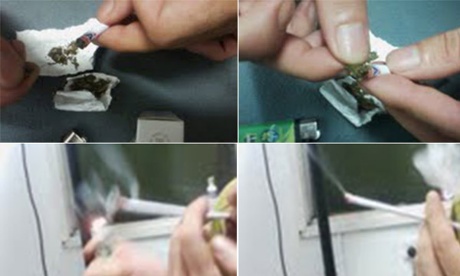
A third of asylum seekers in detention on Manus Island are regularly smoking marijuana, the drug swapped for cigarettes thrown over the detention centre fence, or smuggled in by security guards, it has been alleged.
A detainee on the island has told Guardian Australia that a lucrative black market in the drug exists on Manus, and bored, miserable detainees are easy targets for dealers.
“In the hard situation of prison, many people are living a hallucination life,” the detainee said.
“It is a bitter fact that more than 10% of asylum seekers use marijuana every night and about 30-40% from time to time.”
Detainees usually make the exchange at sunset, throwing packets of cigarettes over the fence.
In exchange, dealers throw a few grams of wild marijuana, wrapped in foil, back over the detention centre perimeter.
“Sometimes, local officers get the drugs into the prison.”
Detainees smoke the drug in groups in their rooms, rolling it into joints or fashioning homemade bongs.
“They put the drug into funnels they make with soda cans and smoke it together just to get some relief from the suffering situation of prison”.
The detainee told Guardian Australia many inmates were dependent on the drug.
When marijuana couldn’t be sourced, some displayed signs of withdrawal, while others, he said, had psychotic episodes after smoking the drug.
Those whose behaviour was noticed by guards, and whose health deteriorated sharply, were placed in solitary confinement in the isolation unit within the camp.
“An Iranian asylum seeker was in [isolation] for some days – he thought he was God.
“His friends said that he had used marijuana for six months every day in Oscar Camp. One day he found himself as a prophet after using the drug.”
Possession and use of marijuana is illegal in Papua New Guinea, but the drug is widely grown and easily distributed across the archipelago.
There are currently 1,060 men held in immigration detention on Manus Island.
The office of the immigration minister, Scott Morrison, declined to comment on reports of drug use in the Australian government-run facilities.
However, the minister did say on Thursday that on Nauru – Australia’s other external detention centre – detainees will be free to move around the island, outside the camp boundaries, from early next year.
Detainees will still eat, sleep and receive medical care inside the centre.
“The ‘open centre model’ will permit freedom of movement of transferees across Nauru,” Morrison said.
“The government of Nauru is keen to welcome refugees into their community. It will provide assistance to the Nauru community to understand any racial or cultural differences of refugees and the talents and benefits the individuals being to Nauru.”
There have been several instances of refugees being seriously assaulted by Nauruan locals in the past month.
Four child refugees, all without parents on the island, were beaten by a gang of locals last week.
One of the children was hospitalised with injuries.
Another man was taken to hospital after local men threw rocks and kicked him, while others have received death threats because they had jobs that locals believed should be held by Nauruans.
At least one asylum seeker on Nauru who was found to be a refugee by Australian authorities has reportedly refused to claim his visa because he did not want to leave the detention centre and was too frightened to live in the Nauruan community.