Manta ray being driven to extinction by Chinese medicine demand – in pictures
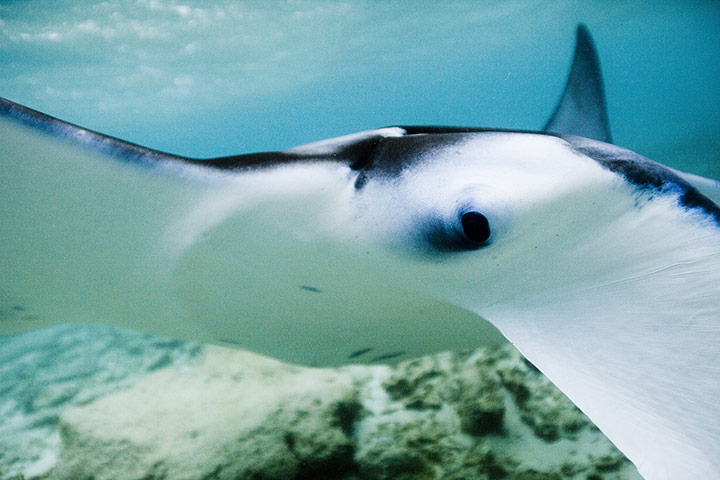
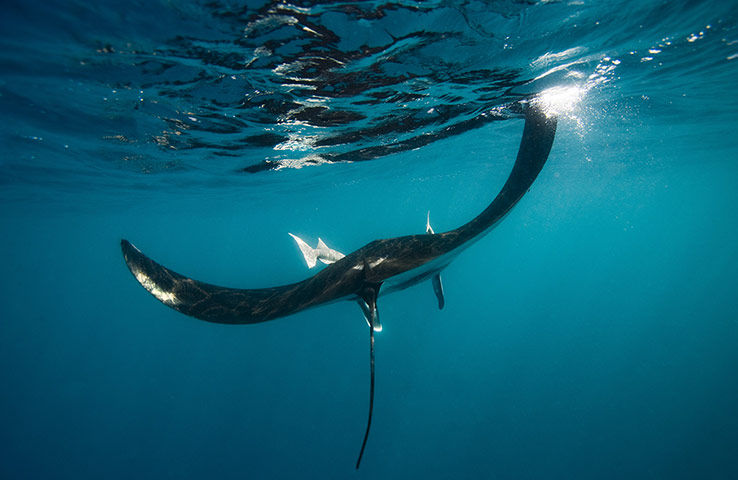
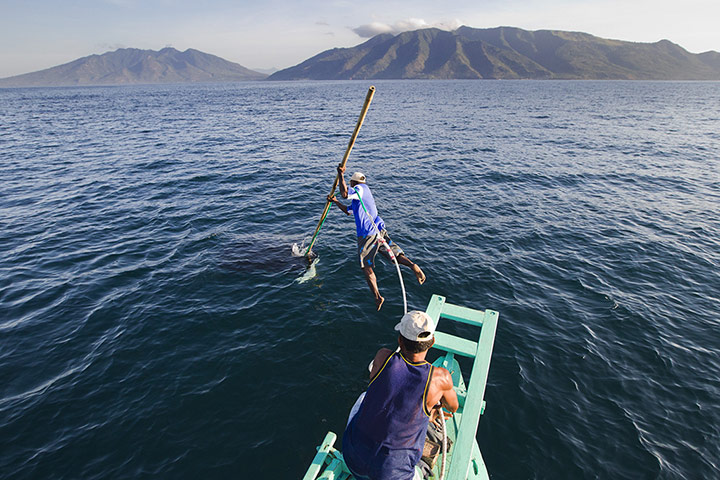
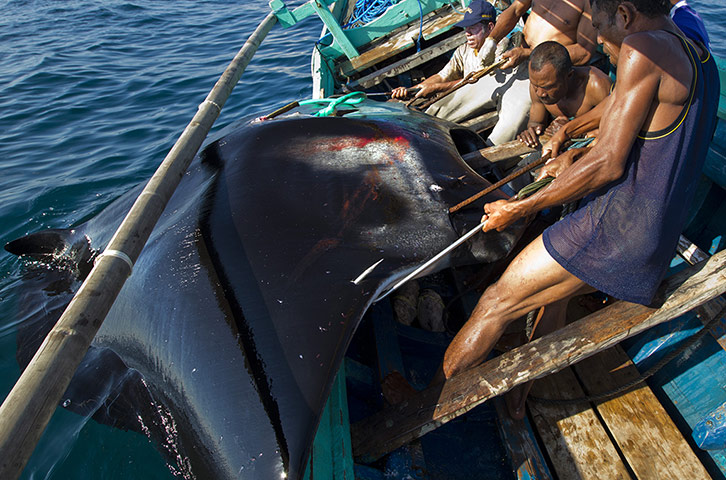
There is growing demand for products from the manta ray and its close cousins, the mobula or devil ray, (collectively mobulid rays)Photograph: Paul Hilton/Manta Ray Of HopeA oceanic manta ray swims in the waters off Indonesia. The water is so calm the ray's reflection can be seen on the surfacePhotograph: Paul Hilton/Manta Ray Of HopeA large manta ray is speared for its gills and meat in IndonesiaPhotograph: Paul Hilton/Manta Ray Of Hope
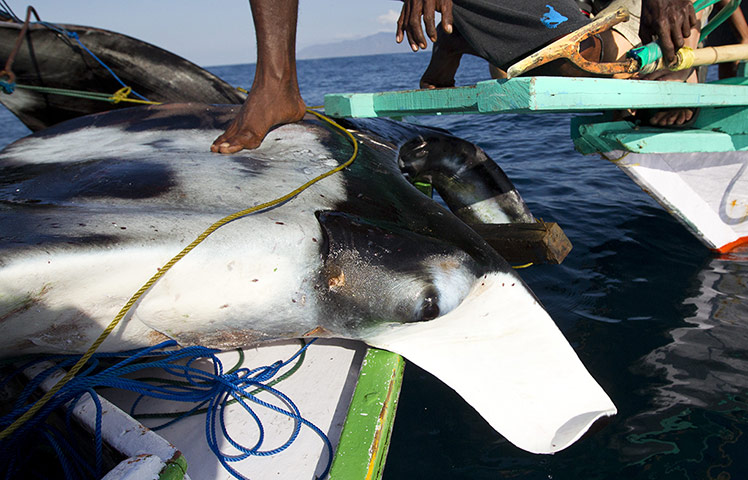
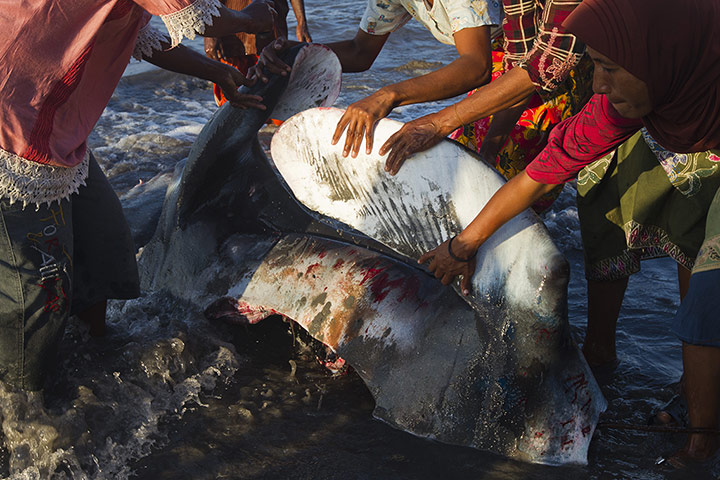
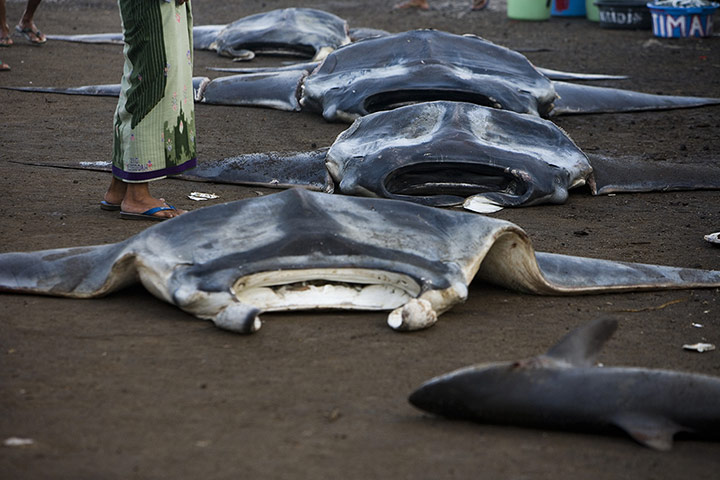
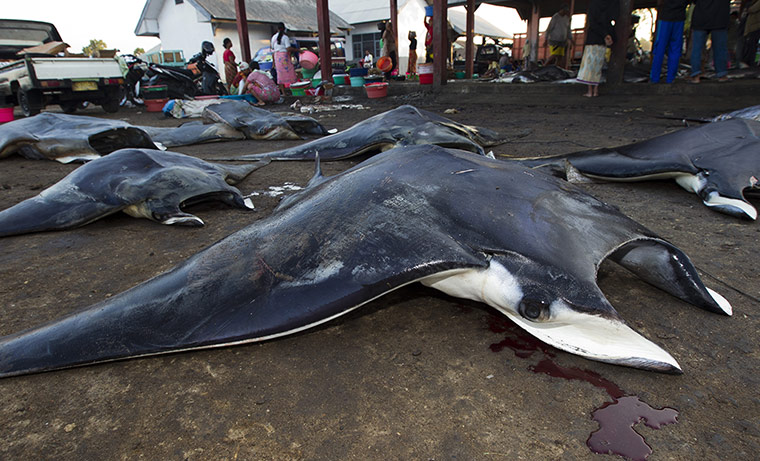
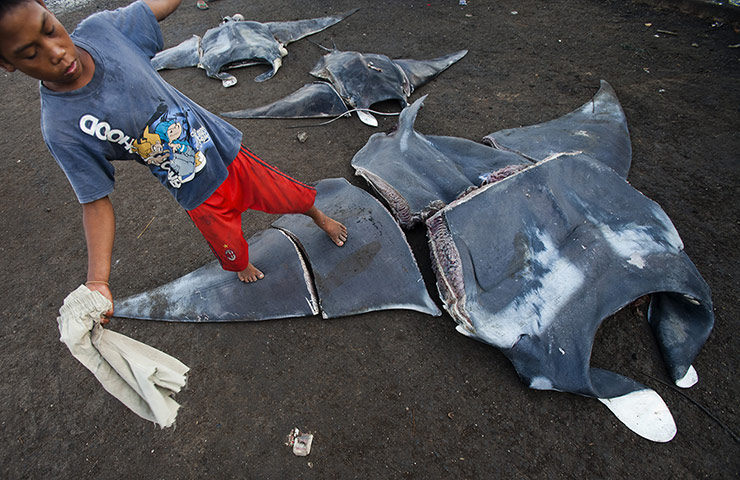
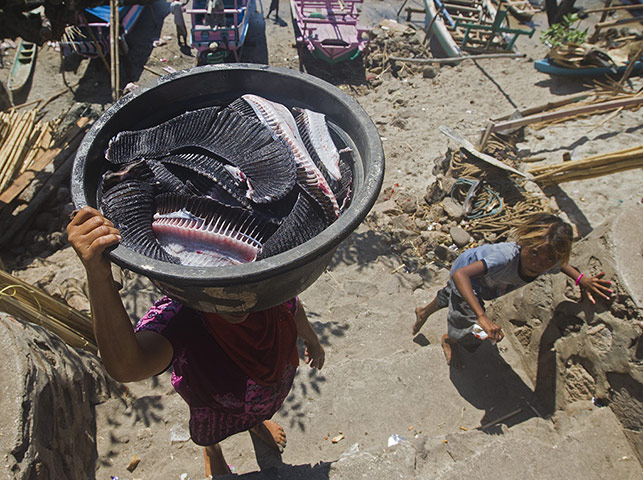
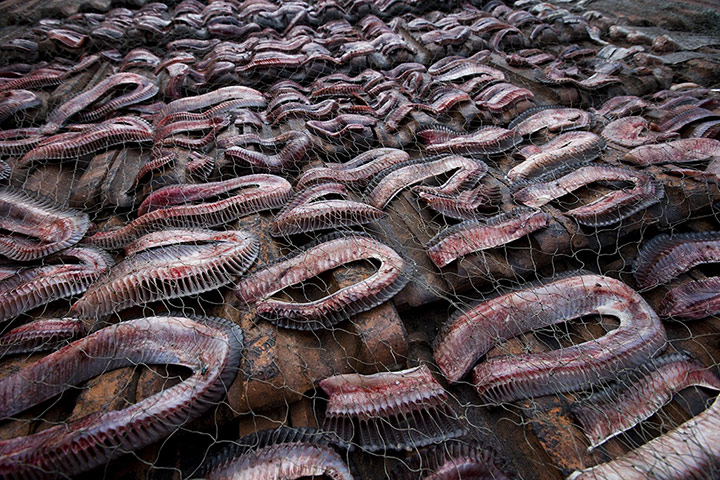
The manta ray is pulled up alongside the boatPhotograph: Paul Hilton/Manta Ray Of HopeThe struggle could last 30 minutes, while the fishing crew chant an ancestral song that they believe will stop the manta ray from escapingPhotograph: Paul Hilton/Manta Ray Of HopeThe manta ray's wings and head are cut off and its gills removed. A mature ray can yield up to 7kg of dried gills that retail for up to £300 per kilo in a market in ChinaPhotograph: Paul Hilton/Manta Ray Of HopeThese developments are especially troubling because manta rays grow slowly, take many years to mature, and typically produce only one pup per pregnancyPhotograph: Paul Hilton/Manta Ray Of HopeLarge manta rays are lined up at a fish market in Indonesia. Growing demand for products from the manta ray and its close cousins, the mobula or devil ray, (collectively mobulid rays) along with decreased fishery income due to the wide scale depletion of regional shark populations, has transformed small-scale subsistence mobulid ray fisheries into global commercial export businessesPhotograph: Paul Hilton/Manta Ray Of HopeManta and mobula rays are valued by the dried seafood industry primarily for their gill rakers that the animals use to filter feed. Gill rakers are dried and sold in Asian markets, and are purported to speed recovery from fevers. Some practitioners interviewed as a part of this report, state however, that gill rakers are not a legitimate component of traditional chinese medicine. Nevertheless, use of gill rakers in a pseudo-medicinal tonic, driven by direct marketing to consumers by importers in Guangzhou, continues to drive a strong trade in the dried productPhotograph: Paul Hilton/Manta Ray Of HopeFor years this trade has continued, largely undocumented and unregulated, with little known about its consequencesPhotograph: Paul Hilton/Manta Ray Of HopeGill rakers from a large manta ray. The gills will be dried and sent to China for the traditional Chinese medicine market. In the past decade, unchecked fisheries have had significant consequences on regional mobulid populations. Some of these fisheries are in rapid decline and in certain regions, such as the Sea of Cortez, the oceanic manta ray has largely disappeared. In other areas, where manta rays are protected, populations are currently stablePhotograph: Paul Hilton/Manta Ray Of HopeMobula gills are layed out to dry in the hot Sri Lanka sunPhotograph: Paul Hilton/Manta Ray Of HopeManta and mobula gills for sale in the dry seafood area of Guangzhou, ChinaPhotograph: Paul Hilton/Manta Ray Of Hope
Sign up to read this article
Read news from 100’s of titles, curated specifically for you.