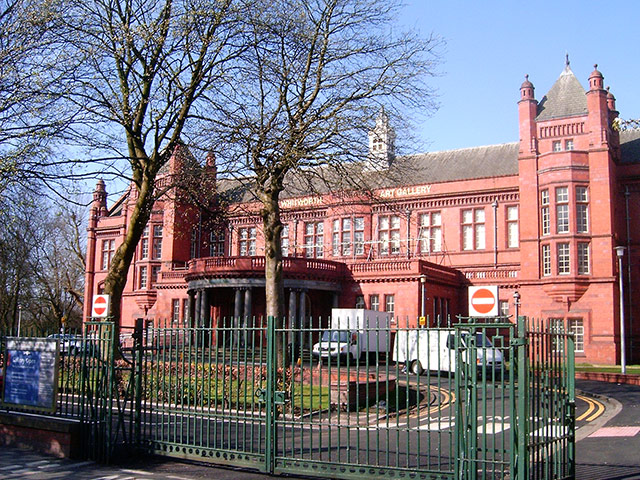
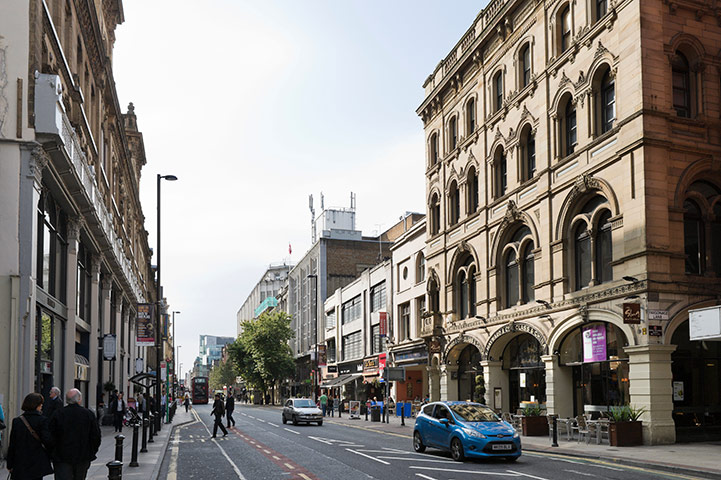
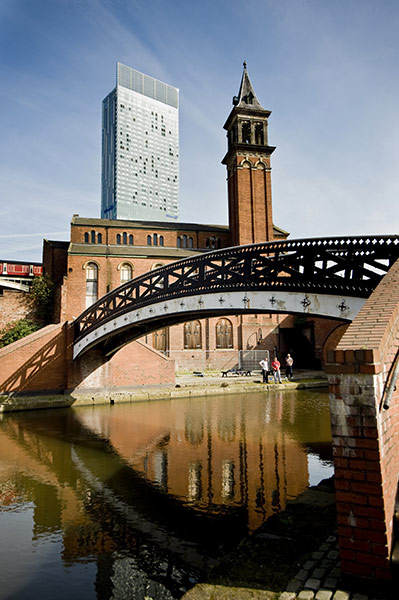
Whitworth Art Gallery (1908), Oxford Road I saw contemporary art here for the first time in the mid-70s – a series of Marilyn portraits by Warhol. It's a formative memory for me, because it was such a radical thing to see in Manchester. It remains a fascinating gallery – it's still very much on the agenda – and where Projections: Works from the Artangel Collection will be shown during the festival.Photograph: Public DomainDeansgateKendal Milne Building (1939) is quintessentially art deco. When I was a child the department store belonged to Harrods and was quite sophisticated. Behind it is a very charming little enclave called Spring Gardens. And in the other direction, George Best had his boutique in the 60s. That feels significant to me because Best was the first pop-star footballer. The relevance of that today is profound, especially in Manchester.Photograph: Ian Dagnall / Alamy/AlamyCastlefield This is the site of a Roman fort, from which Manchester gets its name. One of the first urban heritage sites, it is also a confluence of waterways: where the Rochdale and Bridgewater canals meet the river Irwell. I remember Tony Wilson took me there one afternoon, to the point where they intersect, and said: "This is where the industrial revolution started." The impressionist Adolphe Valette produced paintings of the canals that you can see in the Manchester Art Gallery.Photograph: Dosfotos/Getty Images/Axiom RM
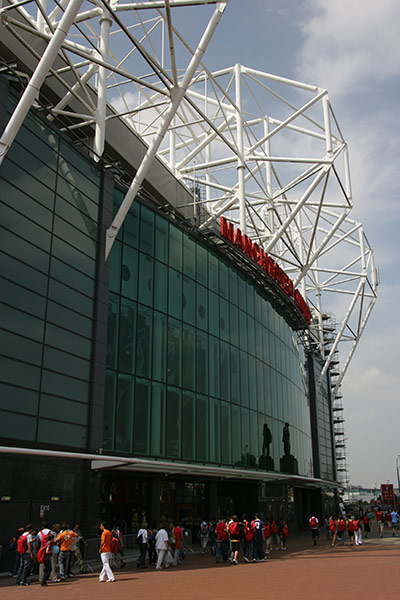
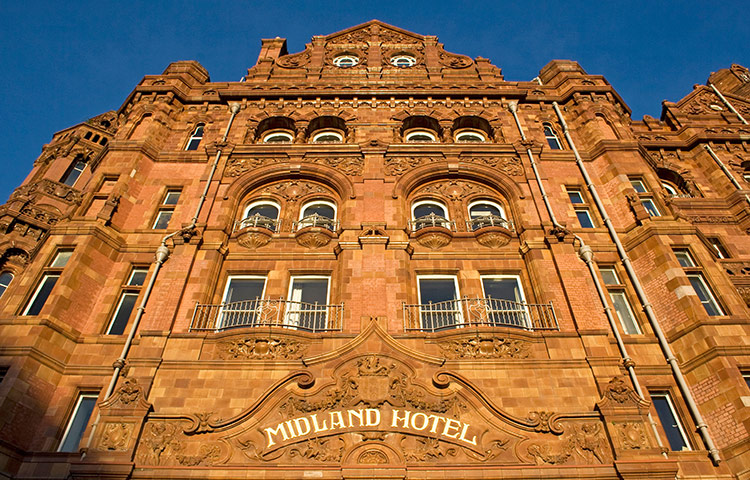
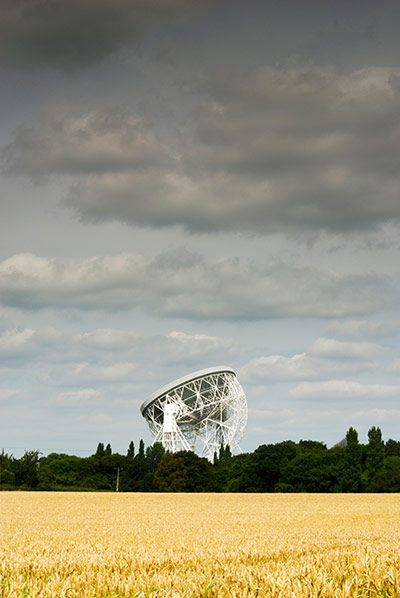
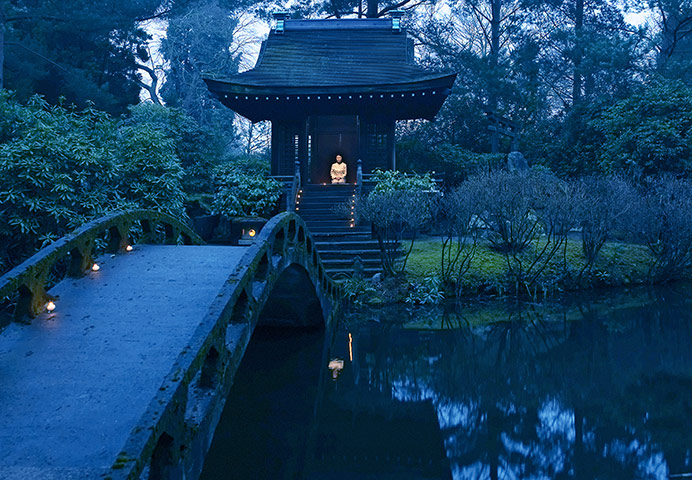
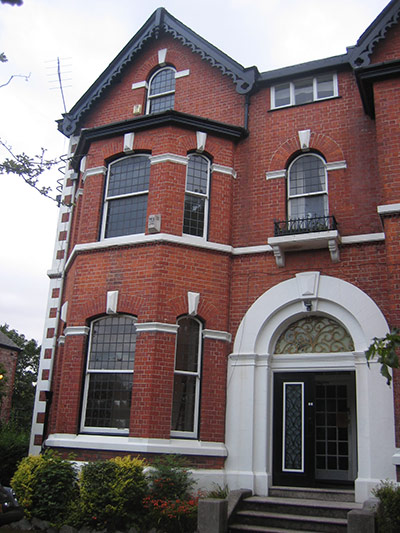
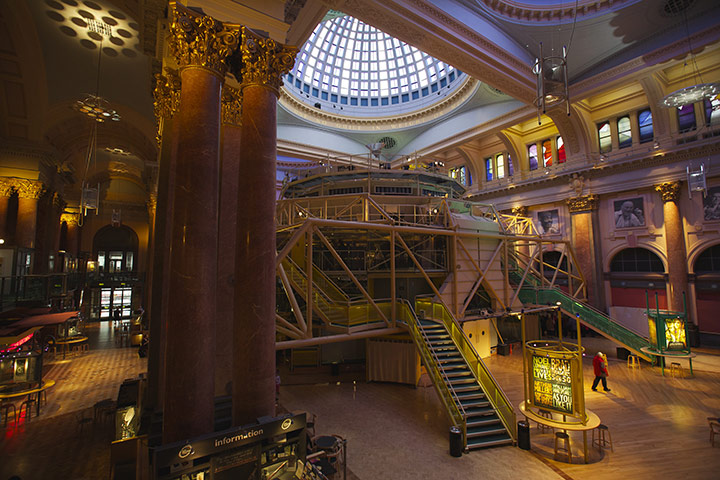
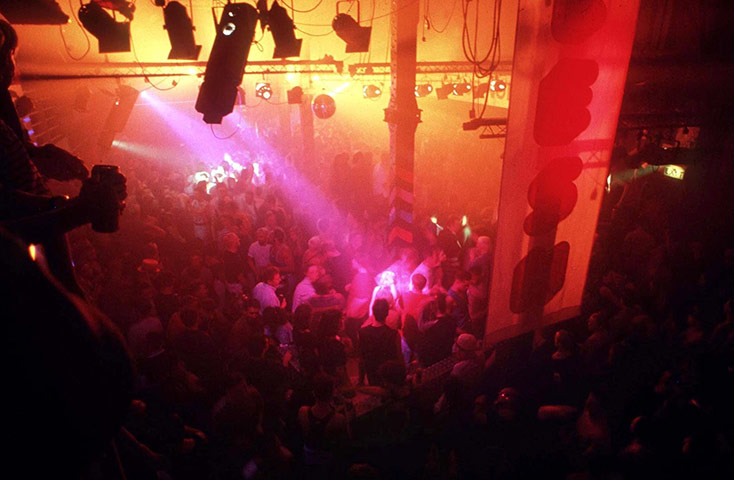
Old Trafford (1910) and Eastlands (2003) Old Trafford is something to behold. They call it the theatre of dreams, and it is a football stadium on an industrial scale. Located in what until the mid-20th century was still the biggest industrial park in Europe, it was originally a place of entertainment for the workers. There was almost a sense of duty for the players, to give this very large working community something to look forward to on a Saturday. Over at Manchester City's Eastlands, a whole new era is developing: through sport and architecture there is huge change going on.Photograph: UK City Images / Alamy/AlamyPetersfield: Central Station (1880), the Free Trade Hall (1853) and the Midlandhotel (1903) Central Station was one of the earliest train stations. The Free Trade Hall was where the Bob Dylan concert was held when someone shouted "Judas!". The former Midland hotel was a grand establishment. Tthese three buildings form the boundary around Petersfield, where the Peterloo Massacre happened, and the trade union movement originated, so it's particularly hallowed ground.Photograph: Ian Canham / Alamy/AlamyJodrell Bank Observatory (1945) in Cheshire You might not know it, but you pass the world's first radio telescope on the train from London, quite close to Macclesfield. I'm fond of it because I'm sure it's where the image on the cover of Joy Division's Unknown Pleasures originated. Jodrell Bank located the first pulsars, and the Unknown Pleasures image is the radio signal from a pulsar. Jodrell Bank announced to the world the orbit of the first satellite, launched by the Russians; they knew before the Americans did.Photograph: Tony Eveling / Alamy/AlamyManchester housing Parks such as Tatton were very important to me. To understand Manchester you have to go to some of the outlying areas. In stark contrast to the affluent semi-rural surrounding areas, there is a street in Ancoats that was the first row of worker housing with plumbing. It was proudly called Sanitary Street, but has now been abbreviated to Anita Street. New Islington is where Urban Splash is trying to reinvent our understanding of social housing.Photograph: Britain OnView/Getty Images/Britain on View 86 Palatine Road, M20 This was the first-floor flat belonging to Alan Erasmus where Factory Records was founded and run for many years. It's residential, so you can only walk by and look at it. It's an early 20th-century large residence, typical of the sort that were converted into apartments. I think Alan may still have some connection with the property. It feels very familiar to me.Photograph: WikipediaRoyal Exchange Theatre (1792/1976), St Ann's Square In the mid-70s, a modern crucible was built in a late 18th-century building – not quite brutalist, more high-tech: a theatre in the round almost hanging like a lunar craft in a neo- classical exchange hall, with supporting steel struts going up into the marble-clad columns. It was this juxtaposition that had a really profound effect upon me when I first saw it while at art college. It was refurbished after the IRA bomb in 1996, but the structure remains the same.Photograph: Christopher Thomond/Christopher ThomondThe Haçienda (converted 1982, demolished 2002), Whitworth Street This is now of course the Haçienda Apartments. I haven't been inside; I think one can pass by and only wonder. The conversion [to apartments] is a cultural oversight on a historic scale. For me, what the Haçienda represents is the first statement of regeneration in a former industrial city, through which it becomes the post-industrial city. Its highly important interior is quintessentially Ben Kelly, who worked with an industrial aesthetic. Ben had the same autonomy in expressing his vision at the Haçienda as I had in creating record covers. I see Factory as an autonomous collective: free spirits, uncompromised. Photograph: REX FEATURES/REX FEATURES
Sign up to read this article
Read news from 100’s of titles, curated specifically for you.