Tests on two patients suspected of having the Middle East respiratory virus syndrome (Mers) have proved negative, Public Health England has said.
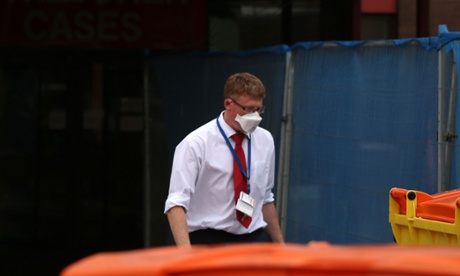
The A&E department at Manchester Royal infirmary was closed for more than two hours on Monday due to fears of a possible outbreak of the disease, which has killed at least 449 people globally since it was first identified in Saudi Arabia in 2012.
A&E reopened after the patients were isolated for treatment. One was subsequently moved to North Manchester general hospital, with bosses saying there was no significant risk to public health.
The cases were “separate and unrelated”, said Rosemary McCann, PHE’s north-west deputy director of health protection. In the UK, 316 people have been tested for the virus since 2013. All have been negative.
Mers is passed between animals – usually camels – and humans. It is caused by a coronavirus (Mers‐CoV), a large family of viruses that can cause diseases ranging from the common cold to severe acute respiratory syndrome (Sars). Most recent cases of Mers in Saudi Arabia were in patients who had a history of drinking raw camel milk and close contact with the animals.
McCann said the risk in the UK remains very low. “Although cases continue to be reported from the Middle East, no new cases of Mers-CoV have been detected in the UK since February 2013,” she said.
“There is presently no evidence of sustained person-to-person transmission of Mers-CoV, and the risk of contracting infection in the UK remains very low. The risk to UK residents travelling to Middle Eastern countries may be slightly higher than within the UK, but is still very low.
“Limited onward transmission in South Korea has been associated with healthcare settings, and the risk to UK tourists visiting South Korea is also considered to be very low.”