

Dogs have been man's best friend for a very, very long time. Much longer, it turns out, than scientists had previously been able to prove.
Two new separate studies have uncovered the oldest known genetic evidence of domesticated dogs across Europe and Asia. These date back to between 15,800 and 14,000 years ago - roughly 5,000 years earlier than other genetic records suggested.
“This is the earliest clear genetic evidence we have for domestic dogs,” Pontus Skoglund, co-author of one of the studies and a geneticist at the Francis Crick Institute in London, UK, said.
The studies, both published in the journal Nature, analysed ancient DNA from the remains of over 200 dogs and wolves. They identified key remains from sites across Europe and Asia, including Pınarbaşı in central Türkiye and Gough’s Cave in southwest England.
Collectively, their findings reveal a clearer picture of dogs' origin stories - and their integration into human communities.
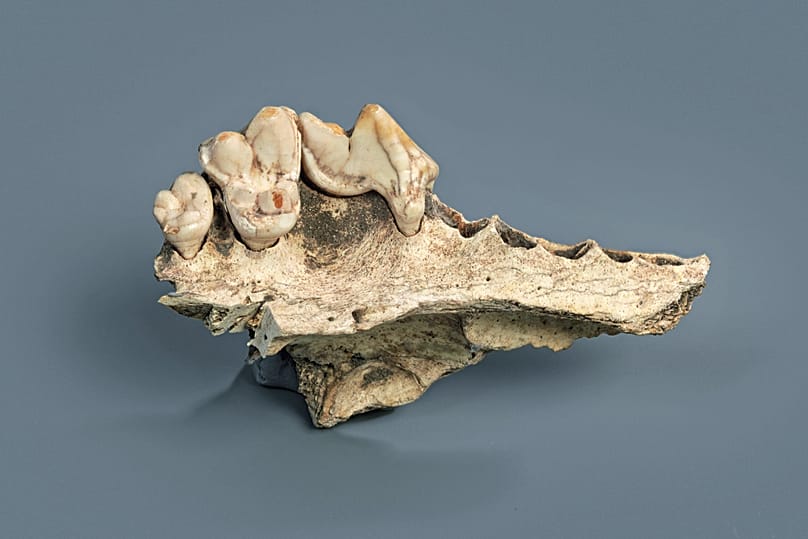
Scientists have long known that dogs descended from grey wolves during the last Ice Age, but the exact timeline of this transition - and how they initially looked - has remained a mystery.
Advancements in studying ancient canine DNA - where scientists isolate the dog-specific bits - is now helping to bring clarity.
The research also highlights that there has always been a unique human-dog bond, with chemical analysis of remains found in Türkiye suggesting that ancient dogs were eating fish - the same diet as nearby humans.
At Gough’s Cave, researchers found a dog jawbone that had been carefully processed after death. Cut marks show the animal was butchered, but the remains were treated in ways similar to human bodies at the site, where bones were also processed and arranged.
This overlap suggests dogs were not treated as ordinary animals, but held a closer, possibly symbolic or social role.
“They are humanity’s best friend, alongside our societies for the last 16,000 years and will continue to in the future,” said Lachie Scarsbrook, a study co-author from the Ludwig Maximilian University of Munich.