A lawyer whose husband died 10 months after an “out of the blue” brain cancer diagnosis credits counselling for helping to rebuild her life.
Helen Taylor, 57, from Chichester, West Sussex, said her husband Nick Taylor never went to the doctors, but after he started suffering from deja vu and lost his sense of direction, he had a scan and was diagnosed with glioblastoma, a fast-growing type of brain tumour, in July 2018.
Helen said they were both “utterly devastated” to learn the prognosis was terminal from the outset and they were told the average life expectancy was about one year.
Nick underwent surgery just over a week later and had radiotherapy, followed by a second surgery in January 2019.
He died in May 2019, aged 62, just 10 months after his diagnosis.
Helen said she experienced a “tsunami of emotions” while navigating grief, but through counselling she found the “freedom” to talk, laugh and cry – and she wants to encourage others to “get the help” they need.
“Grief isn’t something that ever leaves you, but grieving is a part of life,” Helen said.
“There’s a very moving saying that grief is the price we pay for love, which I think says it all.
“We grieve because we are alive and because we love… and it’s important to say that the person that you have lost is not lost to you.
“Nick still sits on my shoulder, the relationship endures, and we’re all but memories in the end.”
Helen, who has three children from a previous relationship, met Nick through the Royal Automobile Club, when she was 37.
They formed a friendship before it developed romantically, and Helen said they had “lots and lots of fun” together.

“Nick was one of those people who, when he went into a room, he would energise the whole room… he was a people magnet,” she explained.
“He was such fun, he had the most wicked sense of humour, and he had a real twinkle in his eye.”
However, in the summer of 2018, Nick “wasn’t quite himself” – he started suffering from deja vu and lost his sense of direction.
Helen initially thought “he was just stressed from work”, as they were “subtle” changes, but his symptoms progressively worsened.
Two days after a scan in July 2018, the couple were told Nick had glioblastoma and it was terminal – and when Helen asked whether he would be here for Christmas, she said the surgeon could not answer her.
“It was a particularly aggressive cancer, glioblastoma, so it was a devastating prognosis,” Helen explained.
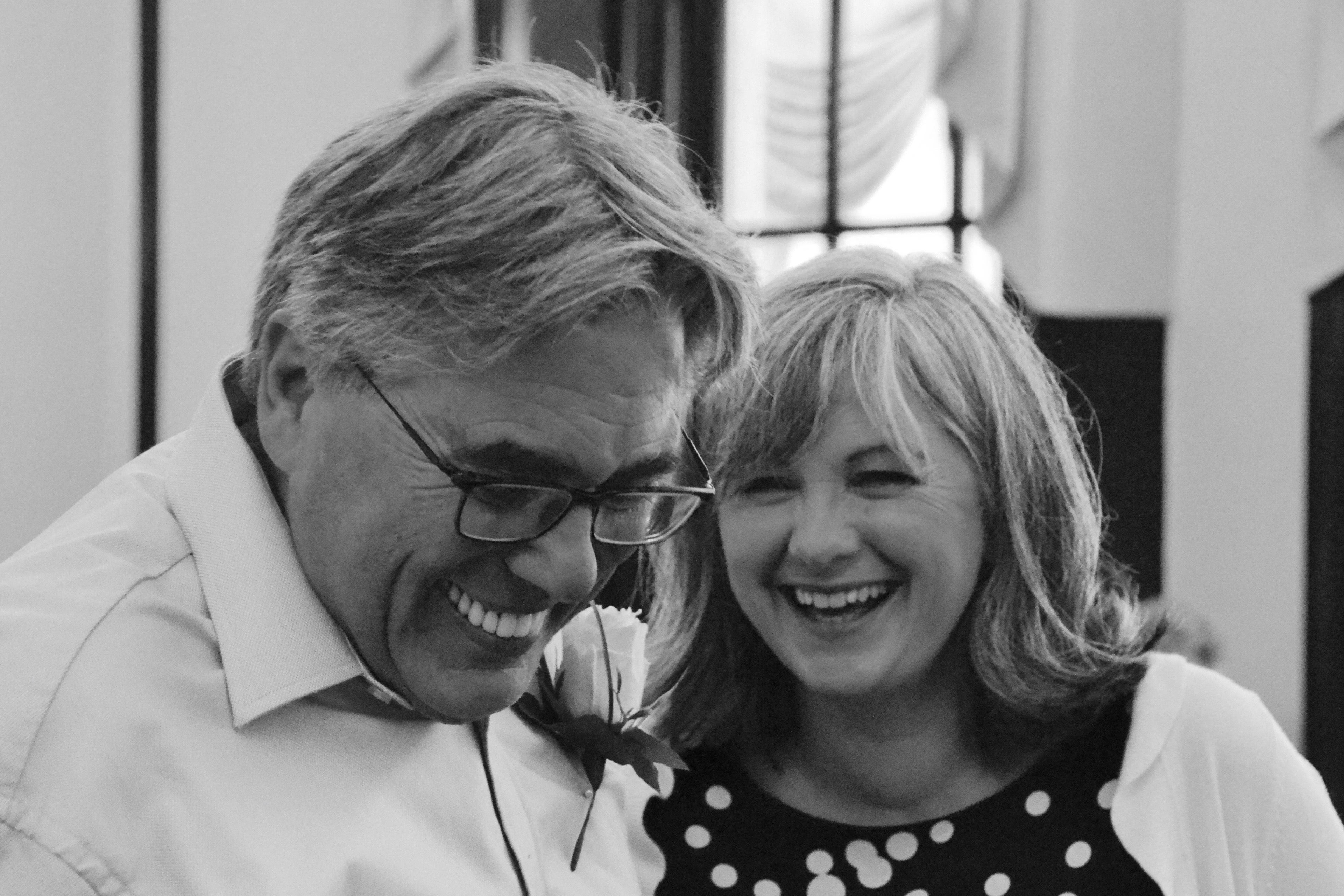
“It came totally out of the blue… and the hardest thing, I think, for both of us was the lack of hope.
“We then, almost immediately, got tipped into surgery, radiotherapy, more surgery, more hospital stays, while also trying to live our best life.
“It just seemed impossible that a man like him could be taken down by cancer in this way. It was brutal.”
At this point, the couple had been looking forward to Nick’s retirement and Helen’s children leaving home, so with his diagnosis, he asked her, “Darling, look, what can I do for you?”
Helen replied, “Come on, let’s do it. We need to get married”, and they tied the knot on 24 hours’ notice in August 2018, surrounded by loved ones, and she said it was “completely joyous”.
While undergoing surgeries and radiotherapy, which caused side effects of drowsiness, sight loss and memory loss, Helen said Nick “remained himself” and his sense of humour was “undimmed”.
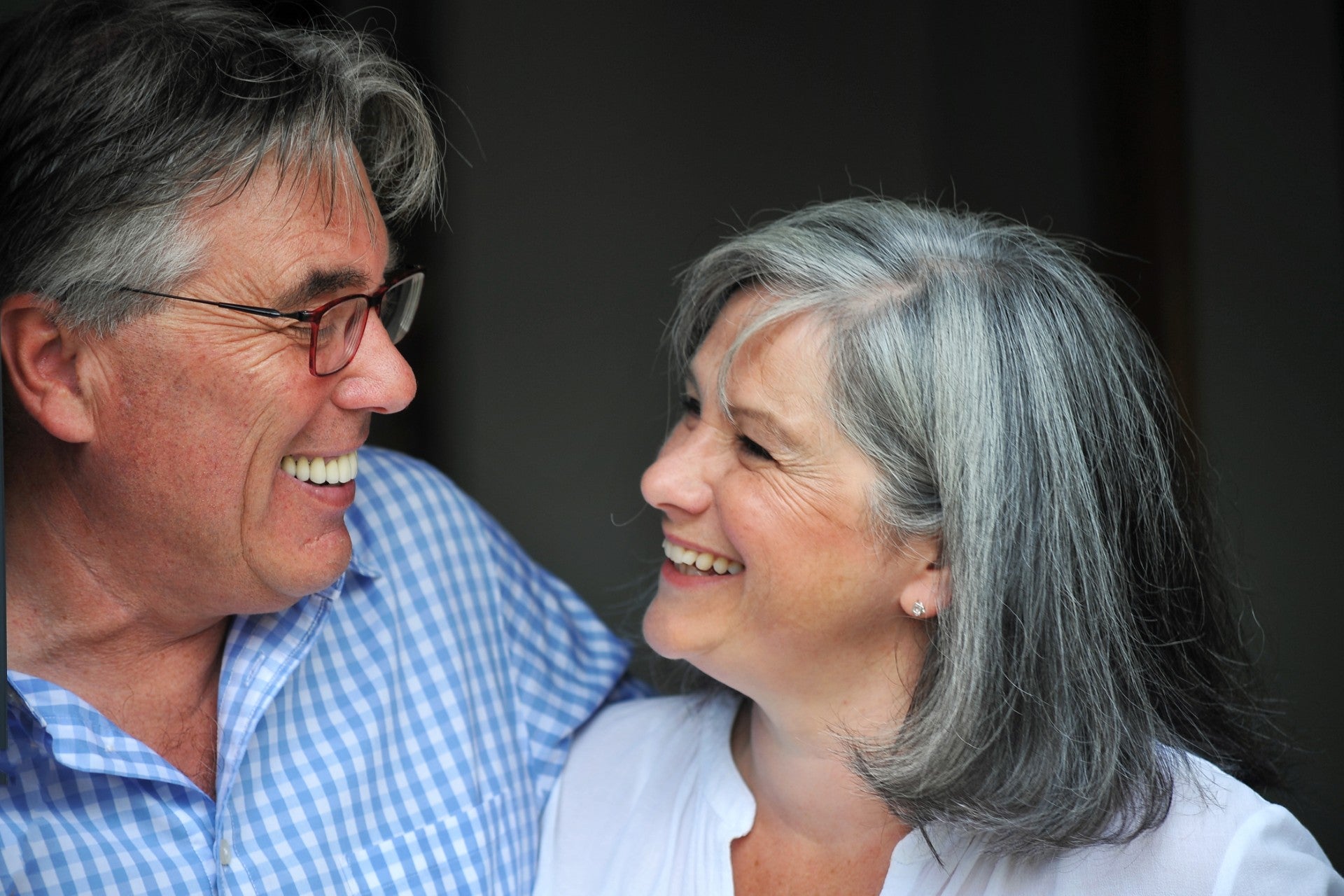
However, in May 2019, the couple were advised to seek support from St Wilfrid’s Hospice in Chichester, and after 10 days there, Nick died aged 62.
“Overnight, my world had fallen apart,” Helen said.
“Our lives together, over 13 years, had been a riot of love, friendship, laughter and fun.
“With Nick’s death, my three children lost their father figure, I lost ‘my person’, our future together, our shared history, memories and in-jokes, our everything.”
In the days and months afterwards, Helen said she experienced “overwhelming waves of emotion” and she felt as though she was “the ball in a pinball machine”.
She described it as “very exhausting and very isolating”, particularly as she had just turned 50 and she did not know anyone else who was “in the same boat” among her friendship group.

She explained: “One minute you could find yourself laughing, one minute you could find yourself crying. In the next minute, you could be feeling nothing at all.
“I think what was most peculiar about it was you could feel a whole gamut of emotions, a whole range of emotions, within a very short period of time.
“I’m not talking days, I’m not necessarily even talking hours, but within minutes you could go from laughing your socks off at something to howling on the floor.”
Just before Nick died, Helen said she bumped into a hospice counsellor, who offered her support and the opportunity to talk.
Through weekly sessions with him over the following year, Helen said she was able to process her grief in a safe, non-judgmental space, which was a “complete privilege”.
Helen said she soon learned that every emotion she felt was valid and she did not need to feel guilty, and giving herself the freedom to “let (herself) be whatever (she) needed to be” was “comforting”.
Main symptoms of a malignant brain tumour (brain cancer)
NHS
Common symptoms may include:
- new headaches, or headaches that are getting worse – these usually happen with other symptoms
- feeling sick (nausea) or being sick (vomiting) when moving suddenly – this usually happens with other symptoms
- fits (seizures)
- eye problems that are getting worse, such as blurred vision, seeing dots and lines or flashes of light, or not being able to see out of the corners of your eyes
- being very sleepy or fainting (losing consciousness)
- changes to behaviour or personality, such as problems with thinking and concentration
“I had a very physical need to talk – it was so physical I felt I was literally going to pop,” she explained.
“People always say about grief being like a tsunami, like waves, and it is.
“Grief is not a civilised emotion, it’s primal, it’s hugely raw.
“It feels quite violent and panic-inducing and just so, so powerful, and that’s not something that really comes up in everyday life.”
She added: “I will be grateful to him forever for being there for me during the very worst period of my life.”
Over time, Helen said this support helped her rebuild her life: she moved to a new home by the sea, returned to work, pursued creative interests and watched her children flourish.
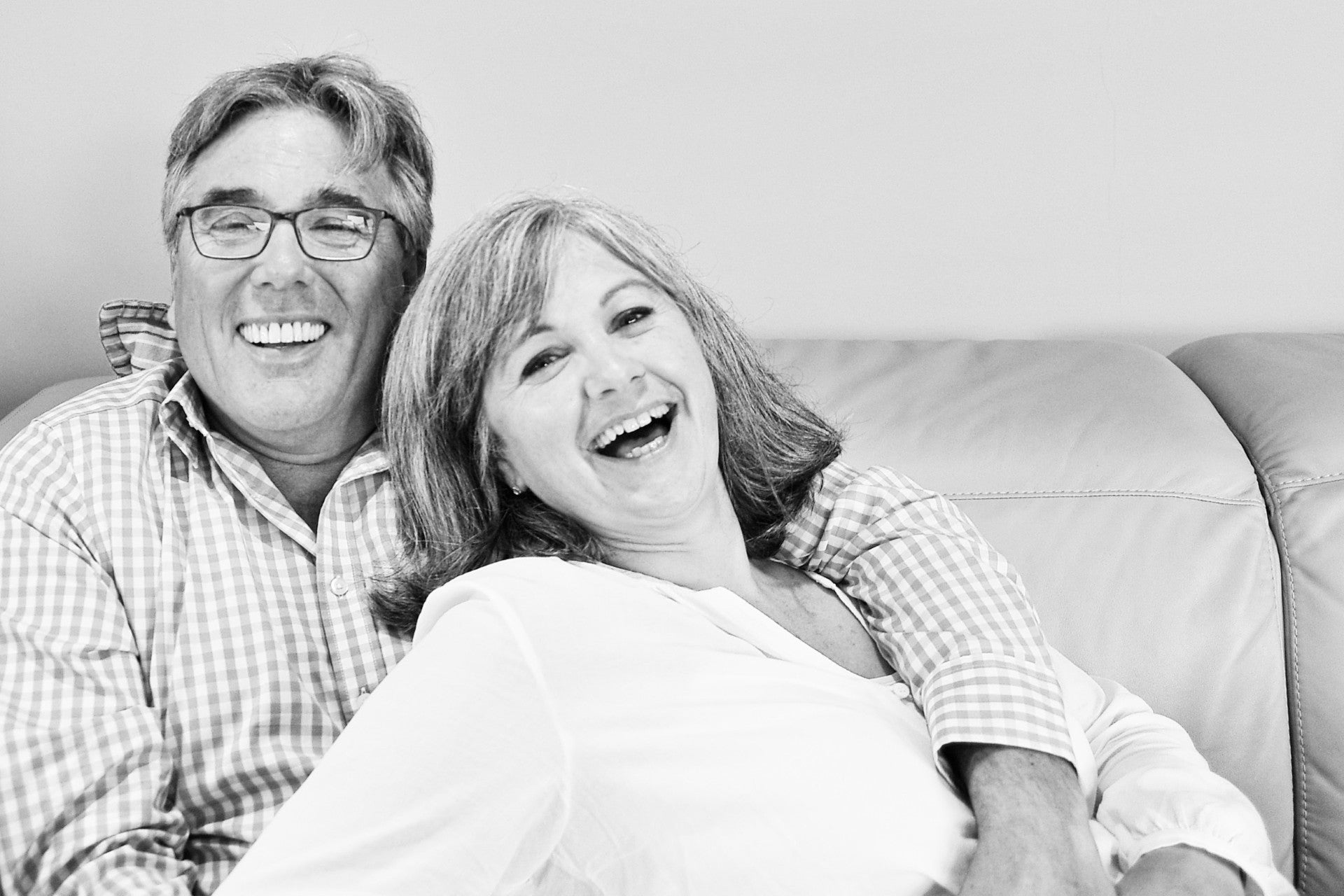
Describing counselling as “one tool in the toolbox”, Helen also focused on her wellbeing by eating and sleeping well, walking the dog, reading, seeing friends and family and sticking to a routine.
Helen is now sharing her story as part of the British Association for Counselling and Psychotherapy’s (BACP) No More Stiff Upper Lip campaign, which aims to empower more women to access therapy in midlife.
The campaign is underpinned by research among 2,000 UK women aged over 50, which found that 8 per cent who struggle with their mental health hide it from others and 46% say they do not want to “burden” people.
Helen is encouraging others to seek help and talk, as she said her counselling sessions offered her “freedom that wasn’t available elsewhere” and helped her find happiness again.
“A problem shared is a problem halved,” she said.
“I think withdrawal in difficult circumstances is often an attractive option, but it is important to understand that this may not necessarily be a healthy option for the long term.
“Nick lost his life, and it’s very important to me that I don’t waste the life that I have.
“I think one of the best ways of honouring what we had is by going out and living, whatever form that takes, because otherwise that’s two lives lost.”
To find out more about BACP’s campaign and its accredited therapist directory, visit: nomorestiffupperlip.co.uk.
Mum lost leg to flesh-eating disease after thinking she had a cold
Less-than-perfect organs for transplant list recipients is Medicare’s latest proposal
Should I take a fish oil supplement? Here’s what the science says
The popular sports supplement that could improve memory and sleep
What is RSD? The condition often linked with ADHD – and how to manage it
Tipping jars and loans - how parents are paying for out of control kids parties