The Man Booker prize has continued to aim itself away from the much-criticised populism of 2011’s award jury, and its express search for “readability”, with the appointment of a resolutely highbrow panel chaired by Princeton English literature professor Michael Wood for 2015.
For the second year running, the award will allow entries from writers published in the UK of any nationality – an innovation introduced after the launch of the Folio prize. Forty-four of the 154 titles submitted for the 2014 prize came from writers outside Britain, Ireland and the Commonwealth, previously ineligible for the award. Despite shortlisting two American writers, Joshua Ferris and Karen Joy Fowler, this year’s prize was won by the Australian novelist Richard Flanagan.
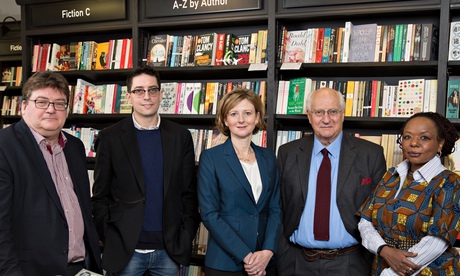
The UK-born Wood, a professor emeritus of English and comparative literature at Princeton, will be joined on the 2015 judging panel by the award-winning poet John Burnside, and by the novelist and biographer Frances Osborne, wife of chancellor of the exchequer George Osborne. The panel is completed by Ellah Allfrey, the critic and editor, and by the Spectator literary editor and author Sam Leith. Organisers said that the five-strong jury “bring together a wide knowledge of international literature”.
Wood described the Booker as “surely the most exciting and the most closely followed literary event in the English-speaking world”, adding that “talking about novels is almost as much fun as reading them, and we’re all greatly looking forward to this double pleasure”.
Flanagan took the 2014 prize for his novel The Narrow Road to the Deep North, sales of which have subsequently “eclipse[d] the sum total of all Flanagan’s other book sales in the past decade”, according to the Booker. The novel continues to make headlines after the Australian prime minister Tony Abbott overruled judges to insist Flanagan be honoured alongside Steven Carroll’s A World of Other People.