Maldives 'rubbish island' turns paradise into dump
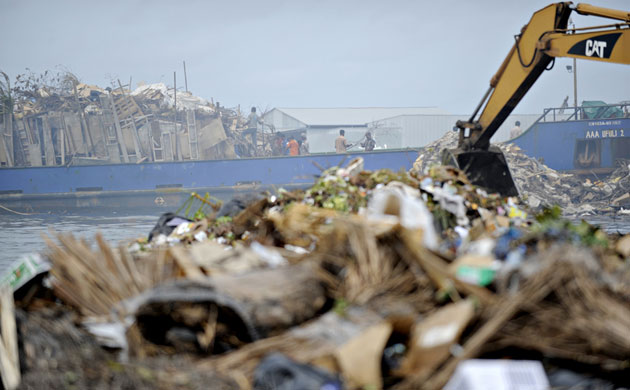
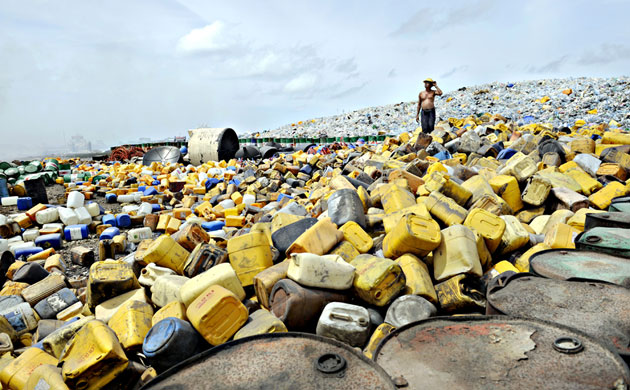
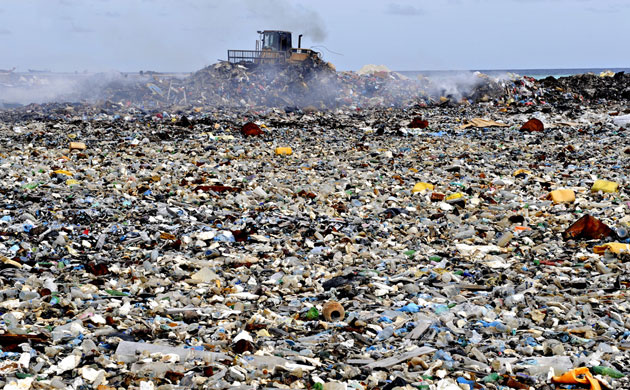
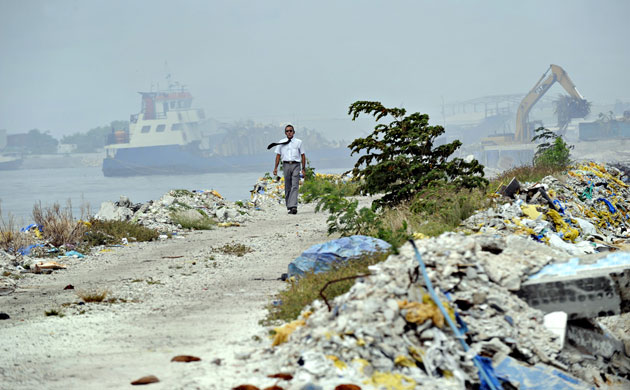
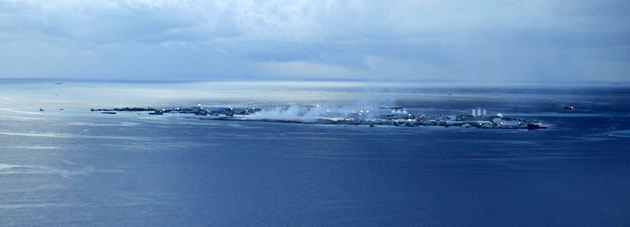
The Maldives are an archipelago of 1,192 islands in the Indian Ocean, grouped into 26 atolls. Tourism is the country's most important source of income. The country has a population of 270,000. But last year 650,000 tourists visited the islands, but each of them produces Photograph: Elin Høyland/Elin HøylandRubbish is shipped in daily to Thilafushi where it is sorted and sent to different zones around the islands. The authorities turned Thilafushi into a rubbish island at the beginning of the 90s because they could not cope with the ever-growing quantity of trash form tourists Photograph: Elin HøylandThere are different zones around the island for different types of waste. The first delivery of rubbish was in 1992Photograph: Elin Høyland
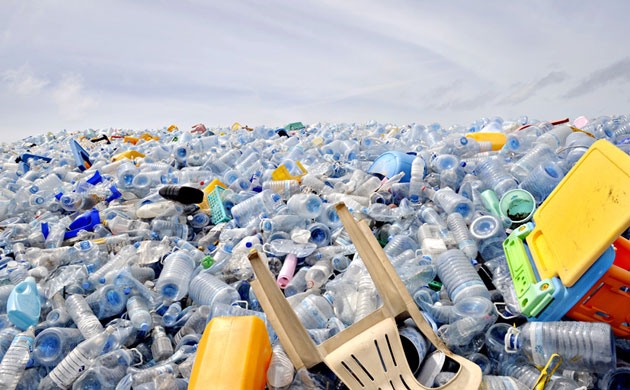
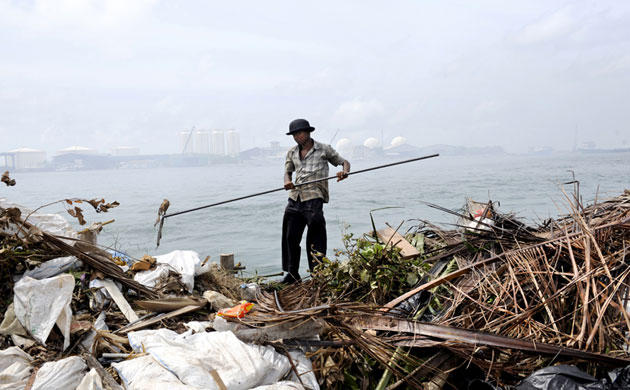
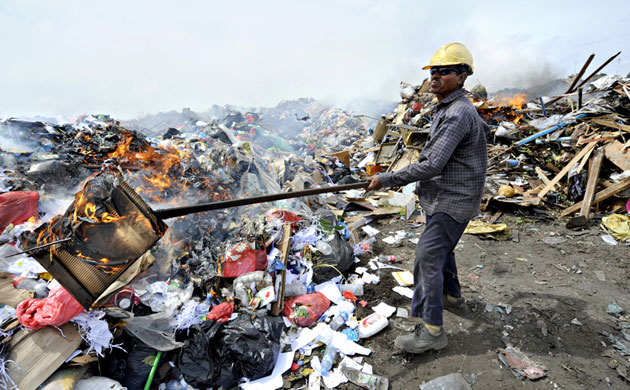
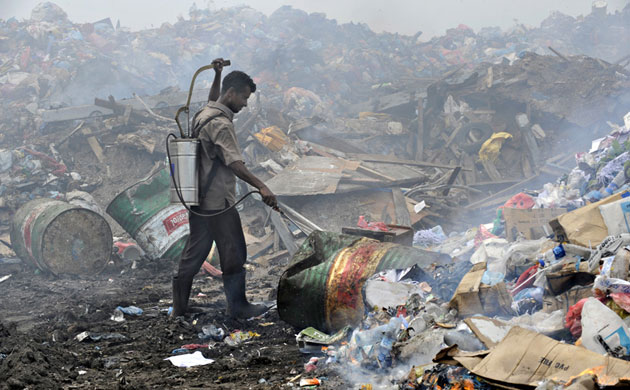
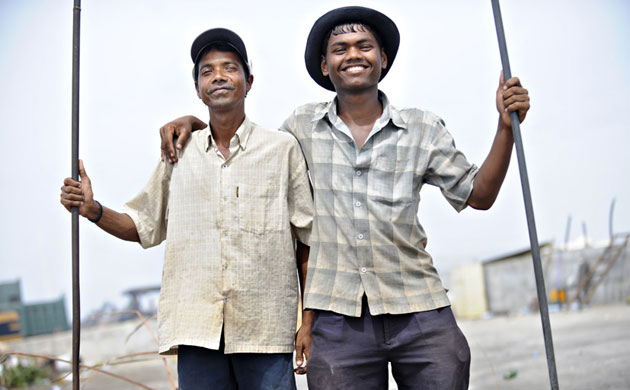
Disposing of plastic water bottles is a big problem on the island which was originally seven kilometres long and 200 metres wide. During its early years, pits were dug. But the volume of rubbish became too great to cover over with sandPhotograph: Elin HøylandSouraf from Bangladesh throws rubbish into the sea. The lagoon in the background will eventually be filled with wastePhotograph: Elin HøylandEarthmovers are required to shift the huge volume of waste - some of which is left as landfill or burned. Some of the waste, such as asbestos, is also extremely harmfulPhotograph: Elin HøylandMohamed Chan Mia from Bangladesh burns rubbish on the island where he worked for six yearsPhotograph: Elin HøylandSome of the waste needs to be disinfected Photograph: Elin HøylandSouraf (right) and his friend are two of the 150 Bangladeshi men who work at the Thilafushi dump Photograph: Elin HøylandAround 3,000 people live on the island which has attracted other industries such as boat manufacturing, cement packing and methane bottlingPhotograph: Elin HøylandThilfushi, like most of the islands in the Maldives, lies around only 1m above sea level and is therefore at risk of rising sea levels because of climate change. Toxic heavy metals such as mercury, lead and cadmium are already at risk of leaching out into the sea and damaging marine ecologyPhotograph: Elin Høyland
Sign up to read this article
Read news from 100’s of titles, curated specifically for you.