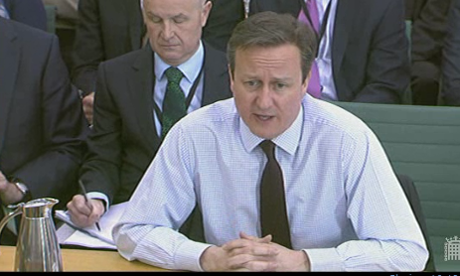
Cameron's evidence to the liaison committee - Summary
Here are the key points from David Cameron’s evidence to the liaison committee.
-
He said he would not rule out supplying Ukraine with lethal equipment.
I don’t say that we should rule out forever going further [ie, supplying lethal military equipment]- I know America is thinking carefully about this - but I think we’ve had National Security Council discussions, we’ve had very clear decisions that we should be in the space of providing non-lethal support, the help, the advice.
-
He said he did not think there would be a military solution to the crisis in Ukraine.
The reason for not going further is we don’t believe, fundamentally, there is some military solution to this issue. There needs to be a diplomatic solution which I think should be enabled by sanctions and pressure and the economic weight of Europe and America.
- He said further Russian aggression would trigger more sanctions.
-
He said excluding Russia from the international Swift banking system was an option.
If there was major further incursion by Russian-backed forces and effectively Russian forces into Ukraine we should be clear about what that is. That is trying to dismember a democracy, a member of the United Nations, a sovereign state on the continent of Europe, and it’s not acceptable.
I would hope that the European Union collectively would respond very robustly with new sanctions, including so-called tier three sanctions, really hitting the economy of Russia.
But were that not possible then, of course, we should look at other avenues as well - obviously looking at the Swift banking issues is a big decision but there is a logic for it, which is if Russia is going to leave the rules-based system of the 21st century, then they have to start thinking about whether it’s going to be in the 21st century system when it comes to investment, when it comes to banking, when it comes to clearing houses, when it comes to the other things that make our world work.
-
He hinted that the government could give the BBC World Service more funding to provide news to the Baltic states.
I think we need to do more frankly in the area of information. One of the complaints we get from the Baltic states is there is nothing to counter the deluge of Russian-paid and backed media spreading disinformation.
We have got to recognise one of the strengths we have got as a country - although we don’t always necessarily see it this way - is that we have a very strong and impartial media, we have a wonderful brand in the BBC known for its impartial views.
We should be supporting the BBC to provide news services and news channels where people otherwise are getting a diet of Russian disinformation.
-
He played down the significance of the recent incidents involving Russian jets encroaching on British airspace.
So far this year the RAF has scrambled the quick reaction aircraft twice, last year it was eight times. Go back to 2011 it was 10 times, in 2007 it was 19 occasions. I think we should be strong, measured and clear. But we should be absolutely confident that in our air force and in the Typhoons and the pilots - we have 135 Typhoons now in service - we are more than capable of protecting our air space ...
When we look at the situation in Ukraine let’s not talk ourselves into some idea that this has all been a fantastic success for Russia. It hasn’t been. Because a couple of Russian planes fly around the channel we shouldn’t talk ourselves in to a situation where we think somehow we cannot defend ourselves. We absolutely can.
-
He said that the fact that Britain was not involved in the latest Minsk peace talks did not mean the country was losing influence.
We shouldn’t be too precious about not being involved in every different set of negotiations.
There is no point endlessly obsessing about whether or not you are in the room. We have a very clear role when it comes to Ukraine.
That’s all from me for today.
Thanks for the comments.
Keith Vaz goes next.
Q: I was at a dinner last year where you said you hoped to see an Asian prime minister in your lifetime. It won’t be me. But, on diversity, only one permanent secretary out of 36 is Asian. Why aren’t there more?
Cameron says he agrees with the premise of the question. The work of creating a multi-cultural society is not complete until you have black and Asian people right at the top. With permanent secretaries, we need to do more. Some very talented people were on the brink of becoming permanent secretaries but went off to run other agencies.
Vaz finishes by thanking Sir Alan Beith for his work as committee chair, because this is the last session before the election and Beith is standing down.
Cameron says he hopes to be back.
And that’s it. I’ll post a summary soon.
Q: Would you consider allowing pre-election talks between the civil service and the opposition to start 12 months before the election?
Cameron says he will consider this. But there is a lot that can be done if they just have six or seven months.
Q: Have you discussed the conditions under which you would allow the civil service to support coalition talks after the election?
Cameron says he has had brief talks about the cabinet manual. He is confident our system can handle these things, and that it has the flexibility required.
Q: The last time civil service advice was offered but refused?
Cameron says there is discretion. But he believes politicians should decide.
Graham Allen, the Labour chair of the political and constitutional reform committee, goes next.
Q: When will you have a policy of devolution for England?
Cameron says English votes for English laws is an example.
Q: What else?
Cameron says he does not believe in regional assemblies. He does believe in devolving more powers to the bodies already there.
Q: What about giving new statutory powers to local government?
Cameron says he can’t see how you would explain the benefits of that to someone down the pub.
Q: What about having a constitutional convention?
Cameron says one of the parties in favour (Labour), and possibly both (ie, the Lib Dems too) see the convention as a way of delaying English votes for English laws.
Margaret Hodge, the Labour chair of the public accounts committee, goes next.
Q: Yesterday a Ministry of Justice official said she went ahead with the appointment of Paul McDowell as chief inspector of probation, even though his wife worked for a company bidding for probation contracts. And HMRC told us they only had a limited role vetting appointments. Does the appointment system need an overhaul?
Cameron says not every appointment decision is right. But the process is coordinated centrally.
It is right that people are vetted, he says. And, if someone is getting a peerage, HMRC should be consulted about their tax affairs. But ministers should not be told about individuals’ tax affairs. In other countries it does not happen like this; ministers order tax investigations.
At the hearing Cameron is now talking about schools.
Graham Stuart, the Conservative chair of the education committee, asks it is viable to have more and more academies directly funded by the Department for Education.
Cameron says the key think is for someone to intervene quickly when things go wrong.
Here is a longer version of the quote from David Cameron about the despatch of military advisers to Ukraine.
We are not at the stage of supplying lethal equipment. We have announced a whole series of non-lethal equipment, night-vision goggles, body armour, which we have already said that we will give to Ukraine.
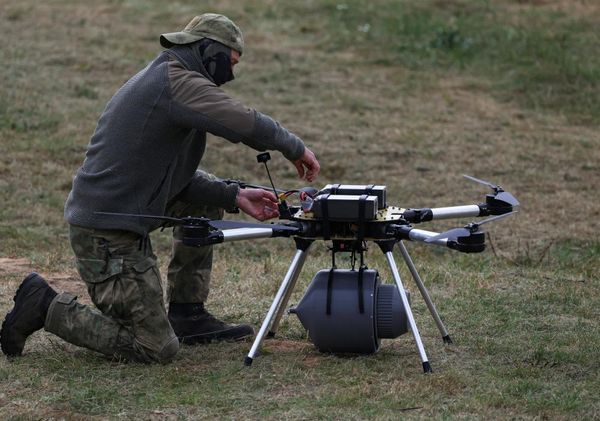
Over the course of the next month we are going to be deploying British service personnel to provide advice and a range of training, from tactical intelligence to logistics to medical care, which is something else they have asked for.
We will also be developing an infantry training programme with Ukraine to improve the durability of their forces. This will involve a number of British service personnel, they will be away from the area of conflict but I think this is the sort of thing we should be helping with.
And here is more detail from the Press Association.
Up to 75 personnel will begin to deploy to Ukraine from next month as part of the training mission, the Ministry of Defence said.
There will be four separate areas covered by the deployment - medical, intelligence, logistics and infantry training.
Personnel involved in the training elements could spend one or two months in Ukraine, with a command and control deployment lasting up to six months.
Jenkin presses Cameron on reforming the centre of government. Cameron says he thinks the key thing is to have a group of ministers who are working together on agreed aims. In this government, unusually, the prime minister and the chancellor actually work together, he says.
Machinery of government
Bernard Jenkin goes next.
Q: Governments often fail to achieve their aims. Why do you think this is?
Cameron says some matters are within your power; for example, pensions policy.
Then there are goals like cutting migration. You can get the policies right, but the end result is not within your control.
Q: Can you think of an example of where the government has learnt from its mistakes.
Cameron cites some successes, like Crossrail and the Olympics. Jenkin says that is not what he meant. Cameron says even from successes you can learn lessons.
On migration, he says he learnt that he needed to act faster to address the financial attractions to coming to Britain.
Keith Vaz, the Labour chair of the home affairs committee, is asking questions now.
Q: Do you know how many young people have been radicalised, or are going to Syria?
Cameron says the government has published estimates for the number of people going to Syria.
But he does not have figures for the number of young people radicalised by the internet.
Sir Malcolm Bruce, the Lib Dem chair of the international development committee, is asking the questions now.
Q: What can we do to help Nigeria cope with Boko Haram?
Cameron says this is a good example of how the national security council has been useful. When discussing a country like Nigeria, a range of government departments, such as defence and the Home Office, can make a contribution.
He says the archbishop of Canterbury also came to the NSC’s meeting on Nigeria. He has a lot of experience of Nigeria, he says.
(We didn’t know the archbishop of Canterbury had joined the NSC!)
Here’s more on the British deployment to Ukraine.
PM's new British military training mission to Ukraine will be 75 troops teaching medical, intelligence, logistics and infantry skills; No10.
— Tom Newton Dunn (@tnewtondunn) February 24, 2015
Cameron says Britain sending military personnel to provide training for Ukrainian forces
Reuters has just snapped this, from what David Cameron was saying about Ukraine earlier.
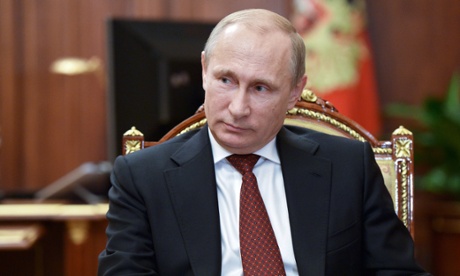
Prime Minister David Cameron said on Tuesday Britain would deploy military personnel to Ukraine in the next month to help train the Ukrainian army, warning that Moscow would move to destabilise other countries if left unchallenged.
“Over the course of the next month we’re going to be deploying British service personnel to provide advice and a range of training, to tactical intelligence to logistics, to medical care,” Cameron told a committee of lawmakers in parliament.
“We’ll also be developing an infantry training programme with Ukraine to improve the durability of their forces.”
Q: What are we doing in Iraq?
Cameron says there is a fully joined-up strategy there, but it takes time. It involves supporting the Iraqi government, and providing air cover in the fight against Isis. Britain is the second largest contributor of military help.
He says he pushed hard for a vote in the Commons to allow Britain to contribute air strikes because Britain has a big contribution to make in this area.
Syria
Sir Richard Ottaway, the Conservative chair of the foreign affairs committee, goes next.
Q: Do you accept that the fall of Assad is not in the UK’s interests?
No, says Cameron. There is no solution to the problem posed by Islamic State (Isis) that involves Assad staying.
Q: What if Assad goes, and Isis fills the vacuum?
Cameron says he does not see that as likely. The vast majority of people do not want an Isis regime. They are unbelievably brutal.
Bernard Jenkin, the Conservative chair of the public administration committee, goes next.
Q: People say there is no military solution to this. But there is. When there was a conflict in George, it came to an abrupt end when America despatched its fleet.
Cameron says the biggest effect that could be had would be an economic effect.
The greatest power we have in this crisis is an economic one, he says. That is the one we should be leveraging.
Cameron says Ukraine and the Baltic states see Britain as a very reliable ally.
The key has been to get Russia and Urkaine together, he says. It matters less who is there on behalf of the EU.
And the key thing is what happens if the talks do not work. Then the role for Britain is to persuade other countries to back sanctions. Britain is very much listened to, he says.
Don’t be precious about always being in the room.
Cameron says Britain should be very tough insisting upon a good reform programme for Ukraine. “A good reform programme is worth billions of dollars of aid,” he says.
Q: Would Britain consider further sanctions, going beyond the EU ones, if Russian aggression were to continue? And would it suspend Russia membership of the SWIFT banking system?
Cameron says we should not rule that out.
Cameron says there is no doubt that Russia is supplying the rebels in Urkaine with weapons. “You can’t buy these things on eBay,” he says.
Q: Will you consider supplying Ukraine with lethal defensive equipment?
Cameron says Britain is not at that stage.
It is supplying non-lethal equipment.
Some British service personnel will be involved with training Urkainian forces.
Cameron says he would not rule out supplying lethal weapons forever. The US is thinking about this.
Updated
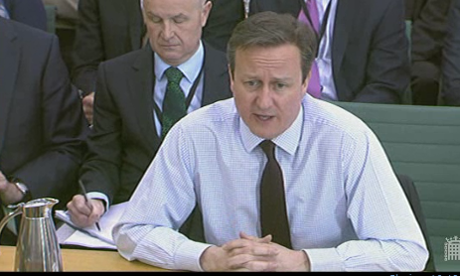
Q: Michael Fallon, the defence secretary, said recently the cold war is heating up. Is he right?
Cameron says our economy is stronger than Russia’s. We have the fifth biggest armed forces in the world. The situation in Ukraine has not been a success for Russia.
Because a couple of Russian planes fly around the Channel, we should not talk ourselves into thinking we cannot defend ourselves. We can, he says.
Cameron says President Putin knows that we would stand by our Article 5 commitments.
An attack on one country would count as an attack on all.
If there were a cyberattack on a Baltic state, that would trigger all Nato members trying to help with its cyber defences.
Do we understand Putin’s goals? We have now seen a very clear pattern of behaviour, Cameron says. He wants to restore some of the near abroad to Russia. But that is not acceptable. We should support the right of these countries to decide what they want to do.
Some people argue for an accommodation with Russia over this.
That would be wrong, says Cameron. We would be writing off some 11 or so countries. We made that mistake before, with “faraway countries of which we know little”.
Cameron says we should be “strong, measured and clear” when standing up to Russia.
The RAF has the ability to deal with incursions by Russian aircraft, he says.
Q: What protection does Article 5 of the Nato treaty offer to the Baltic states if Russia tries to destablise them using unconventional means, such as proxy troops or cyberwarfare.
Cameron says the Baltic states know we are their friends.
Q: What would count as a breach of Article 5? Would militia activity over the border count?
Cameron says that’s a good question. We have to protect their security.
Q: But would militia activity across the border count?
Cameron says that would be the kind of thing we should protect the Baltic states against.
Q: Should sanctions by extended or deepened?
Cameron says they should be extended anyway. And they should be deepened if the situation gets worse.
If Mariupol falls, there should definitely be tougher sanctions, he says.
Q: Philip Hammond said recently Russia can no longer be seen as a strategic partner to the EU. Doesn’t that cause us problems?
Cameron says Russia is not behaving like a strategic partner to the EU.
But where we are working together, as over Iran, we should continue to do so.
Russia and Ukraine
David Cameron is at the committee.
They start with Russia.
Q: Different countries in the EU have different views on sanctions. How will we get unanimity?
It is difficult, says Cameron.
There is a case for bringing forward some sanctions planned for later.
The way to achieve unanimity is to present people with the facts, he says.
We need to convince those who have been sceptical that only a firm stand will be taken seriously in the Kremlin.
Cameron says Britain has been “the strong pole in the tent” on sanctions.
Updated
Cameron at the liaison committee
David Cameron is giving evidence to the Commons liaison committee at 4pm. I’ll be covering the hearing in detail.
According to the committee, the two subjects to be covered in the 90 minute hearing are:
Foreign Affairs: Countries affected by Islamist extremism; and Ukraine
Capacity and flexibility of the Civil Service and machinery of government
And these are the detailed topics due to come up.
Issues likely to be raised include:
· Tackling Islamist extremism in Syria, Iraq and Nigeria
· Humanitarian situation in Nigeria and Iraq-Syria
· Yemen/Horn of Africa
· Ukraine and Russia
· Civil Service impartiality: Civil Service horizon-scanning capability
· Department for Work and Pensions
· The reorganisation of the Department for Education
· Centre of Government
· Diversity of the Civil Service
· UKRep
· Political and Constitutional Affairs.
Here’s the Guardian video of Sir Malcolm Rifkind speaking to reporters after the ISC meeting. (See 1.41pm.)
Ukip's Carswell and Farage split over whether Enoch Powell was right.
In the Times today Douglas Carswell, the Ukip MP, has an article headed: “Enoch Powell was wrong about immigration” (paywall). Here’s an excerpt.
Half a century ago, Enoch Powell made a speech about immigration that made it difficult to even mention immigration in Westminster. Full of foreboding, Powell warned of mass immigration leading to major unrest.
Powell was, as Tony Blair put it, “one of the great figures of 20th-century British politics”. He was also a distinguished soldier, linguist and classicist. Yet in his pessimism, Powell was wrong.
Immigration has not been without its challenges. Yet it has been, overwhelmingly, a story of success. Britain today is more at ease with the multi-ethnic society that we have become than once seemed imaginable — and not just to Enoch Powell. Like many before and since, Powell underestimated the ability of a free society to adapt.
Powell talked of Britain “heaping up its own funeral pyre”. Yet our country has more than survived. We have, in all kinds of ways, thrived.
Yet last year Nigel Farage, the Ukip leader, said almost exactly the opposite. Here’s an extract from the story my colleague Rowena Mason wrote about it at the time.
Nigel Farage has backed the “basic principle” of Enoch Powell’s warning that mass immigration can make people feel like strangers in their own country from the Tory politician’s 1968 “rivers of blood” speech.
The Ukip leader was read several lines of the infamous speech on Sky’s Murnaghan show and agreed that it was true for “a lot of England” – without being told who had spoken the words.
The extract was about the impact of immigration, saying “the indigenous population found themselves made strangers in their own country, their wives unable to obtain hospital beds in childbirth, their children unable to obtain school places, their homes and neighbourhoods changed beyond recognition”.
Told the origin of the quote, Farage said the central principle was right, as Powell was warning about tension that can happen when you have a large influx of people into an area.
Tories would continue badger cull after the election, Truss tells NFU
Liz Truss, the environment secretary, told the NFU conference this morning that a Conservative government would continue with the badger cull. This is from the Press Association.
A Tory-led government would roll out badger culling to more areas where tuberculosis is rife in cattle, environment secretary Elizabeth Truss has said.
Truss refused to be drawn on whether wider culling of badgers to tackle the disease in livestock could take place this year if the Conservatives win the general election, but she insisted the Tories would continue with their 25-year TB eradication strategy, which includes a roll-out of the badger cull.
Her comments came as National Farmers’ Union president Meurig Raymond said the incidence of TB had decreased on farms in two pilot areas in Somerset and Gloucestershire where culling of badgers has taken place over the last two years.
By my reckoning 87 MPs have now announced they're retiring in May - 36 Tory, 38 Lab, 11 Lib Dem; 2 others. I expect another 6 or so
— Michael Crick (@MichaelLCrick) February 24, 2015
Labour's motion on MPs having second jobs
The Labour party has now released the text of the motion MPs will debate tomorrow on MPs’ second jobs.
It won’t propose banning all second jobs, as the party originally suggested, but just paid directorships and consultancies.
It says:
That this House believes that, as part of a wider regulatory framework for second jobs, from the start of the next parliament no honourable members should be permitted to hold paid directorships or consultancies.
Ed Miliband has already said that Labour MPs will be banned for having paid directorships and consultancies in the next parliament under party rules.
If you are one of the 1m people who have fallen off the electoral register (see 2.29pm), here’s how you can get your name back on.
Give up not being registered to vote for lent. Register now at http://t.co/4zXMvnhg63
— Electoral Commission (@ElectoralCommUK) February 17, 2015
Lunchtime summary
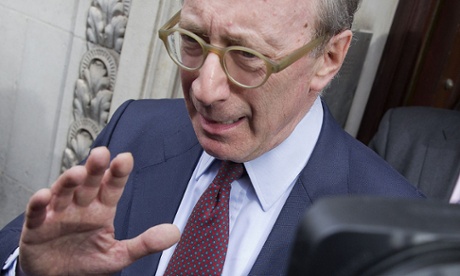
- Sir Malcolm Rifkind has admitted that he may have made “errors of judgment” as he explained his decision to resign as chair of parliament’s intelligence and security committee and to stand down as an MP at the election. (See 1.41pm.) Yesterday Rifkind insisted that there was no need to quit for him in the light of the revelation that he had been filmed by undercover reporters posing as representatives of a Chinese firm discussing with them a business role he might accept. But today, with pressure on him growing, he announced his U-turn, only minutes after Labour said it would press for a vote on MPs having second jobs in the Commons tomorrow. Rifkind rejects claims that he was sacked by Number 10 and there is no evidence (yet?) that he was explicitly urged to quit by anyone from Tory high command. But at Westminster such wishes do not need to be articulated openly, and Number 10’s reluctance to offer Rifkind its full support yesterday was very telling. In the past David Cameron has clung on to beleaguered ministers for some time (eg Liam Fox, Maria Miller), but, with the election fast approaching, any distractions - particularly on issues that favour Labour - are highly unwelcome. Effectively, as Torcuil Crichton argues (see 12.43pm), Rifkind got the barnacle treatment.
-
Natalie Bennett, the Green party leader, has conceded that she gave an “excruciating” performance during a radio interview and attributed her poor performance to a “mind blank” and “mental brain fade” on the day that she launched the party’s election manifesto. Speaking to the BBC’s Daily Politics, she apologised to Green party members for her performance.
I had a very bad interview on housing this morning. I’m very happy to confess that and I’m very sorry to the Green party members who I didn’t do a good job, any kind of job of presenting our policies on.
That happens, I’m human. One can have a mental brain fade on these things.
- Britain must fix its productivity problem to secure future economic growth and improve living standards, a leading thinktank has warned as it highlights a failure to grow output per UK worker since the downturn. As Katie Allen reports, the Organisation for Economic Co-operation and Development (OECD) has also downgraded its outlook for the UK this year but still sees it enjoying one of the fastest growth rates among advanced economies. Growth in 2015 is now projected to be 2.6%, matching last year’s pace but down from a forecast for 2.7% made in November. The 2016 forecast remains at 2.5% GDP growth.
- The press regulator is to look at allegations that the Daily Telegraph allowed commercial pressures to dictate editorial decisions following Peter Oborne’s resignation over its coverage of HSBC. As John Plunkett reports, Sir Alan Moses, the chairman of the Independent Press Standards Organisation, said he wanted to hear from Oborne, the paper’s former chief political commentator, other journalists and Telegraph management over claims that the Barclay brothers-owned newspaper refused to run stories about the banking giant because of concerns over advertising.
-
The Electoral Commission has released figures showing that almost 1m people have come off the electoral register within the last year. There were 41.4m people on the register in December 2014, compared to 42.3m in February/March 2014. Sadiq Khan, the shadow justice secretary, blamed the way the government introduced individual voter registration and called it “a disaster for our democracy”.
Ed Miliband warned weeks ago that nearly a million voters had disappeared off the register and these figures published today confirm Labour’s worst fears.
They are a direct consequence of the way the Tories and Liberal Democrats hastily forced through changes to the way people register to vote. Ministers ignored warnings from experts, including the Electoral Commission, that young people, students and people living in private rented accommodation risked losing their vote, pushing ahead regardless, over-riding sensible safeguards that would have prevented this from happening.
This is a disaster for our democracy.
- Downing Street has said that the fate of a blogger sentenced to public flogging will be raised when the deputy crown prince of Saudi Arabia holds talks in the UK with David Cameron and other ministers. As the Press Association reports, interior minister Prince Mohammed bin Nayef will have dinner with foreign secretary Philip Hammond tonight at the start of the three-day visit. He is scheduled for talks with defence secretary Michael Fallon tomorrow and then the prime minister and home secretary Theresa May on Thursday.
-
Roman Catholic bishops have said people have a moral duty to vote in the election. They did so in an open letter about the election to Catholics in England and Wales. Here’s an extract.
Politics is a vital and necessary vocation. It carries important responsibilities not only for policy decisions but also for shaping the hopes and aspirations of people. Political leaders can choose to appeal to our sense of hope or of fear, to our desires to care for others or for ourselves, and to our sense of solidarity or to our selfishness.
We expect politicians to be committed to the common good. We also each have a responsibility to be involved in the democratic process. It is important that we vote. It is a duty which springs from the privilege of living in a democratic society.
In deciding how we vote the question for each one of us is then:
How, in the light of the Gospel, can my vote best serve the common good?
Prior to casting your vote, you may wish to use the following prayer:
“Lord, grant us wisdom that we may walk with integrity, guarding the path of justice and knowing the protection of your loving care for all”.
Updated
Standards watchdog confirms Straw/Rifkind inquiry won't conclude until after election
Kevin Barron, chair of the Commons standards committee, and Kathryn Hudson, the parliamentary commissioner for standards, have issued a joint statement confirming that the investigation into Jack Straw and Sir Malcolm Rifkind will not be finished until after the election.
Here it is.
The parliamentary commissioner for standards is responsible for deciding whether or not there is sufficient evidence that there may have been a breach of the code of conduct to justify an inquiry. This is a decision for her alone.
If the commissioner decides to conduct an inquiry, she will need to assemble evidence, including complete transcripts of the meetings on which recent reports have been based. In the past, broadcasting organisations have taken up to 5 weeks to release such transcripts to the commissioner. The commissioner’s procedures for investigation are designed to be fair and open. The commissioner shares the evidence she has gathered with the individual under inquiry and gives them an opportunity to comment on that evidence before she, or the committee, reaches any conclusions.
Any investigation will inevitably continue into the next parliament. The committee on standards has agreed that any memorandum will be submitted to its successor committee on completion.
Rifkind accepts he may have made 'errors of judgment'
My colleague Rowena Mason has sent me more on what Sir Malcolm Rifkind said when he spoke to reporters after the ISC meeting was over.
-
Rifkind said that he had not done anything wrong, but that he had made “errors of judgment”.
No, I don’t think I did anything wrong. I may have made errors of judgement but then we all make errors of judgment. We are all human beings in that sense.
-
He rejected claims that he had been forced to resign as ISC chair by Downing Street.
Downing street does not have that power [to dismiss him]. The ISC acts under an act of parliament.
I reflected on the situation last night and could see the issue is one of which there is a rising public interest. And I did not want the work of the committee to be distracted. I informed the committee at the very beginning of the discussions that have been going on all morning. It met at 10am and I read a statement about the issues in the press and then went on to the main business.
- He said it was a mistake to talk about being “entitled” to earn more than £67,00.
I used the word entitled - it might not have been the right word. Each person determines on the work they do the kind of living standard they hope to aspire to and you make judgements based on that.
In an interview yesterday Rifkind said: “I want to have the standard of living my professional background would normally entitle me to have.”
-
He said he did not blame the press for his downfall.
I don’t blame the press. I certainly have some criticisms of some individual elements of the press.
Updated
No 10 says Cameron 'respects and supports' Rifkind's decision to resign
The prime minister’s spokesman told journalists at the lobby briefing that David Cameron “respects and supports” Sir Malcolm Rifkind’s decision to resign as ISC chair and to leave the Commons. The spokesman said:
What the prime minister thinks is that there were very serious allegations and questions that had been raised. Because of that he thinks that Sir Malcolm has done the right thing, which is why he respects and supports his decisions.
Updated
And here is some more from the Rifkind doorstep.
Rifkind on standing down on ISC "I reflected on the decision last night. I could see that..it was a matter of public interest."
— Tim Reid (@TimReidBBC) February 24, 2015
Rifkind:on salary.. says if he used the word "entitled" to higher salary that might not have been the correct one
— Tim Reid (@TimReidBBC) February 24, 2015
“I may have made errors of judgement,” Malcolm Rifkind finally admits. A casebook example of how not to handle a scandal, others might say.
— Tom Newton Dunn (@tnewtondunn) February 24, 2015
Rifkind says the whip may be restored in 3 weeks time but his local association needed a new candidate after coverage
— Paul Waugh (@paulwaugh) February 24, 2015
And this one.
Rifkind says he doesn't blame the press for what happened https://t.co/B8TzghA4RO
— Frances Perraudin (@fperraudin) February 24, 2015
The ISC meeting has just broken up.
My colleague Frances Perraudin has posted this vine.
Rifkind says he didn't want the work of the ISC to be disrupted https://t.co/YQYN97CjEL
— Frances Perraudin (@fperraudin) February 24, 2015
My colleague Rowena Mason, who gets all the best jobs, is still outside the ISC meeting.
Andrew Parker, head of MI5, just left ISC meeting via back door. Still awaiting Rifkind....
— Rowena Mason (@rowenamason) February 24, 2015
Alex Younger, MI6 boss, was also in there. Looks like a proper ISC meeting took place despite Rifkind drama
— Rowena Mason (@rowenamason) February 24, 2015
Media and 4 police officers wait for Rifkind outside the Intel and Security Ctte office pic.twitter.com/j93Tx0d3QJ
— Harry Smith (@stvharry) February 24, 2015
Like many people, the Lib Dem peer Lord Tyler suspects that Sir Malcolm Rifkind may have decided to quit in the hope of increasing his chances of getting a seat in the House of Lords after the election.
#Rifkind about-turn: Did Tory whips say "Go today Malcolm and you'll get your peerage". "Go tomorrow, and you won't”?
— Paul Tyler (@PTylerLords) February 24, 2015
Perhaps. But, re-reading Rifkind’s resignation statement (see 10.30am), I see that he says he will “retire from parliament”.
Many people assume that parliament and the Commons are synonymous, but a parliamentarian like Rifkind understands the distinction very clearly. Maybe he phrased it like this because he thought that anything that implied he was heading for the second chamber would be counter-productive. Or maybe he doesn’t actually expect to be offered a peerage anymore anyway.
And here are two interesting blogs on Sir Malcolm Rifkind.
I was working covering Scottish politics for The Times then, and during the 2001 campaign I had a chance to see how hard he worked at at a time where he had little national profile. He was giving his all, fighting for Scotland at a time when his party had pretty much given up on it. Had 900 people voted a different way in Edinburgh, he would have succeeded in fighting his way back to parliament in 2001.
Stature, grit, oratory, courage — I became quite a Malky fan, and saw him as a potential Tory leader. As did he: when he came back in the 2005 election, he stood against David Cameron. But when he lost, and Cameron refused to make him shadow foreign secretary, he went into a huff.
This, I thought, was unforgivable. After he failed to make the shortlist in Windsor his party had helped him back to one of the most enviable perches in politics – the gorgeous seat of Kensington, a few minutes from Westminster, so he could throw himself into politics without any long commutes. And he still refused to lend his significant skills to a party that was (and remains) badly in need of them. In the recording, he seemed to have so little regard for his job as an MP that he forgot about it – and the £67,060 pay packet that comes with it.
Here is some more Twitter comment on Sir Malcolm Rifkind.
From the BBC’s James Landale
Rifkind resignation shows once again that legalistic, lawyerly defence rarely succeeds in public arena. Tone trumps detail.
— James Landale (@BBCJLandale) February 24, 2015
From the FT’s Jim Pickard
Departure of Europhile Rifkind tips Tory party even further into Eurosceptic collective mindset.
— Jim Pickard (@PickardJE) February 24, 2015
Guido Fawkes’ guide to the runners and riders for Kensington is probably better than Ladbrokes. (See 12.04pm.)
The Ladbrokes free advertising department has sent out its odds on the Tory candidate who will be chosen to replace Sir Malcolm Rifkind in Kensingston.
10/1 James Cracknell
10/1 Syed Kamall
16/1 Andrew Strauss
20/1 Ruth Davidson
20/1 Tim Montgomerie
33/1 Iain Dale
33/1 Sol Campbell
50/1 Frank Lampard
100/1 Boris Johnson
100/1 Hugo Rifkind
And this is from the BBC’s Tim Reid.
Scottish Tory source on 20/1 odds by one bookmaker on Ruth Davidson for Kensington seat says:"We'd advise people not to place that bet."
— Tim Reid (@TimReidBBC) February 24, 2015
Here’s the Guardian video of Sir Malcolm Rifkind’s ill-tempered encounter with the cameraman who was doorstepping him earlier this morning. (See 11.06am.)
Reprieve, the legal and human rights charity, has put out a statement following the resignation of Sir Malcolm Rifkind from the ISC. This is from Clare Algar, its executive director.
Sir Malcolm Rifkind’s resignation should not distract from the ISC’s central problem: that it has been hopelessly inadequate when it comes to holding our security services to account.
From UK complicity in CIA torture to mass-surveillance, the ISC has missed every major security-related scandal of the past 15 years. It has fallen to the press, the courts and NGOs to expose these events, with the ISC’s members only discovering them by reading the newspapers.
My colleague Patrick Wintour says Lord Butler, the former cabinet secretary and an ISC member, is the obvious candidate to succeed Sir Malcolm Rifkind as ISC chair.
Lord Butler is the obvious stop gap chairman of parliament's ISC now that Rifkind has decided to resign as committee chairman.
— Patrick Wintour (@patrickwintour) February 24, 2015
Robin McGhee, the Lib Dem candidate in Kensington, has put out a statement welcoming Sir Malcolm Rifkind’s decision to stand down at the election. “Kensington people often say he is an absentee MP who does very little work,” McGhee says.
Rod Abouharb, the Labour candidate in Kensington, has not commented yet on his blog today, but yesterday he wrote a post saying Rifkind’s behaviour illustrated why “so many people hold MPs in contempt”.
Kensington & Chelsea has a history of Tory MPs who get into scrapes - Nick Scott, Alan Clark, Malcolm Rifkind. Arguably Portillo. Who next?
— Michael Crick (@MichaelLCrick) February 24, 2015
Not Boris Johnson. At one stage there was speculation that he might stand in the constituency, but he has already been selected for Uxbridge and he has been campaigning there. Recently one of his potential constituents sent me an email about what he’s been up to. Here’s an extract.
There is a feeling that Boris expects voters to come to him rather than going out doing canvassing ... Where we live, one of the people in our road said they saw him doing canvassing of a few houses, but that he just stopped to do a photo near the site where a new health centre, much delayed, is due to be built. He is producing a full colour A3 newspaper on a regular basis. It has lots of pictures of Boris in it and not much else.
I haven’t seen many Tories on Twitter paying tribute to Sir Malcolm Rifkind, but the TV presenter Kirstie Allsopp has a kind word to say.
Oh bugger it, I might as well say it - Malcolm Rifkind is my local MP & I doubt very much they'll manage to replace him with someone better.
— Kirstie Mary Allsopp (@KirstieMAllsopp) February 24, 2015
My colleague Rowena Mason is doorstepping the ISC.
ISC still holed up in Great Smith St after an hour. No comment on Rifkind from members on way in.
— Rowena Mason (@rowenamason) February 24, 2015
Sky News has been showing footage of a journalist (a cameraman, I think) doorstepping Sir Malcolm Rifkind this morning. (“Doorstepping” is journalese for trying to get an interview with someone on the street, normally someone who doesn’t want to talk to the media.)
Here’s a vine with a clip.
Rifkind steps down as ISC Chair. Was inevitable really. Here’s his ill-tempered exchange with Sky News this morning https://t.co/GuMIjDsseB
— Mark Ferguson (@Markfergusonuk) February 24, 2015
And here are some more of the exchanges.
Rifkind: Good morning. May I get through please?
Cameraman: Are you going to resign from the defence committee?
Rifkind: Mind your own business ... Get the right committee, you don’t even your committees.
Cameraman: Intelligence committee is what I meant to say.
Rifkind: There’s a breakthrough.
Camerman: But I am running backwards trying to do several jobs.
Rifkind: I know. You’ll bump into a lamp post any moment. You had better be careful.
Cameraman: Are you going to resign?
Rifkind: Very childish ... Here we go again. How many photographs are you actually going to use? .... You really must learn better how to walk backwards. It requires a skill. You should have learnt it by now.
Rifkind did have a point; the cameraman did not seem very comfortable throwing the questions. The great master of this art was a BBC producer called Paul Lambert, or “Gobby”, who could shout “Are you going to resign?” better than anyone. He’s now gone to work for Ukip.
Updated
Labour’s Tom Watson says, even though Sir Malcolm Rifkind has resigned, the rules about ISC membership still need to be reformed.
Inevitable Malcolm Rifkind has gone but the rules governing membership of the intelligence committee need immediate reform.
— tom_watson (@tom_watson) February 24, 2015
The Conservative party has issued this statement on Sir Malcolm Rifkind’s decision to stand down as an MP.
Sir Malcolm has had a long career of distinguished service both to the Conservative party and the country. We respect and support his decision to stand down.
Kim Howells, the former Labour MP and former chair of the ISC, arguably helped tipped Sir Malcolm Rifkind over the edge with his Newnsight interview last night. (See 6.45am.) Howells has just told Sky News that Rifkind did the right thing.
It’s a shame because he’s had a very distinguished parliamentary career and to end in this way is really awful ...
The intelligence and security committee has such an important role that there can’t be any shadow across it whatsoever. And I’m afraid that the whole affair that Malcolm Rifkind got into would not be good for that committee at all. It’s far, far too important for the country at large. And I think he’s done the right thing.
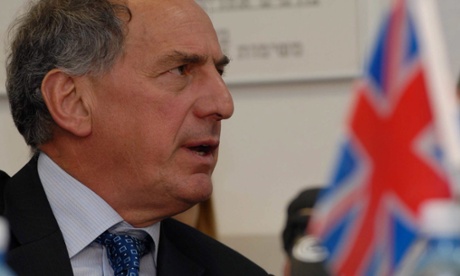
Rifkind's statement on resigning as ISC chair
And here is Sir Malcolm Rifkind’s resignation statement as chair of the intelligence and security committee (ISC).
None one of the current controversy with which I am associated is relevant to my work as chairman of the intelligence and security committee of parliament.
However, I have today informed my colleagues that while I will remain a member of the committee, I will step down from the chairmanship.
The committee is due to be dissolved in little over a month with the prorogation of parliament for the forthcoming general election. The main substantive work which needs to be completed will be the publication of our privacy and security report during March.
I do not want the work of the committee and the publication of the report to be, in any way, distracted or affected by controversy as to my personal position. I have concluded, therefore, that it is better that this important work should be presided over by a new chairman.
Rifkind's statement on standing down as an MP
Here’s the statement Sir Malcolm Rifkind has issued.
I have received tremendous support from my constituency association and from many constituents in Kensington over the last two days.
However, I have been pondering whether it is fair to my colleagues and friends in Kensington to remain the prospective Conservative candidate for the forthcoming general election.
I warmly welcome the committee that has been established by the party to examine the controversy with which I have been associated and to report by the end of March on its conclusions. It will be an excellent opportunity for an objective assessment of the allegations that have been made and I will be happy to cooperate closely with the committee.
However, it is unlikely that it will be able to finish its deliberations until well into March and there, obviously, can be no certainty as to its conclusions.
I am conscious, therefore, that Kensington Conservatives are faced with serious uncertainty until the end of March as to whether I will be able to be their candidate. If I could not they would have little time to choose a new candidate.
I am also aware that even if the committee reach a favourable conclusion as to these allegations the controversy will remain during what is certain to be a heated general election and, indeed, for many months thereafter until the parliamentary commissioner for standards has completed the necessary enquiry.I had intended to seek one further term as MP for Kensington, before retiring from the House of Commons.
I have concluded that to end the uncertainty it would be preferable, instead, to step down at the end of this parliament.
This is entirely my personal decision. I have had no such requests from my constituency association but I believe that it is the right and proper action to take.
As regards the allegations of Channel 4 and the Daily Telegraph I find them contemptible and will not comment further at this time.
Although I will retire from parliament I shall continue my public and political life and am much looking forward to doing so over the years to come.
Updated
Sir Malcolm Rifkind’s decision to stand down at the election means that one of the plummest seat in the Conservative party is about to become vacant.
Kensington Tories about to be bombarded with CVs from prospective candidates hoping to replace Sir Malcolm Rifkind.
— James Landale (@BBCJLandale) February 24, 2015
Rifkind had a majority of 8,616 in Kensington in 2010.
This sounds right, from the BBC’s Nick Robinson.
Rifkind may hope that by going quickly - as MP & intelligence committee chair - he'll able to win disciplinary enquiry & head to the Lords
— Nick Robinson (@bbcnickrobinson) February 24, 2015
Rifkind resigns as ICS chair and to step down as MP at the election.
The Press Association has just snapped this.
Tory MP Sir Malcolm Rifkind is to step down as an MP at the general election and has also resigned as chairman of the parliamentary intelligence and security committee, he said.
Updated
Labour to hold vote on banning MPs from having second jobs
Labour has announced that it will hold a Commons vote tomorrow on banning MPs from second jobs. It can do so because Wednesday is set aside for opposition business. Labour is not expecting to win - the Tories and the Lib Dems have both resisted the idea in the past - but the party knows that its stance on this has wide popular support.
A party source said:
We need to act to improve the reputation of our parliament in the eyes of the British people.
Here’s some more Twitter comment from journalists on that Natalie Bennett interview.
I must say @NickFerrariLBC v gently twisting the knife on Green leader does a rather masterful job. It's painful tho http://t.co/7U84A12A8j
— Joey Jones (@joeyjonessky) February 24, 2015
Natalie Bennett’s LBC interview is so bad I felt enormously sorry for her. Oh god. It’s just painful. http://t.co/IKuZkpVfSd
— Mark Ferguson (@Markfergusonuk) February 24, 2015
Never pleasant to hear someone implode under gentle inquiry, but @natalieben is Greens' leader - talking abt numbers. http://t.co/8CtG1GW3Gx
— Oliver Kamm (@OliverKamm) February 24, 2015
Painful: “@MichaelPDeacon: Maybe the Greens should start campaigning to be excluded from the Leaders' Debates. http://t.co/eGGZxvXSaJ”
— Faisal Islam (@faisalislam) February 24, 2015
For a start, 500,000 times 60,000 is 30 billion, not 3 billion: http://t.co/eGGZxvXSaJ
— Faisal Islam (@faisalislam) February 24, 2015
Greens should abandon TV debates after this @natalieben solar collapse with @NickFerrariLBC. Painful http://t.co/85waVznVSL
— Kevin Maguire (@Kevin_Maguire) February 24, 2015
Extraordinarily bad interview by @natalieben on the Greens' manifesto http://t.co/FOpQ1s8w1W Better just to say "I don't have the figures"
— Mark Wallace (@wallaceme) February 24, 2015
Have the Labour paid Bennett off?
— Harry Cole (@MrHarryCole) February 24, 2015
If Natalie Bennett’s Today interview was poor (see 9.30am), her interview with Nick Ferrari on LBC was dire. She more or less dried up when asked to explain the costings of the Green’s housing plans. It’s excruciating listening.
Election 2015 hasn’t properly started yet, but Bennett may have already bagged the prize for the worst interview of the campaign.
Here’s the Telegraph’s Michael Deacon on the interview.
Maybe the Greens should start campaigning to be excluded from the Leaders' Debates. http://t.co/jrepGipznG
— Michael Deacon (@MichaelPDeacon) February 24, 2015
Updated
Natalie Bennett's Today interview - Summary
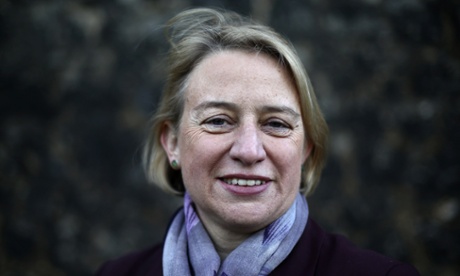
Natalie Bennett, the Green party leader, was on the Today programme earlier ahead of the party’s election campaign launch later. Here are the key points that emerged.
-
Bennett said, in negotiations with Russia, President Putin had to “walk away with something”. She was asked what the Greens would do about Russian jets encroaching upon British airspace, and she said it was important to take a new view of Britain’s role in the world.
What we’ve got to do is take a broad approach and change our place in the world. We’re in the place we are now as a product of decades of Cold War thinking; we’re in the place of acting as the world’s policeman, with America, in places like Iraq and Afghanistan – wars that we oppose. We need to build a new place in the world as a champion of human rights, as a champion of international law ...
What we need to do is put diplomatic pressure on Russia, put economic pressure on Russia, but we also have to understand that if we’re negotiating with Russia, it’s really important not to take what you might call the Versailles approach, to understand that President Putin has to walk away with something – things that we might not necessarily like. So we have to stand up for international law, for human rights, but we also have to acknowledge that we’re living in the real world. So use all those pressures, but use them subtly, build international alliances, work together.
The Telegraph has written this up under the headline: “Natalie Bennett: Greens believe Britain should appease Russia’s President Putin”.
-
She said the Greens were committed to a tax on all wealth, not just property, and that they thought this could raise £45bn.
This is a broader proposal than Labour’s mansion tax. What we’re talking about is, we don’t just tax property because that excludes about two-thirds of wealth; we also want to tax pension pots, holdings in cash, Ferraris, whatever else it might be.
-
She said plans for a citizens’ income would be included in the Green party manifesto, but that it was a long-term aspiration, and not something that could be introduced in the next parliament.
It will be in the manifesto, but what we’re saying is – and we’ll also be releasing around about the time of the manifesto a consultative costing on this – but what we’re saying is we’re looking at a massive change in the welfare system. It’s not something that we’d expect to be able to introduce overnight, or indeed in the term of the next parliament; it’s something we want to consult on, offer over time.
-
She said Green party membership now stood at 54,000.
I’ve taken the quotes from PoliticsHome.
Updated
This is from the BBC’s Norman Smith.
Tory MP on ISC says "slightly fluid" over whether Sir Malcolm Rifkind remains chairman of committee
— norman smith (@BBCNormanS) February 24, 2015
Lord King, the Conservative peer and a former chair of the intelligence and security committee, told the Today programme a few minutes ago that he did not understand why the investigation by the parliamentary commissioner for standards into Sir Malcolm Rifkind and Jack Straw would not be over until after the election.
Everybody knows what the issue is. It’s all been recorded and published. I can’t understand why there can’t be a report by the parliamentary commissioner this week.
Asked if he thought Rifkind should resign, he sidestepped the question. The key issue was whether Rifkind had the confidence of the committee, he said. But he did say that the fact that the committee is about to publish a report covering the Edward Snowden revelations meant a resignation now would be “a particular problem”.
The Labour MP John Mann thinks Sir Malcolm Rifkind will have resigned as ISC chair by the end of today. He posted this on Twitter last night.
The only question now is whether Rifkind resigns before he is pushed from security Cttee. He will not be there this time tomorrow.
— John Mann MP (@JohnMannMP) February 23, 2015
The Lib Dem MP Julian Huppert also thinks Rifkind should go.
I really cannot see how Rifkind can continue as Chair of the ISC. He would now fail any sensible security vetting. #fb
— Julian Huppert (@julianhuppert) February 23, 2015
And here’s today’s ComRes poll for the Daily Mail.
First ComRes / @DailyMailUK poll, 2 point Con lead Con 34% (+3) Lab 32% (+2) LD 8% (NC) UKIP 13% (-4) Green 8% (+1)
— ComRes (@ComResPolls) February 23, 2015
Time for a change? Six in ten Britons think so in our new poll for @DailyMailUK http://t.co/oddQn6QflS pic.twitter.com/JGL60qwWn4
— Tom Mludzinski (@tom_ComRes) February 23, 2015
There are 72 days to go until the election.
Here’s today’s “election fact” from the Press Association.
The unreformed county constituencies, prior to 1832, had - unlike the boroughs - a single fixed voting qualification for those having a freehold worth at least 40 shillings (2). Inflation over 400 years between 1430 and 1830 theoretically made the shires relatively democratic. In practice the parties, put off by the costs of bribing thousands of electors, normally did deals ensuring unopposed returns of one MP each from either side. William Wilberforce, the great anti-slavery campaigner, represented Yorkshire, one of the largest county constituencies. He was unopposed from 1784 to 1807 when he topped a tight poll with all three runners within 818 votes of each other out of 33,975 votes cast. Candidates’ spending was a then-record-breaking nearly £250,000.
And you can watch the Newsnight interview with Kim Howells about Sir Malcolm Rifkind here.
In case u missd Rifkind's ISC predecessor Kim Howells on why it will be difficult for Rifkind to survive http://t.co/SQ80IgyfsV (at 6'30'')
— Ian Katz (@iankatz1000) February 23, 2015
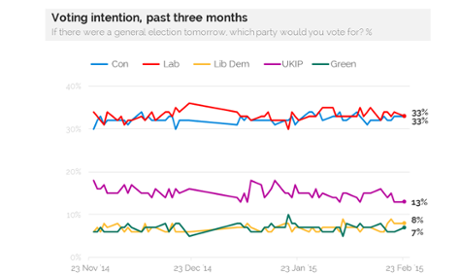
Here’s today’s YouGov poll.
Update: Lab & Con tied - Latest YouGov / The Sun results 23rd Feb - Con33%, Lab33%, LD8%, UKIP13%, GRN7%; APP -19 http://t.co/PGnN9Q0GXw
— YouGov (@YouGov) February 24, 2015
Updated
Sir Malcolm Rifkind, the former foreign secretary suspended by the Conservatives over cash-for-access claims, is facing calls from his colleagues to stand down as chairman of the Intelligence and Security Committee.
He will be told on Tuesday by some of his colleagues at a meeting of the committee, which oversees the security services, that his position is now “untenable” and that he should stand down pending an investigation.
The committee is due to produce a major report on the balance between privacy and security next month and there are concerns that the questions surrounding Sir Malcolm could damage its “integrity”.
Revealing further extracts from the conversation that Jack Straw had with undercover reporters, the Telegraph in its splash also claims that Straw “is take a job with a firm which won a £75m government contract after he lobbied a minister on its behalf”. The firm is Senator International, but its chairman, Colin Mustoe, told the paper Straw did not help with a government contract. In a statement Straw said:
I have acted in accordance with the parliamentary rules at all times in respect of Senator International, as in all other respects. All of these matters will be scrutinised by the parliamentary commissioner.
Updated
Sir Malcolm Rifkind is under pressure to step down as chair of parliament’s intelligence and security committee. Here’s the Guardian’s story from last night about the plight he’s in and this is what Kim Howells, the former Labour MP and a former ISC chair, said about Rifkind’s situation on Newsnight last night. Howells said he was “bewildered” that Rifkind had time for outside work.
It became for me a full time job, trying to get through that material and make sense of it. If the intelligence and security services are not properly overseen, if they are not properly accountable to Parliament and the people then all hell can break loose ...
One would have thought that great care would have been needed by anyone who is chairing that committee. I think it is going to be very difficult for him.
I’ll will be covering all today’s latest developments.
Here’s the agenda for the day.
10am: Mark Carney, governor of the Bank of England, gives evidence to the Commons Treasury committee.
10am: The Green party launches its general election campaign.
10.30am: Sir Alan Moses, chair of the Independent Press Standards Organisation, gives evidence to the Commons media committee.
10.45am: Liz Truss, the environment secretary, speaks at the NFU annual conference.
11.30am: George Osborne, the chancellor, and the OECD’s Angel Gurria launch the OECD’s economic survey of the UK.
Afternoon: Peers vote on the legislation allowing mitochondrial replacement.
4pm: David Cameron gives evidence to the Commons liaison committee.
As well as bringing you the most interesting political comment and analysis from the web and from Twitter. I will post a summary at lunchtime and another in the afternoon.
If you want to follow me on Twitter, I’m on @AndrewSparrow