

The editor should improve the work and then step back
Saorsa also asked:
It seems to me that editors, like translators, often have a critical influence on the final shape of a work, and yet tend to remain in the shadows, hidden from public view and public appreciation. Can you say anything about your experience of this?
 Guardian contributor
 I think that's the territory. Your job is to improve, if possible, the author's work, and then step back.
Updated
samjordison also asked:
Are there any other editors you have particularly admired... or indeed envied?
Guardian contributor I always admired Liz Calder, who was Editorial Director of Gollancz when I started there, and went on to have a stellar career at Cape and Bloomsbury.
I don't think there's anyone I particularly envy, apart maybe from my colleague Alan Samson, simply because he's so bloody clever and knows everything. On the other hand, he's an Arsenal supporter...
MikeWB asked:
Ballard had a fair bit of editorial experience himself -- what was he like to edit?
Guardian contributor As I've said earlier, totally professional, eager to hear of anything which might improve the text. And immovable if he disagreed with a suggestion.
samjordison asked:
Since we’re having a web chat, I wonder if you know anything on JG Ballard’s opinion on the internet? Am I right in thinking he realised its potential quite early...
Guardian contributor As far as I know he never went on the internet in his entire life, though he said he relished it for the unlimited possibilities it promised. But I stopped being his editor in 1997, which was still the internet Stone Age.
Curt Phillips asked:
1) To what degree (if any) do you think that classic science fiction – which for this question I’ll loosely define as “published prior to about 1960” – is influential to the leading British SF writers working today?
2) The current world situation would seem to make many of J. G. Ballard’s writings from decades ago seem unusually prescient. If Ballard were alive today, what do you think he might make of the world we are living through today, and how do you imagine he might further envision the future that awaits us?
Guardian contributor Hi Curt
1) I think most British sf writers are aware of classic sf, and whether or not it's an influence, it's part of their writerly DNA. Some, like Stephen Baxter, go further -- he is a Wells and Stapledon scholar. And I've yet to find a book that China Mieville hasn't read.
2) Ballard wrote in this autobiography: "The United States is now fast becoming a theocratic state run by right-wing political fanatics and religious moralisers". That was obviously completely wrong! I wish he was around to give his views on the current state of Europe.
Updated
MythicalMagpie also asked:
Is there one that got away, a book you wonder if you should have published but didn’t?
Guardian contributor I'm sure there are lots, but at this precise moment I can't think what they are! I have certainly turned down my share of novels which went on to be hugely successful, but I don't actually regret any of those. I always say to editors that if you truly believe in a writer's talent you should think very carefully before turning them down.
Wordnumb asked:
What did you think of the fairly recent collection of Ballard interviews edited by Simon Sellars, Extreme Metaphors? And I grew up reading Ballard, Burroughs, PKD, Lem – authors writing ideas you wouldn’t find elsewhere. Am I right in thinking that there are fewer novel ideas being published as fiction currently / recently? If I’m not right, would you be able to recommend anything?
Guardian contributor I think EXTREME METAPHORS is very much a book for the diehard Ballard fan. There is a lot of repetition in it. Jim definitely liked to formulate and polish his opinions on most subjects, and once he was satisfied with them, he would produce them verbatim.
I'm probably the worst person to ask for recommendations, as currently I mostly reread books we're thinking of reprinting. The Finnish author Hannu Rajaniemi has ideas so clever they make my brain hurt.
Ballard read virtually no fiction
hemingway62 asked:
How do you think Ballard saw himself against his contemporaries and which of his books was he most happy with?
Guardian contributor The thing is, Jim read virtually no fiction. In the roughly fifteen years I worked with him, I believe the only novel he read was THE WASP FACTORY, which he enjoyed. Latterly, he may have read some of Will Self’s work – he certainly says in his autobiography that he had – but I wouldn’t bet on it. One of his most polished anecdotes, which I heard him recount a few times, described the satisfying noise a copy of MIDNIGHT’S CHILDREN (sent to him by the publisher) made as it hit the bottom of his dustbin.
I think he thought that CRASH was the novel which most completely succeeded in what he set out to do, but that may be projection as that’s what I think. He didn’t really talk about his work much.
philipphilip99 asked:
What’s the biggest disagreement/argument you’ve had with a writer over a small thing - such as the placement of a comma? Have you ever suggested a major change expecting a battle but then been surprised by the writer’s immediate agreement?
Guardian contributor I wouldn’t say ‘disagreement’, but I have certainly had extended discussions with at least one writer about the placement of a single comma.
On the other hand, I once phoned a writer, who was way behind his deadline, with some trepidation on a Saturday afternoon, to suggest that he take the novel he was struggling to finish and split it in two; and he virtually tore my hand off in his haste to agree.
But as I’ve said, an editor has to remember that it’s the author’s book. It's a poor editor who tries to intrude their personality into the equation.
BMacLean asked:
Was Ballard aware of PKD’s work? Did he ever express his views on it? Did PKD have anything to say about Ballard? They both used a flat, deadpan tone (though their styles were in other respects quite different) that contrasted effectively with the strange ideas and characters they described in their books. Was this a conscious decision, or just the only way they knew how to write?
Guardian contributor Ballard will certainly have been aware of PKD (in the mid 1960s Jonathan Cape published two Dick novels – THE THREE STIGMATA OF PALMER ELDRITCH and THE PENULTIMATE TRUTH – at roughly the same time as they were publishing THE DROUGHT and THE CRYSTAL WORLD. But I’m as sure as I can be that he never read any of his novels (he may have read a short story or two). He’ll have approved in theory of at least some of Dick’s work. I can’t recall anything PKD said or wrote about Ballard.
I think they both have very personal and distinctive styles, which they may have refined as their careers (and lives) continued, but I think both had their 'voice' almost from the outset.
Updated
MisterX777 asked:
Did JG Ballard require many drafts of his novels, or were they almost perfectly formed from the start? What editorial revision or support did he require? I have not yet seen the movie High Rise, but would it equate to JG Ballard’s vision, or to what you might have hoped from the movie? JG Ballard’s experiences as a child let him see how fragile was the thin veneer of civilisation, and how, once that was stripped back, there was barely scaffolding in place. Do you think his novels were his attempts to process the devolution of a society, or as others have asked, were his writings somewhat misanthropic or pessimistic about the limits of virtue in human nature?
Guardian contributor He certainly did revise and polish a lot before being satisfied enough with a novel to submit it for publication. (Until very late on, he never sold a novel to a publisher until it was finished.) So every typescript I ever read of his had an almost perfect surface. I gather that CRASH was fairly extensively cut, and a much longer draft is in the British Library’s collection, but I’m not sure at what point in the publication process that happened. He knew what he wanted to say, and by the time he was ready for anyone else (I guess apart from Claire Walsh) to see it, he was pretty satisfied with it. That said, he was always eager to receive suggestions for micro-improvements from his editor (there’s a distinction often drawn in publishing these days between structural editing, line editing and copy editing – with a writer as polished and self-aware as Jim, they blended into a single process). There is one sentence in EMPIRE OF THE SUN which I can proudly say is mine, but that’s about the extent of it.
I think he’d mostly have loved the film of HIGH RISE. It’s a long time since I read the novel, but my impression was that it was quite faithful to the spirit of the novel. My only problem with the film is that the events seemed quite unconnected – the narrative thread of the novel wasn’t there.
Ben Holloway asked:
There are several times in Ballard’s career where he wrote “trilogies” of novels, which weren’t trilogies in the normal sense, but in the sense of being almost identical in plot, archetypes and themes. This strikes me as almost obsessive, as if Ballard was using writing as a way of trying to understand something – and when he didn’t quite get it the first time he wrote the same thing again, going over the same ground again, trying to understand something just beyond his reach. I guess my questions are firstly, do you think this is an accurate view? And if so, what fundamental truths do you think he was trying to grasp?
Guardian contributor I don’t think that’s quite right. I think that with certain of his ideas he thought there was enough to explore that he had two or three different approaches from alternative directions. So, for example, he explored many of his ideas about the modern media landscape and our obsession with celebrity in THE ATROCITY EXHIBITION. Then (as he describes in MEMORIES OF LIFE) he decided to go all out in CRASH. Then CONCRETE ISLAND was an idea which (I suspect) came up when he was writing CRASH.
But I don’t think you need the qualifier ‘almost’ to describe his obsessiveness!
Snoring also asked:
Could you talk about what it was like to work with Philip K Dick, please? I read that he would speed write novels over a weekend in binge sessions at his typewriter. Was he interested in honing his prose and structure or did he just want to get the ideas out? Many if his books seem poorly written but that helps to make them so odd.
Guardian contributor I think his days of amphetamine-fuelled binge writing were over by the time I had my first contact with him as a publisher, which was over A SCANNER DARKLY. And as the British publisher, we basically left the editing to the Americans. (This is something which has changed a lot in recent years, but before the internet, and before cheap telephone calls, the Atlantic was very wide.) I never met him, sadly, though I had a few phone conversations in 1978/79. I had persuaded a consortium of his British publishers to come up with the money to fund a visit, but sadly it never came to anything.
I find his – shall we say? – convoluted sentence structure part of his novels’ distinctive charm. You can recognize his work from a single paragraph, the one main characteristic he shares with Ballard. But I can see how some readers would find it off-putting.
I do know that A SCANNER DARKLY and THE TRANSMIGRATION OF TIMOTHY ARCHER – the two new novels I was involved with publishing – were quite extensively revised and rewritten, which I think shows.

Thanks for the reply. A Scanner Darkly and Transmigration of Timothy Archer are two of my favourites. I also found VALIS fascinating and bewildering- it appears to me that it was compulsively reworked and reworked and clearly meant a lot to him. I tried dipping into the compendium of his 'Exegesis' that was published a few years ago - it's too daunting to take in one go, but to me it reads as a primary source to VALIS as he was obsessively trying to work through what he had experienced.
Guardian contributor VALIS divides the readership down the middle -- those who think it's his masterpiece, and those who think it confirms that he'd gone off the rails. I'm afraid I'm in the latter camp. My main correspondence with him was before I got a job in publishing, and he wrote me a succession of long and (to me) frankly loopy letters, some of which are included in the EXEGESIS. When he said that as she was dying his cat turned into the Lamb of God I didn't know what to say...
Updated
Snoring asked:
Re: Saturday 14th May 2016 – Bookham, Surrey – available?
https://discussion.theguardian.com/comment-permalink/71250431
ActualGraunReader asked:
I’d like to know if there are any currently-active authors or books that look likely to be in whatever future version of Gollancz SF Masterworks we might have twenty years from now. Five years ago things looked pretty moribund (from where I’m sitting) and the Masterworks looked like a headstone on SF’s expansionist glory days (roughly 1953 - 83) but my perception is that things have perked up.
Guardian contributor I hope that’s not the case. The entry barrier to the Masterworks series is that the books should have to some extent stood the test of time, which in practical terms they have to be remembered after 15-20 years. So when the list was launched in 1999, there was a rough cut-off of 1980. Seventeen years later, the cut-off is approaching the millennium. I actually think the genre has looked pretty healthy over here for the last few years; arguably a bit less so in the USA (but that may just be that I’ve read less!). I have to admit I’m pretty poorly read in sf not published by Gollancz in the past 15-20 years.
One consequence of the ebook revolution is that publishers keep their backlist in print, in principle forever, so the days of contracts lapsing because sales fall below a certain threshold seem to be gone, which will make adding to the list more challenging in future.
 Guardian contributor
 One consequence of the ebook revolution is that publishers keep their backlist in print, in principle forever, so the days of contracts lapsing because sales fall below a certain threshold seem to be gone, which will make adding to the list more challenging in future.
How fascinating... Definitely a case for more flexibility in contracts. If I were an author who couldn't get into the Masterworks series because of an ebook, I'd be furious...
Updated
Saorsa asked:
Malcolm, my experience of Ballard’s writing is of sense impressions which vividly linger, almost like memory traces of a lived experience. Do you think Ballard was aware of creating this effect as he wrote?
Guardian contributor As I said in a previous answer, it’s always worth remembering that he always embraced surrealism, and I think he was successfully trying to reproduce the very heightened but simultaneously dreamlike realistic surfaces of a painter like Dali (wildly out of fashion now, but Jim had no regard for fashion). But it’s also worth remembering that I am a publisher not a literary critic!
I was always particularly conscious while reading his typescripts of the smooth powerful pulsing rhythms of his prose, quite unlike any other writer I've worked with.
MythicalMagpie also asked:
Do you think JG Ballard had generally negative views of people and the fate of the human race? The ending of High Rise seems to hint that he felt the breakdown of modern society might be inevitable but also that it might not necessarily be ultimately a bad thing.
Guardian contributor Jim would say that he was posting warning signs. He was very clear-sighted about western society, and not altogether optimistic about people’s better natures prevailing. But it’s worth remembering (a) that he was always at heart a surrealist, and (b) there is a lot of very dry humour in his work. I went to see the film of HIGH RISE a few days ago, and I was reminded much more of Bunuel films than of any other current dystopian vision.
After I moved publishers and ceased being his editor, I attended a bookshop event for MILLENNIUM PEOPLE at which he read aloud a typical passage, chortling with mirth as he did so. He concluded the evening by suggesting that the audience set fire to a Volvo on their way home.
lysistrata papas asked:
1.Can I have your definition of SF?
2.Is Freud a SF writer?
3. Who is your favourite female SF writer and why there are still less female SF writers?Lack of interest? Talent? Or due to the Male Audience?
There are many definitions of sf, from the long and pretentious to the short and obvious. In some ways I prefer some variant of “sf is what I’m pointing at when I talk about sf”. I’d say that sf (as I understand it) couldn’t really exist until there was a widespread understanding that the future would differ from the present, often in the course of a single lifetime, and I don’t believe that was generally the case until the Industrial Revolution, so definitions which go back to Lucian of Samosata or Jonathan Swift don’t really work for me.
Freud – no. That certainly wasn’t his intent!
Women sf writers? Ursula Le Guin is obviously the Everest of this mountain range (and arguably the Everest of sf writers irrespective of gender). Otherwise I’ll just mention three writers who I’ve published fairly consistently – Pat Cadigan, Nicola Griffith and Sheri S. Tepper -- completely different writers, all very good. As a publisher, I’ve never noticed any gender barrier within the field, much as people like to say otherwise.
Updated
Friendship is optional between an author and an editor
Varun Ramadhyani asked:
As an editor, what do you look for the most when trying to start a long-professional- relationship with a writer? What, to you, signifies a healthy relationship between a writer and an editor?
Well, the obvious point is that you have to feel the writer has the talent. Some authors have one or two books in them, and there’s absolutely nothing wrong in that; others seem to be tapping a constant wellspring.
It’s an interesting question about what constitutes a healthy relationship. I’ve always thought it’s very important that the editor should remember that it is at root a professional relationship, not a friendship. Author and editor may become friends, but it’s certainly not a requirement. The editor’s job is (a) to give utterly truthful responses to a work, but (b) to remember that at the end of the day it’s the author’s work. You work together to arrive at the best possible version of the book the author was trying to write. If in time the relationship turns into friendship, that’s a bonus. Jim and I were friendly, but not friends. (For one thing, his close friends – none of whom were publishers – called him Jimmy; he was Jim to his publishers.) And in between books he basically wanted to be left alone, and always sounded surprised (and not altogether pleased) if I had to call him about something.
Updated
daveportivo asked:
My only exposure to JG Ballard’s writing is High Rise and Crash, so I wanted to ask what might be a blunt question: did JG’s life experiences lead him to have a dim view of humanity?
I thought there were many intriguing questions arising from the novels, but rather than ask something overly conditional, I just thought I’d ask the similar optimist/pessimist question about human nature.
I’m not sure I’d put it that way. I think he had a very unsentimental and forensic view of humanity. But in person he was generally cheerful, one might almost say jolly. Mind you, by the time I met him he’d raised his children and appeared a contented middle-aged man; I gather he was wilder in the 1960s.
MythicalMagpie asked:
Who was your favourite author to work with? And do you have the best job in the entire world?
It’s invidious to single out anyone, not least because I’ll forget someone, and I'm not ready to commit career suicide! Most authors are very easy to work with, and I won’t name the few who haven’t been! As this webchat is centred on J.G. Ballard, I’ll note that he was an absolute pleasure to work with and immensely professional.
I’ve had a series of jobs in publishing, each of which I’ve enjoyed immensely. I’m aware how lucky that makes me!

Thank you.
It was a bit of an unfair question. I guess we'll have to wait for the scandal filled memoirs. Confessions of a Publisher. ;)
judgeDAmNationAgain asked:
Which particular author/book/work got you interested in SF, and have you ever attempted to write any of your own? Even though I am not a big SF fan now, I was an avid reader of the Target Doctor Who novelizations as a child, and it was attempts to recreate my own versions of these that probably got me into writing (and indeed reading) as a lifelong pursuit...
I'm not sure how this is meant to work, but it's after noon, so I'll kick off...
I think I was interested from the moment I discovered there were such books. In the children’s section of the library I worked my way through such now-forgotten writers as E.C. Eliott (whose Kemlo novels were particular favourites) and Donald Suddaby. Then I graduated to the adult section and read everything I could find, starting around the time Gollancz started their sf list. We’ve republished ebooks of many titles from the 1950s and 60s (and earlier).
I have no talent for writing fiction, sadly, although as Sam noted I did manage to squeeze out one short story. ( I co-wrote a number of texts for large format illustrated books in the early 1980s, one with Harry Harrison and the rest with Rob Holdstock, a close friend.) I made a number of starts when I was much younger, but they all petered out as I realised I didn’t know where they were going and had no idea what I wanted to say. In consequence I’ve always had great respect for anyone who has the staying power actually to finish a novel.
Updated
Malcolm Edwards was JG Ballard’s editor for several years and worked with him on Empire of The Sun, among other classics. He should be able to give invaluable insights into Ballard’s working methods and the wonderful books he produced - and so is uniquely placed to talk about this month’s Reading Group choice, High-Rise, not to mention the recently released film.
But Edwards is also a wonderful guest for plenty of other reasons. He is a publishing legend who has worked with writers including Tom Clancy, Philip K. Dick, Stephen King, William Gibson and Terry Pratchett. He has been one of Brian Aldiss’s publishers for decades , in the 1990s was one of the first UK editors on George RR Martin’s Game Of Thrones and has also worked with Ursula Le Guin, Michael Moorcock, Kate Mosse and Alan Furst - to name just a few.
As well as such close involvement with so many great books, he has also risen to the top of the industry. For several years he was deputy CEO of Orion and is currently chairman of Gollancz, where he established the superb SF Masterworks series: one of the finest lists of novels in the English language in any genre - and also the best way to end an argument with anyone trying to claim that Science Fiction does not deserve serious literary attention.
In addition to all of that Edwards is a leading light in SF fandom, was the chairman of the Science Fiction Foundation for several years, he was a contributing editor to the very first Encyclopedia of Science Fiction, he edited the anthology Constellations, and co-edited The Complete Book of Science Fiction and Fantasy Lists with Maxim Jakubowski. Malcolm Edwards also won a British SF Award for his (so far as I know only published) story, After Images, in 1984.
We’re lucky to have him with us, in other words, so please do take advantage of this opportunity and ask as much as you can. Malcolm will be answering questions at 12noon on 25 March - but feel free to get yours in early.
To get the ball rolling I’m also happy to say that we have five copies of the recent SF Masterworks release, Ursula K LeGuin’s The Word for World is Forest, to give away to the first five readers to post a “please may I have” along with a nice question for Malcolm. If you’re lucky enough to be one of the first to comment, email Laura Kemp with your address (laura.kemp@theguardian.com) – we can’t track you down ourselves. Be nice to her, too.
Updated




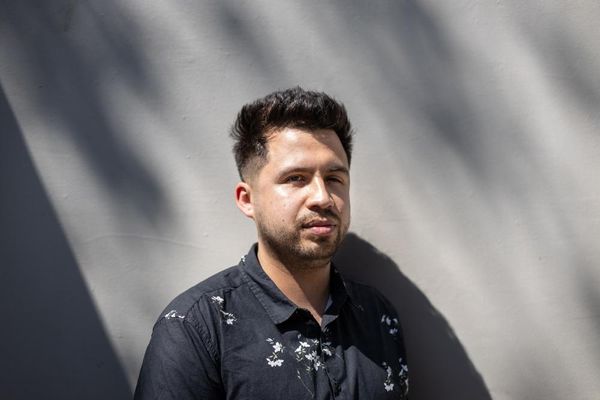









I always think that more people should know about Alan Furst, whose thrillers based in Europe in the late 1930s and very early 1940s I've been publishing for over 20 years.