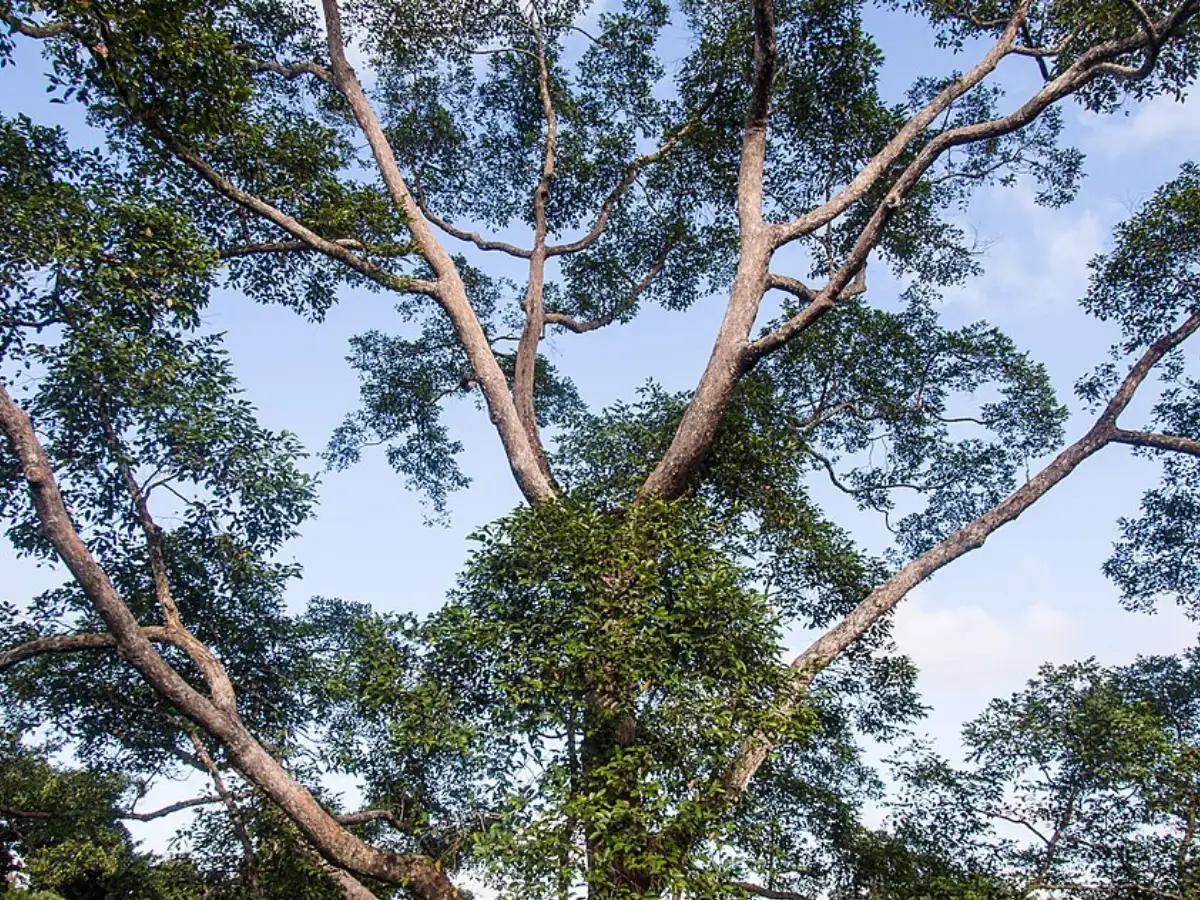
For years, one idea has quietly shaped the way climate scientists in the US and elsewhere think about forests and drought. The theory is that the taller a tree grows, the harder it has to work to pull water from its roots all the way up to its topmost leaves, leaving giant trees more vulnerable when the rains stop. But a new study turns that assumption on its head.
In the study, ‘Height does not impair the hydraulic system of the tallest tropical Dipterocarp trees,’ published in Science, researchers from Cardiff University and the University of Exeter examined five species of dipterocarps, a family of rainforest giants that dominate the rainforests of Malaysian Borneo. They found that the tallest of these trees is not more vulnerable to drought than its shorter neighbors. The same study reports that the trees have silently built their own internal workaround for the physical challenge of moving water to such extreme heights.
Why this matters beyond the rainforest
It’s not only of interest to botanists. The University of Exeter says the tallest 1% of trees on the planet hold more than half of all the carbon held above ground in forests, making them a major piece of the puzzle when it comes to slowing climate change. According to Science's own reporting on the study, the assumption that trees are more fragile in droughts because they’re tall has gone straight into the climate models scientists use to predict how much carbon forests will keep locked up as the planet continues to warm. So getting this detail wrong has real consequences.