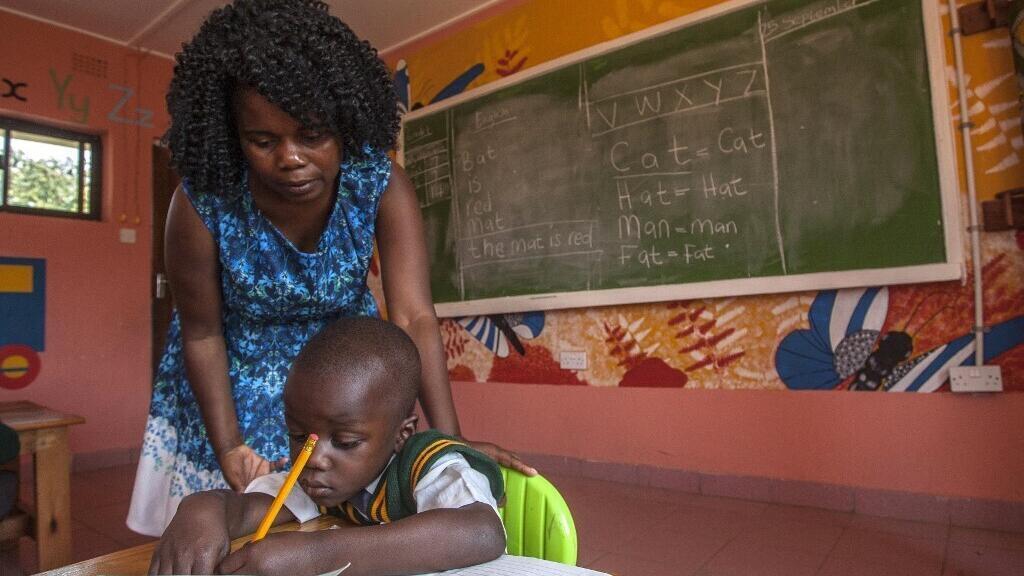
Malawi's newly elected president, 85-year-old Peter Mutharika, has delivered on his campaign promise to make primary and secondary education free by abolishing almost all school-related fees.
In a bid to improve literacy levels in the country, Mutharika has announced that tuition fees, examination fees, school development fees and fees for identity cards used during examinations have all been abolished.
"I also want to direct that no public school should be requesting learners to make contributions towards the School Development Fund and any other fees, except boarding fees," Mutharika added.
Secondary school pupils in boarding schools will still need to pay boarding fees, which remain substantial.
The move is expected to increase enrolment and lower the drop-out rate.
Although the latter has improved significantly for primary education – from 11.7 percent in 2009 to 3.2 percent in 2018, according to the national education sector investment plan – retention remains a challenge. The country has a primary school completion rate of 52 percent and a repetition rate of 24.5 percent.
In 2024, 24,371 learners dropped out of primary schools and 24,371 of secondary school. Overall, only 33 percent of children complete primary school and 4 percent upper secondary school, according to figures quoted by Malawi's Nation newspaper.
Malawians face food insecurity and soaring unemployment as they head to polls
'The only way out of poverty'
The country is in economic crisis, and has seen the price of goods and services soar. According to the World Bank, it is the fourth poorest in the world, with the majority of people living on less than $2.15 a day, according to 2019 estimates.
"The [previous] government has not been able to mobilise enough revenue to implement its programmes. Overall growth projection remains weak, with GDP projected to grow at 2.8 percent in 2025 from 1.7 percent in 2024, mainly attributed to low agricultural productivity, supply chain constraints and limited industrial capacity," said Mutharika.
He added that his administration has already started taking steps to address the gaps.
Meet the Kenyan man shaping a francophone future in East Africa
Dr Foster Lungu, an education expert at Mzuzu University, said that the school fees announcement "gives hope", but questioned how it will be implemented financially.
"Come January [when the policy is set to take effect], you may find that the schools are not well resourced, and this line of income to the schools was helping to resource those schools. Then it will be a pinch – more or less back to square one."
Commenting on the development, Zimbabwean journalist Hopewell Chin'ono said that abolishing school fees is an "excellent start" and "a progressive move, because national education remains the only real way out of poverty for the African child".
Chin'ono also noted, however, that around 30 percent of Malawi's national budget is lost through corruption, quoting organisations including Transparency International.
"If [Mutharika] successfully stops this 30 percent looting, he could fund free primary and secondary education using the recovered resources... Africa has enough money to fund public services such as education."