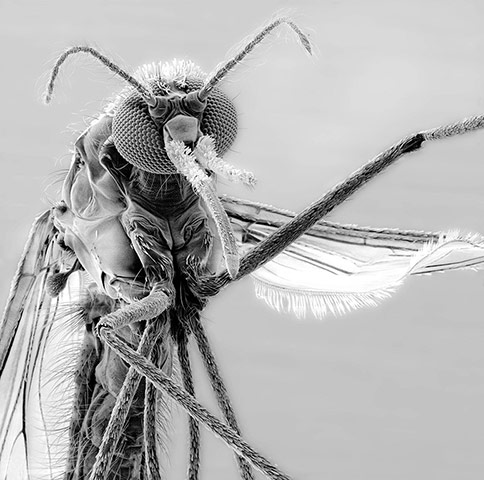
“She was three years old. It was a very sad time, a bad time for the entire family. We are all still deeply affected by her death and I truly fear this disease.” Nambassa Miriyamge, Mother, Uganda This image is from the collection of “Portraits of grief”. View the other portraits here Photograph: Adam Nadel/Malaria ConsortiumThese two Nigerian children are recovering at a clinic after receiving emergency anti-malarials. Without treatment it is likely one, or both children, could have died. In 2010 an estimated 660,000 people died from malaria. Children under five are the hardest hit by the disease, accounting for at least 86% of all deaths. Their immune systems are not strong enough to fight off the malaria infection. View the full exhibition on malaria herePhotograph: Adam Nadel/Malaria ConsortiumAn electron microscope image of the female Anopheles mosquito, which is responsible for transmitting malaria in over 100 countries. The head contains all of the significant sensory organs that the insect uses to find blood meals. See the exhibition of the Vector herePhotograph: Adam Nadel/Malaria Consortium
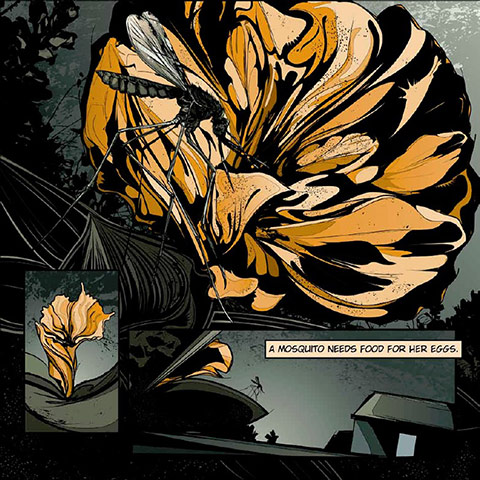
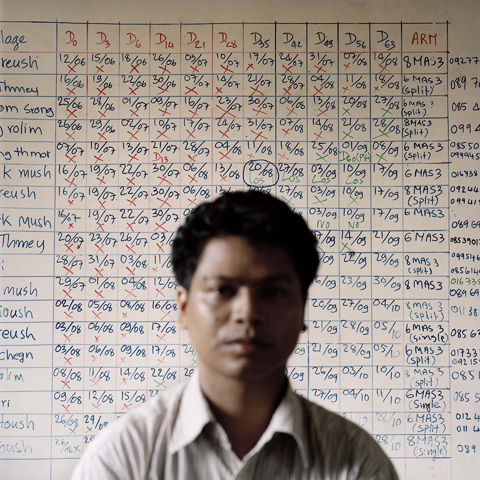
Oba's story: a graphic story about how malaria affects one family, by Adam Nadel, illustrated by Kako. Read the rest here Photograph: Adam Nadel/Malaria ConsortiumThe malaria parasite’s ability to develop resistance to drugs is a major problem in the fight against the disease. One obvious solution to drug resistance is, of course, newer and better drugs. Unfortunately, each new generation of drugs is many times more expensive than the last. "There was increased concern that the parasite was not clearing and this research facility was created to examine the issue. The results are clear: day-by-day resistance is undeniably growing. Artemisinin is quickly losing its ability to work here. The dangers associated with this emerging resistance can’t be overstated… The numbers behind me are the data of individuals who have had resistant malaria." Dr. Rupam Tripra, Research Physician Mahidol-Oxford Tropical Medical Research Unit, Cambodia. You can find out more about malaria here Photograph: Adam Nadel/Malaria Consortium
Sign up to read this article
Read news from 100’s of titles, curated specifically for you.