
It’s December – a time of year when people commit to drastic lifestyle changes in an attempt to overhaul their health. But this rarely works long-term. Instead, NHS GP Dr Radha Modgil prescribes small, sustainable swaps that can have a significant cumulative impact on how you look, feel and function.
“Take five minutes out of your day to stop and think about tangible, realistic changes you can make to make you feel better,” she advises. “Habits can be changed, our bodies can get used to these things quite quickly, and small changes can make a big difference over time.”
This could start as simply as tweaking your daily cup (or cups) of tea. “Years ago, when I was having a stressful day, I used to put three sugars in my tea,” she says. “I started to think, ‘Why am I doing this?’, then I gradually reduced it. Now, if someone puts sugar in my tea, it tastes horrible.
“The best thing is to get the sugar in your tea down to zero,” she continues. “Weight management is one problem associated with sugary drinks in general. Then there is the risk of developing type 2 diabetes and increasing risk factors for cardiovascular disease.
“It is also not great for your energy levels, because we tend to gravitate towards sugary things when we’re tired. But actually, all this does is give us a sudden spike in our blood sugar followed by a very sharp fall, often leaving us feeling worse than before.”
As an alternative, she recommends black tea and plenty of water to stay hydrated. Diluted squash and cordial, or herbal teas, can be good alternatives if you fancy a splash of flavour.
Below, Dr Modgil details several other beneficial switches you can use in lieu of an unachievable New Year’s resolution. If you can implement just one of them, better health awaits.
Eating
“The main thing we can do to eat healthier is focus on balance, rather than turning to ultra extreme diets,” says Dr Modgil. “One of the simplest steps we can all take is looking at how many fruits and vegetables we are eating each day.”
These do not have to be fresh, she adds. To trim down costs, you can buy them canned, dried or frozen – they will still provide plenty of nutritional value to help the body function better.
“Evidence shows that if we at least eat our five-a-day, we have a lower risk of heart disease, stroke and some cancers,” Dr Modgil says.
Another thing we can do to improve our diet is cutting down on foods high in salt, saturated fat and sugar. One way to do this, Dr Modgil says, is by managing our stress levels.
“We know, when we’re stressed, tired, upset or things are difficult, we tend to grab food that isn’t especially good for us. If we know this is something that has happened in the past, just noticing our emotional state and trying to take a step back before eating can be really helpful. We don’t often talk about diet in the context of our emotional health, but in my experience that’s often a trigger for not eating as well as we’d like to.”
To encourage healthier snacking, she recommends filling a plastic container with a few fruits and vegetables and taking it with you during the day – this provides a handy alternative to grab bags of crisps and chocolate bars when you grow hungry.
By displacing less nutritious, more energy-dense foods in our diet, this switch can aid weight management and regulation of blood sugar levels.
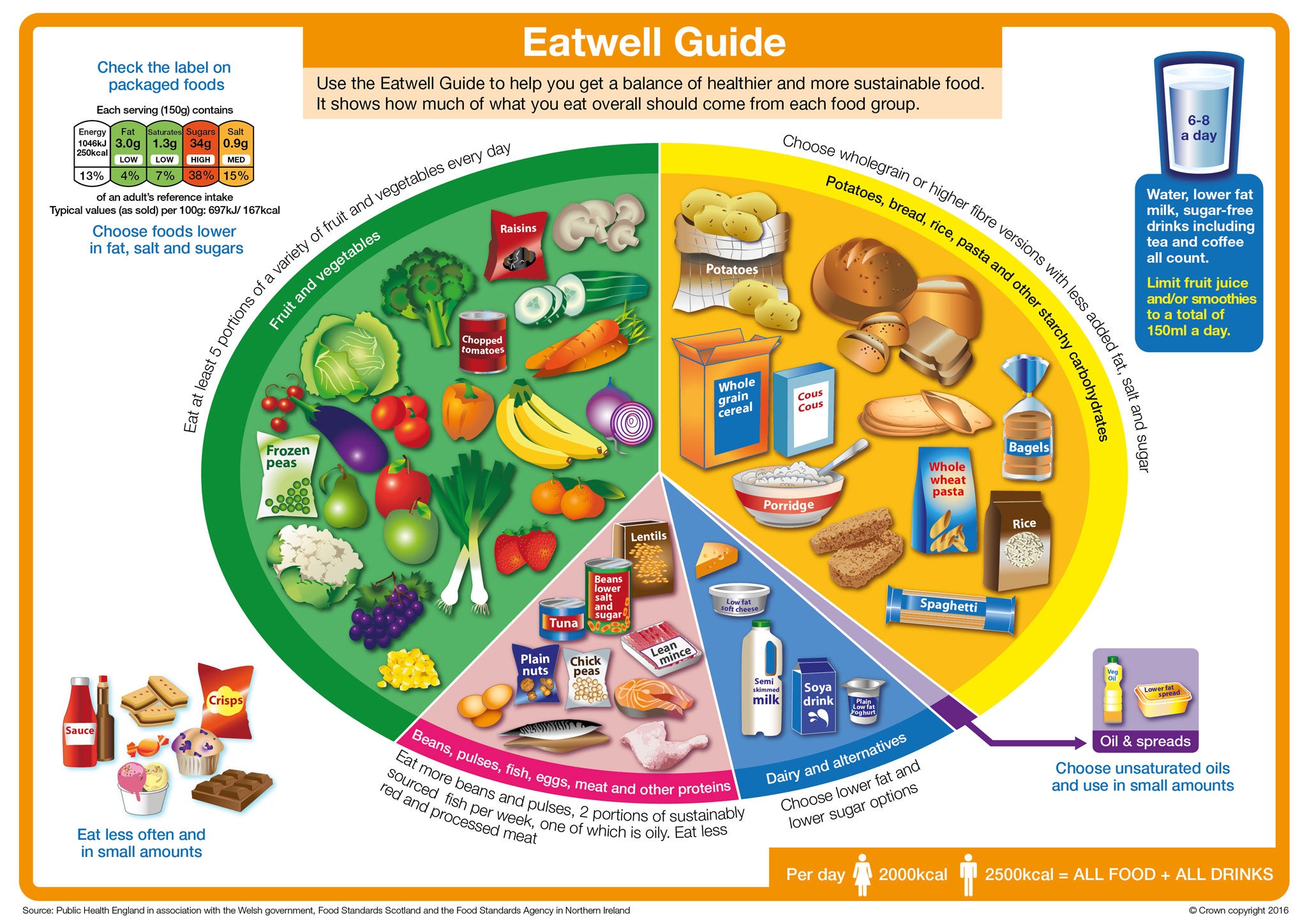
Dr Modgil also suggests looking at the overall composition of your diet. She points to the NHS Eatwell Guide – below – as a good template for balanced eating.
It recommends filling a little more than a third of your diet with fruits and vegetables, and another third from high-fibre starchy foods such as wholewheat pasta, brown rice and skin-on potatoes. The remainder should consist of lean protein sources and dairy, with two weekly portions (140g) of fish where possible. One of these should be oily, such as mackerel, salmon or sardines.
Foods such as chocolate, cakes, biscuits, sugary soft drinks, butter and ice cream, on the other hand, are “not needed in our diet, so should be eaten less often and in smaller amounts”.
Read more: What foods nutrition experts really eat to stop chronic illness in old age (and always avoid)
Drinking
“Our brain is made up of about 80 per cent water, so staying hydrated is one of the most obvious things we can do to feel better,” Dr Modgil says.
NHS guidelines recommend drinking at least six to eight glasses of fluid per day, with people who are pregnant, in a hot environment, physically active or ill likely needing even more.
“When we’re not drinking enough, our energy levels drop and we can get really tired,”Dr Modgil continues. “But when we’re hydrated, our brains work better and we tend to feel less hungry.”
It can also be helpful to consider what you are drinking – something people often overlook when crafting a healthier diet. This is demonstrated by the sugar-in-tea example in the introduction.
“Avoid sugary drinks,” says Dr Modgil. “Swap them for healthier alternatives. Water is always the healthiest option.”
This can aid weight management and help your body better regulate blood sugar levels while reducing your risk of type 2 diabetes and heart disease.
She also recommends limiting your intake of fruit juices and smoothies to one small glass per day, as these are often – perhaps surprisingly – high in sugar and calories.
Dr Modgil’s final tip for healthier drinking is to keep tabs on your caffeine intake, through tea, coffee, energy drinks and otherwise.
There is no strict limit, but the NHS recommends consuming it “in moderation”.
“Generally, caffeine-free drinks are the best,” says Dr Modgil. “But you tend to get headaches and feel quite tired when you withdraw from caffeine, depending on how much you’re drinking. It’s important to make sure you’re reducing caffeine gradually and according to how you feel.”
Read more: The truth about diet soft drinks and their effects on your health

Sleeping
“Sleep is the ignored younger child in the corner when it comes to improving your health,” Dr Modgil jokes. “People just don’t think or talk about it.”
However, improving both the quantity and quality of your nightly slumber can have a transformative effect.
“Sleep is a proactive process,” Dr Modgil says. “Our bodies physically repair, our minds rest and we process emotions and events from the day while laying down memories.
“Good quality sleep can improve attention, concentration and resilience – when things are difficult in life, we have the ability to manage and respond to them rather than just react. When making decisions around eating, this can help us maintain a healthy weight. Our immune system benefits from good sleep too.”
However, poor sleep is linked to weight gain, reduced heart health and an increased risk of high blood pressure, coronary artery disease, diabetes and stroke, she adds. Our mental health is also likely to worsen when we don’t sleep well, making us more stressed and anxious.
Dr Modgil’s primary tip to improve your sleep is to “make your bedroom a sanctuary”. This includes ridding it of anything that might increase your stress levels, such as any devices or items linked to your job.
“As soon as your mind sees your work laptop, or any remnant of work that you’ve left behind, it’s going to be stressed and your brain will not want to go to sleep,” she says.
Another thing you can do to boost your sleep quality is establish a regular routine around our sleep.
“Having fairly regular sleep and wake times is important because it allows your brain to know what’s about to happen and get into a pattern,” she says. “We know our circadian rhythm [an in-built 24-hour body clock] impacts all of our hormones that are responsible for sleep such as melatonin. If you can establish a pre-bed routine, with certain cues like having a shower at a certain time, reading or putting your mobile phone away, your brain will come to expect sleep when you do these things.”
Exercising and accessing plenty of natural light during the day can also raise alertness and further align you with your circadian rhythm.
Read more: The not-so-common tricks to help you fall asleep faster

Movement
“For me, exercise and getting active is like magic,” says Dr Modgil. “It has such a positive impact on your physical health, your mental health and how you feel about life.”
NHS physical activity guidelines for 19-64 year olds advise “at least 150 minutes of moderate intensity activity a week or 75 minutes of vigorous intensity activity a week”, as well as twice weekly “strengthening activities that work all the major muscle groups”. This represents a solid baseline for most people.
But Dr Modgil says these guidelines can be tricky to meet amid the backdrop of a desk job and busy life.
“It’s really challenging in the modern world we live in, but there are things we can do,” she says. “One of those things is to reframe what exercise is. Exercise as a phrase comes with associations in people’s brains – for example, it has to be jogging. But if you can reframe what movement means for you, whether that’s choosing to climb the stairs rather than get a lift, getting off the bus a stop earlier, gardening or even dancing in your kitchen while you cook, all of these things will improve your general fitness and health.”
As an exercise, she advises looking at a typical day in your life and highlighting any opportunities to move your body.
“If we can establish that higher level of lifestyle movement as a baseline, anything we do on top of that – whether that’s running, going to the gym or any other form of traditional exercise – will be a bonus.
“And we know that, when we move our bodies, we lower our risk of type 2 diabetes, certain cancers, osteoarthritis, falls, depression and cardiovascular disease, particularly as we get older. We sleep better, we have less anxiety and we can manage life’s challenges better. Our relationships also improve because our self-esteem and confidence grows – all of that comes from exercise and movement.”
Sedentary time has the opposite impact, “increasing the risk of all of those health conditions”. Every little bit of movement you do helps combat this.
If you are looking for a structured exercise plan, try this four-week bodyweight workout programme for beginners, or give the NHS couch to 5K a go.
Read more: If you struggle to walk 10,000 steps a day, a scientist recommends trying this instead

Alcohol
“There is no completely safe level of drinking,” says Dr Modgil. “The advice on the NHS website is all about lowering the amount we are drinking, because if we can do that we have less chance of liver disease and cancers, we have better mood, we can manage our weight better and we enjoy lots of other benefits too.”
The high amount of sugar in calories and sugar in some alcoholic drinks can hamper our efforts to achieve a healthy weight, she warns.
“It’s not just our physical health alcohol impacts either. Our relationships can be affected, as well as how we interact with other people and our finances too.”
However, going cold turkey can be tricky, and Dr Modgil highlights the importance of being realistic with your goals in order to transform them into habitual behaviours.
“We recommend no more than 14 units per week – roughly six glasses of medium strength wine or six pints of four per cent beer,” she continues. “And there are some caveats to that. You should spread those units across three days or more.”
The Christmas season is an especially tricky time to stick within these limits. To negotiate this period successfully, Dr Modgil shares a few tips.
“Work out your ‘Why?’ for drinking alcohol, and how you might reduce your alcohol intake to feel a bit better during the festive period,” she says. “Then look at your Christmas diary, check the events coming up and consider reducing your alcohol intake or not drinking for a few of them.
“When you’re going to those events, make sure you’re eating enough beforehand and drinking water or soft drinks between alcoholic drinks.”
Read more: Why going sober was one of the best things I’ve ever done

Smoking
It is no great revelation to say that smoking is harmful. It increases your risk of cancers, cardiovascular disease and lung disease, Dr Modgil says.
“Less is always better,” she continues. “And the great news is, if we stop smoking or reduce our smoking gradually with some support, we get some very quick benefits as a result.
“You will have more energy, be able to breathe more easily, have improved lung function and you will enjoy better blood circulation. Then there are the long-term benefits, such as reducing your risk of lung disease, cancer and heart disease.”
When attempting to stop smoking, it is also helpful to establish your reason for quitting, Dr Modgil says.
“Is it for my physical health? Is it to save money? Is it for my children and other people who are worrying about my health, and I want to have more energy to support them?” she says.
“There is an NHS app [NHS Quit Smoking] available to help you give up smoking for better health. Or you can go to a GP for support. If you have some support around you, or do it in a group, you are more likely to be successful.”
Read more: How to deal with a smoking relapse
If you struggle to walk 10,000 steps a day, a scientist recommends trying this instead
A flexibility expert shares his three favourite stretches for soothing tight hips
Swap the gym for this trainer’s six-move kettlebell workout to build full-body strength at home
Should you be taking probiotics? Health benefits explained
I tried the walking method ‘better than 10,000 steps per day’ – this is why I’m a fan
I tried training with one of the fittest women in the world – and it didn’t end well