We all have memories from our formative years that really stick. A first kiss. An epic family road trip. A dramatic moment in a Little League game. For Marcos Espinoza, it’s an infomercial for a food dehydrator. The 29-minute spot from the early 90s featured inventor Ron Popeil, who showed off how his Ronco device could make jerky of all types: beef, buffalo, fish – you name it.
“I must’ve watched it a million and a half times,” Espinoza says with a laugh.
Fast forward to 2015. Espinoza runs Side Project Jerky, a three-year-old small business based in Philadelphia. His jerky products, which include flavors like Mongolian and pho, are sold in 30 stores in 10 states. That’s nice success considering the jerky biz is Espinoza’s side hustle. He also works full time as a cost estimator for a construction management company.
Like many folks who have food industry side hustles, Espinoza faces a major challenge: figuring out how to take his passion project to new heights while balancing the demands of a day job and family life.
The good news is that investment in food and beverage startups is sky high – venture capitalists poured $368.7m into the industry in the third quarter of 2015 alone. However, nurturing a food brand is no small task, says Micha Magid, co-founder of Mighty Quinn’s Barbecue, which began as a side hustle in 2009 and now has grown to seven restaurants in New York and New Jersey.
“Turning a great product that is scalable into an actual company requires a very big tool chest and people with varying talents,” Magid says. “The food part is extremely important, but it is only part. Take yourself away from the product and ask yourself: ‘What do I need to build a company?’”
Taking care of business
Espinoza has been pondering that question for a while. He has learned that the first step to scaling a side hustle is to fully acknowledge that it is, in fact, a real job. “You’re no longer an artist – you’re a craftsman,” he says.
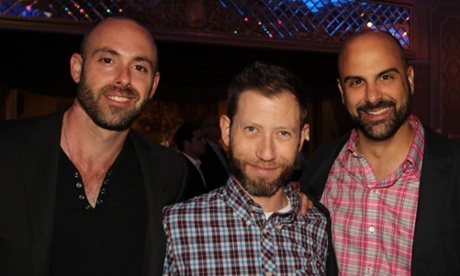
That means staying on top of accounting, legal matters, inventory and food safety regulations. Plus there’s the issue of making sure the product’s quality stays the same as its quantity increases. This was an issue when Mighty Quinn’s grew from a small stand at Brooklyn’s Smorgasburg market into a full-fledged restaurant in Manhattan.
“We had some growing pains perfecting our [meat] smoking process as we moved from outside mobile smokers to a much larger, vented version,” says co-founder Christos Gourmos. “This problem was quickly fixed, but the experience kept us on our toes as we rolled out new menu items.”
Also, since Mighty Quinn’s uses many gourmet ingredients, its owners had to make sure the food preparation process was efficient to maintain low prices for customers.
Friends to lean on
Espinoza’s biggest obstacle is finding the time and energy to work on Side Project Jerky. After he gets home from his day job, he has dinner with his wife and two children. His kids go to bed about 9pm, and then he has to muster the strength to work on his side hustle for a few hours. “There are some times that I just want to turn off,” he says.
Espinoza has hired a vendor to produce his jerky, but he is solely responsible for growing the business – and he doesn’t have the budget for other employees.
“The challenge is that I have to be out there selling or find somebody who’s willing to sell,” he says. “People love the product, but they’re not going to knock on doors and find new accounts out of the kindness of their heart.”
Eleni Gianopulos faced a similar situation in the 1990s. She had a side hustle baking cookies in her tiny Manhattan apartment while holding a day job in magazine publishing.
Gianopulos found help in her community. Her church offered a large kitchen where she could bake and a friend loaned a car to make deliveries. Within a few months, Gianopulos was able to quit her job and focus full time on Eleni’s Cookies, which has been at Manhattan’s popular Chelsea Market for 20 years.
“Friends can be a great influence on a young business,” she says. “Also, look for people within the industry who can be supportive of what you’re doing and give you a hand.”
Make no mistake: it takes strength to get through the early stages of a side hustle. “It might be a rough first couple of years, but each day gets more fun and more challenging in an interesting way,” says Gianopulos. “You wake up every day loving what you do, and that’s the win. It feels like your own thing.”
So what would it take for Espinoza to quit his day job and focus solely on Side Project Jerky? Things would have to jell financially and offer work-life balance. For now, he’s fine with his life as a side hustler who makes ends meat – er, meet.
“The day job is very left brain and Side Project Jerky is very right brain,” he says. “If I start to take myself too seriously on the creative side, then I lose the muse. And if I veer too far off on the noncreative side, then I get bored. I need both to maintain my sanity.”
Content on this page is brought to you by Squarespace. Receive 10% off your new Squarespace signup with offer code SIDEHUSTLE.