In spite of its countless champions in government, social enterprise remains a sticky subject.
I believe market-based income generation can be a crucial means for some organisations to support their work – namely when the business plan is closely linked with fulfilling the an organisation's mission.
But there's an awful lot in the social enterprise world coming from the other end of the spectrum. I've called this "Corporate Social Responsibility 2.0" – or a veneer for profit-making businesses to portray themselves in a more positive light, without changing deeper unethical practices.
It is "enterprise" with a sprinkling of "social" for PR purposes.
That might sound too cynical. I don't want to imply that this is necessarily a malevolent effort, but that profit-making companies must do more than channel a small portion of their profits into a mostly removed charitable cause if they want to be taken seriously as a social venture.
While many businesses turn profits through deeply unethical practices and then make sizable donations to charity, social enterprise should not be the "carbon trading of social good", by which I mean buying the right to keep doing something which is fundamentally wrong.
This means thinking about how every part of what the organisation does, inside and outside its walls, aligns with the values it espouses. How is it making money? What impact do these activities have on the environment? On people involved in them, directly or indirectly?
But there's a deeper question which is hardly limited to social enterprises, applying to so many of our more traditional charities and social change organisations. Do we believe our methods as much as we believe in what we do? I believe we should.
Are our management structures, reporting processes, communication methods, individual behaviours and relationships with colleagues, reflective of the values we want to see more of in the world?
In my experience with social enterprises, charities, NGOs, and campaigning organisations, this is often not the case. So many socially-focused institutions have taken industrial-era corporate organising blueprints and attempted to apply them to a range of social aims. But these systems were not designed to help create a better world, just a more profitable one.
My friend Paul Barasi often jokes about the number of social change organisations that use words such as engagement, participation, or involvement in their Twitter bios, yet who only follow newspapers' and politicians' accounts, and who don't communicate with people who tweet them. This makes for a relatively superficial, but also quite stark, disconnect between purpose and practice.
More fundamentally, countless organisations promote ideas about democracy and egalitarianism, yet hold most decisions as high up the organisational command chain as possible, not trusting those doing the work to understand how best to do it.
Or the many organisations that aim to improve relationships – whether personal or institutional ones – yet are deeply adversarial workplaces, where honest and open dialogue is distorted by accountability systems and management practices that promote the opposite ways of working with colleagues.
Such contradictions have given rise to the first ever More Like People Action Week, a spur-of-the-moment initiative, happening right now, to remind us how people how don't wear organisational hats, nevertheless manage to organise. As Paul tweeted me on Sunday when he suggested the idea: "It's about one small action you can take this week to make your workplace a bit more human."
This is similar to what happens in communities when people come together for a common aim and figure out what to do about it at the pub, or around someone's kitchen table. It is also what happens online when we randomly connect with others concerned with the same social problem, and multiply our individual voices in the process.
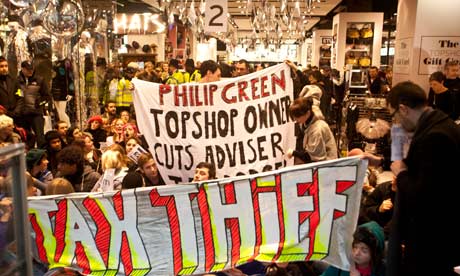
It also has similarities with the autonomy of joining an Occupy camp, or a UK Uncut action, knowing that what you do is up to you, and that you can find your own path to making a difference, as part of a bigger movement.
What each of these examples have in common is that we come to them as ourselves, not as a professional or whatever our job title calls us, and we do things in the ways we want to do them, not through established formal systems that control us, and limit our abilities.
And there's no reason these notions can't be a part of our working lives.
Organisational culture isn't dictated from above, like so many policies; it is the cumulative result of how each of us who are a part of it chooses to engage with our work and with each other.
If we don't feel our organisational culture is living the values we'd like it to, what can we do to improve it? We each have the opportunity to help make it a bit better, which is what this week is all about.
What can you do differently this week to help your social change organisation to be more human? It might be about how you relate to a difficult colleague. Can you focus on hearing them, rather than proving them wrong? It might be about how you hold a meeting. Could you let conversation flow, and drop the formal agenda?. Alternatively it might be about how you make decisions. Can you involve more colleagues' opinions? Or put it out as a question on your social media channels?
But it's up to you. And if you share your action on Twitter using the #MoreLikePeopleWeek hashtag, or add a comment about it to the blog below, you might just inspire someone else to take a step to make their organisation a bit more human too.
Liam Barrington-Bush is a (normally UK-based) facilitator, consultant, and co-founder of Concrete Solutions. He is currently in Oaxaca, Mexico, writing a book about how social media and social movements are modelling new ways of organising for social change, and tweets as @hackofalltrades.
This content is brought to you by Guardian Professional. To join the social enterprise network, click here.