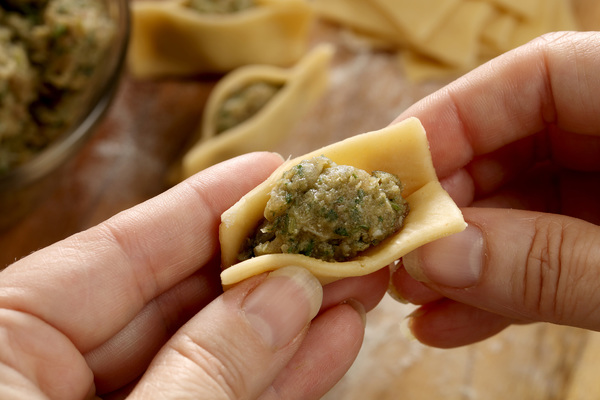
Dumplings from every culture are labor-intensive. There's just no getting around that, and if someone sets a plate of dumplings before you, I hope you appreciate the work that went into them.
Of all the dumplings I know, manti, the little lamb-filled, open-face dumplings, please me most.
The Turks claim them most loudly, but I learned about manti from Armenian friends during my Detroit days, so for me, they will always be Armenian. I prepare them to keep the memories of old friends fresh in my mind. And besides, they're just plain good eating.
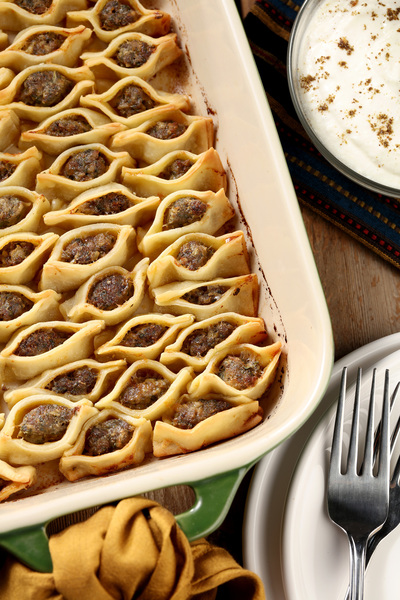
My nickel-size manti would never please a critical Turkish future mother-in-law _ tradition says she'd only be impressed with manti so tiny that 40 would fit in a spoon. Unless you have a critical future mother-in-law on the horizon, nickel-size is fine. And, in fact, sometimes I make much larger manti _ the size of the familiar Chinese pot sticker _ and steam them as the Chinese often do. They're superb that way too. Just don't forget the garlicky yogurt that crowns the dish.
In traditional kitchens, women would gather to prepare dishes like manti. They might gossip over the thin, eggy dough and fragrant lamb filling, or they might complain about their kinfolk, or they might celebrate one another's good fortune. After all, many hands make light work. In dumpling-making, there's work for everyone, from the learner to the expert.
So if you have help making these, count your blessings. If, however, you labor alone, here's a great excuse to prop up your tablet and binge-watch something on Netflix. After two episodes of "Call the Midwife," I had about 130 manti. That's enough for two for a generous dinner and a delectable lunch for two the next day.
Robin Mather is a freelance writer and editor and the author of "The Feast Nearby," a collection of essays and recipes from a year of eating locally on a budget.