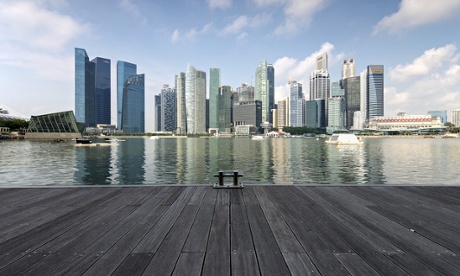
On 9 August 1965 a tiny island on the tip of the Malay Peninsula gained independence. Its journey since has been nothing short of amazing. Singapore has grown from a backwater trading post to an international model of modernity. Its extraordinary history comes alive when you walk through its parks and neighbourhoods and alongside the river. Even as it shapes the future, the past is alive and well in Singapore.
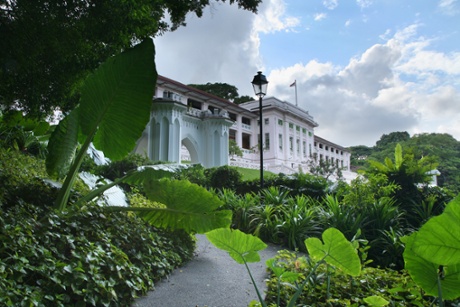
Fort Canning
Begin your excursion at Fort Canning park, a beautiful, 18-hectare (44-acre) expanse strategically located on a hill in the heart of Singapore. The park is just a stone’s throw from Orchard Road and the National Museum, and in medieval times Malay royalty ruled from its peaks. In the 19th century the hill took on a defensive role when Fort Canning was built. And it was in an underground bunker known as the Battle Box – currently undergoing renovation until 2015 – that the British made the decision to surrender to the invading Japanese in the Second World War. Other highlights include the Fort Gate, the “hidden” sally port, the spice garden and the maritime corner.
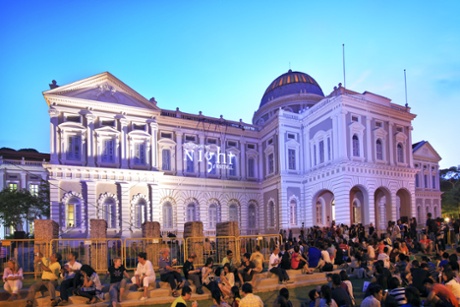
The National Museum of Singapore
Just down from Fort Canning you’ll find the National Museum of Singapore. Not only is it the country’s oldest museum, it is also an architectural marvel, deftly fusing the past with the future. Here, you’ll learn the story of Singapore through compelling exhibitions, artefacts and events. Be sure to take in the Living Galleries, which explore the development of Singapore’s culture through fashion, food and film.
War memorials
A short walk from the National Museum brings you to the Civilian War Memorial, affectionately known as “the chopsticks”. Rising 70 metres, it commemorates the more than 50,000 people killed during the Japanese occupation. Its four pillars represent the unity of the country’s main ethnic groups: Malay, Chinese, Indian and Eurasian. Next, head towards the Esplanade and you’ll soon catch sight of the Cenotaph, a war memorial honouring fighters who lost their lives in the First and Second World Wars. “They died so that we might live,” reads the moving inscription in English, Chinese, Malay and Tamil.
The Singapore River
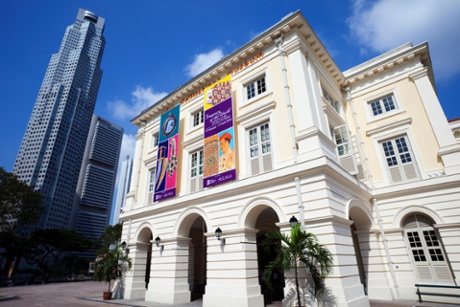
Continue in the same direction and you’ll quickly reach the mouth of the Singapore river. In front of the recently remodelled Victoria theatre and concert hall, you’ll see a bronze statue of Sir Stamford Raffles, founder of modern Singapore. It originally stood where he is believed to have stepped ashore in 1819, but was moved to its present location in 1969 to mark the event’s sesquicentennial. Also in the immediate vicinity is the Asian Civilisations Museum, which features 11 thematic galleries and countless cultural artefacts from throughout the continent. The four ExplorAsian zones offer exciting, interactive experiences that will delight children and adults alike. Afterwards, take a stroll along the river. As you reach the Cavenagh bridge, you’ll encounter the People of the River, a highly photogenic series of sculptures that depict the bygone days of Singapore.
The Changi Museum
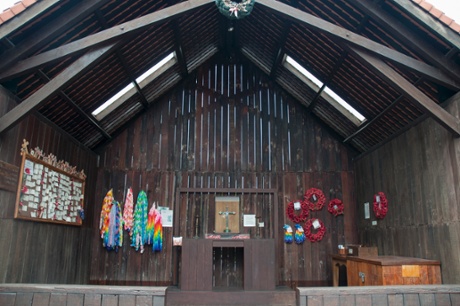
Singapore underwent a dark period in its history during its occupation by Japanese forces in the Second World War, and nothing illustrates that more than the infamous Changi prison. The prison is now open as a museum and can be found on Upper Changi Road North. Visitors can view the paintings, drawings, letters and photographs by the men and women interned there from 1942–1945. A truly moving experience.
It’s been said that you can’t really know a place until you know its history. If this is true, then getting to know Singapore should be a great pleasure. And in doing so, you will become a part of that history.