Make Leicester British (C4) | 4oD
Broadmoor (ITV) | ITV player
Afghanistan: The Lion’s Last Roar (BBC2) | iPlayer
In a week in which it was announced that non-European immigration has cost Britain £118bn, while European immigration has made a net contribution of £20bn, it was good timing for an intelligent documentary on British attitudes to migrants and migrants’ feelings about Britain.
In the absence of such a programme there was Make Leicester British, a follow-up to 2012’s Make Bradford British. It wasn’t without merit, but once more a complex issue was reduced to a simple reality-TV format. Put eight individuals from different cultural and ethnic backgrounds in a house and see what happens.
Not much was the answer. There were arguments and loudly voiced opinions but they were of the kind that made you want to switch off. Not so much because they were offensive but because they were so conspicuously ill-informed, on all sides.
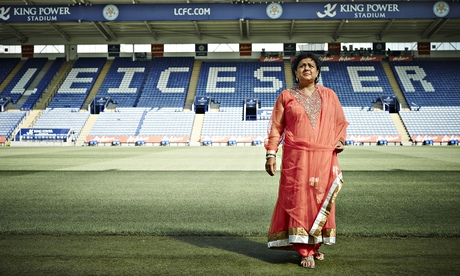
The novelty here was that the most vociferous anti-immigration views were held by two immigrants: a Kenyan Indian, Kit, and an Indian, Sukiy, both of whom had lived and worked in Leicester for decades. They resented what they saw as abuse of the benefits system by new migrants, in contrast to the hard work they and their parents had put in to gain a foothold in British society. And they disliked the insularity of people who preferred to cling to their own culture.
There were three hard-working newer migrants who in their different ways exploded such stereotypes, but they were all European. Unfortunately the sole occupant who appeared to confirm the two Indians’ prejudices was a Somali refugee called Sagal.
A single parent, Sagal lived on benefits in a council house with her four small children. She expressed no gratitude to the country thousands of miles from her homeland that had taken her in and housed her. Instead, she spoke of the victimisation she had suffered and rejected the idea of being British.
She wasn’t a full participant in the experiment because her Islamic faith meant she couldn’t sleep in the same house as men she was not related to. And when she moved into Kit’s home for a couple of days, Kit’s husband had to move out in order to accommodate her religious principles.
As the programme was unable to explore what any of this meant, other than through the participants’ viewpoints, we were left to employ our own political sentiments – and they can become contorted in the heated atmosphere of the immigration debate. Should liberal sympathies, for example, be with Sagal, who showed little interest in her adoptive country, or Kit, with her fiery rhetoric of integration?
The two women ended up not speaking to each other, which, if this programme was intended as a metaphor or microcosm, does not bode well for the multicultural future. Still, at least there was the happy story of 72-year Englishman John, who saw British culture as a mixture of “fish and chips, the odd pint and queuing”, and 36-year-old Eduardas, who had escaped a childhood of abuse and poverty in Lithuania to become a successful businessman in Britain.
The two men, we were told, had become firm friends. John even took Eduardas morris dancing. If a friendship can survive that experience then there may yet be hope for all of us.
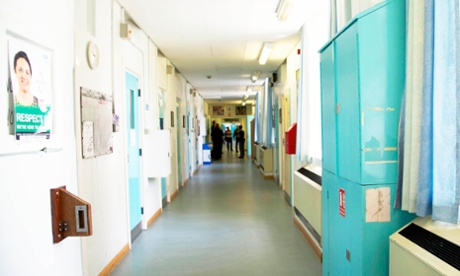
The best pro-immigration argument of the week was made, non-verbally, in Broadmoor. An inside look at the infamous psychiatric hospital that houses the likes of Peter Sutcliffe, it showed several patients who had committed crimes as a result of mental illness. To conceal their identities, the patients’ faces were blurred out, but not those of the staff, which were predominately black and brown. Here they were, men and women from Africa and Asia, doing a difficult job that few natives would envy, seemingly with great care and no small pride.
How do you handle a powerfully built man who, by his own admission, is “violent, antisocial and paranoid”? The answer is with great caution. The risk of attack is ever-present, with an average of five physical assaults on staff each week.
None of the most notorious patients figured in the film, and much of what took place was conducted off camera, so inevitably it lacked a certain revelatory appeal.
The film-makers saw what they were allowed to see, no doubt for the unimpeachable reason of protecting those who were in no position to protect themselves. The effect, however, was to leave you thinking that it was a limited picture; that other, perhaps more disturbing scenes, were taking place behind triple-locked doors.
It costs £300,000 a year to keep a patient at Broadmoor. That sounds a lot, but how do you evaluate such a figure? There are certainly cheaper alternatives but are they better ones?
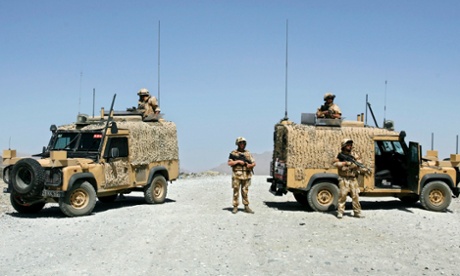
The same question applies to Britain’s 13-year military involvement in Afghanistan, the cost of which has run into billions of pounds as well as the lives of 453 British personnel. In the second part of Afghanistan: The Lion’s Last Roar?, we heard a litany of strategic errors and failures that suggested that the money and lives were all wasted. The Taliban were a presence once more right across the country, the British army’s role in Helmand province was an ill-conceived disaster, the American nation-building project was poorly organised, and the Afghan government of Hamid Karzai was a study in endemic corruption.
Furthermore, in actively seeking public sympathy for its dead and wounded, the British army had made itself effectively undeployable, because almost no conflict would now be seen as worth losing British lives for. The irony of the Royal Wootton Bassett ceremonies is that they proved to be less military tributes than pacifist processions. All of which may be true, and necessarily the subject of proper debate and criticism. But it’s not the only truth, although it was easy to gain that impression from this well-made and important documentary.
Near the end of the sustained and persuasive fault-finding, as if a mumbled afterthought, the narrator mentioned that eight million Afghan children were now in education, a third of Afghan MPs were women and life expectancy in the benighted country had increased by a barely credible 20 years. Even if those figures are open to dispute, there have been tangible gains.
Of course, they might not last. But at least they are a benchmark against which to measure what comes next, and they do offer a significant riposte to the overriding narrative of imperialist misadventure. In the end, whether it’s immigration, psychiatric care or military intervention, money is seldom a reliable guide to value.