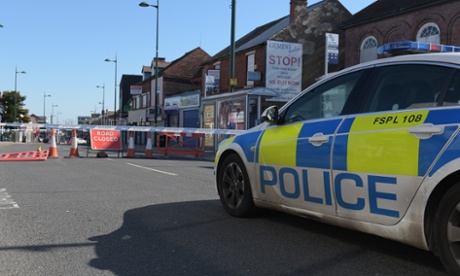
The vast majority of police officers accused of assault are still on the beat, official figures show. Less than 3% of the officers from the two most complained-about forces have been suspended or put on restricted duties.
Between them, those forces – the Metropolitan police and West Midlands police – count 1,635 officers under investigation over 943 assault claims, according to responses to freedom of information requests.
Figures obtained by the Independent show that a total of 3,082 officers across the country are under investigation over allegations of “serious”, “sexual” and “non sexual” assaults.
The paper reported that the next eight forces, which include Northumbria, Leicester and Humberside police, reported that more than 700 of their officers were being investigated, while only 12 had been suspended or put on restricted duties.
It is reported that the majority of the people making the complaints who gave information on their ethnicity were black or minority ethnic (BME). That led to claims of racism on the part of the police.
Desmond Jaddoo, founder of Birmingham Empowerment Forum, told the paper that the relationship between police and the black community had become that of “oppressor and oppressed”.
He said: “Trust and confidence in the police is still at its lowest. I’m not anti-police. The problem is some officers are abusing their power.”
But a Met spokeswoman said that it was difficult to draw such conclusions from the figures because, while the number of cases involving BME complainants outweighed those involving white people, a significant minority had not disclosed their ethnicity.
“While we cannot know whether the proportion of total complainants identified as black, Asian and other are similarly represented within the unknown group, if they were then approx 49% of complaints [to the Met] would be from these groups.
“This would be only a slightly higher proportion of the sample than the proportion of non-white Londoners which according the 2011 census made up 40% of the city’s communities,” he added.
“The commissioner has consistently recognised that there remains a risk that the MPS is, as some people argue, still institutionally racist in some of what it does because there remain elements of disproportionality, despite significant progress over many years.
“The commissioner has also very clearly stated he will not tolerate racism.”