The country's flagship freight company is now chartering ships to get around major international supply chain delays, says managing director Don Braid in a wide-ranging interview with Newsroom Pro.
Mainfreight’s annual result this month didn’t disappoint.
Revenues up 14.5 percent at $3.5 billion, net profit before tax up 27 percent at $262.4 million and an increased dividend of 75c for the full year, also up 27 percent.
Despite experiencing one of its most disruptive challenges ever, the country’s largest freight and logistics business seemingly thrived in an environment that, on the face of it, should have inflicted serious damage.

At one point it did. Mainfreight’s share price plunged more than 40 percent in just four weeks between February and March last year, in line with the falloff in its domestic business, which fell by around the same amount.
One year later its shares are 80 percent above the level they were trading at in February 2020 when the pandemic first struck.
Managing director Don Braid said Covid-19 fully tested Mainfreight’s resilience, but it also necessitated some fundamental commitments.
“We were exposed to Covid-19 quite early in the piece, probably earlier than many others because of our operations in China. From the outset, we committed to protecting the health of our people and their jobs, retaining our healthy balance sheet, made sure we had good cashflow and we relied on the ability of our people and our decentralised structure to get us through.”

Braid readily admits that protecting jobs was his biggest worry at the time, and after applying for and receiving the Government’s wage subsidy within 48 hours he was suddenly confronted with what to do with a significant amount of money.
“We poked it into a bank account and said to ourselves that we would leave it there in reserve.”
Within six weeks the $10.6m had been fully repaid. The landscape quickly began to change as the market flipped and the "stay-at-home" retail surge began in earnest.
“The best thing we did was to give the money back as soon as we could and then we prepared for the freight deluge that hit us. After falling off a cliff in a matter of weeks demand came roaring back very quickly as everyone suddenly wanted everything fast.”

Being able to tap into a global network of market intel also helped.
“Our customers were telling us they were coping and there were still orders there. That gave us confidence. I think that was a benefit we had that perhaps other companies didn’t.”
In the end, not a single employee was made redundant.
"My advice to the shipping lines is they need to think about long term rather than short term profit. I get the fact that previously they probably weren’t getting the freight rates they deserved, but right now it just feels like they’re profiteering.” – Don Braid, Mainfreight
Mainfreight prides itself on its team culture and ‘can do’ attitude, something Braid believes equipped the business to deal with an event as extreme as a global pandemic.
“Our people were amazingly resilient and found ways around problems and continued to deliver for customers. Our whole ethos of what we stand for, getting decisions made as close to the customer as possible and being decentralised certainly helped.
"When you're running a network of 296 branches in 26 countries you haven't got a hope in hell of trying to run that from some sort of bullshit head office process.”
Bonus is for those that earn it
Staff are set to be handsomely rewarded for their efforts with the company’s discretionary profit bonus increasing by 61 percent to $43.9m.
But not everyone will receive the bonus.
“You have to have earned it. There will be some who didn’t perform well enough, but the reality is that if we didn’t pay a bonus we wouldn’t earn the money to pay it.”

Braid says he often wonders why more companies don’t follow Mainfreight’s lead and establish discretionary profit pools to incentivise all their employees to lift their performance and reward them financially.
“We’re sharing the profits with those who helped us to earn those profits and that feels bloody good. We know it’s the right thing to do but our team members also understand that we have to make profits before we can share them.”
Businesses regularly talk about their employees being their greatest asset but Braid believes too many of them pay it lip service when it comes to rewarding staff financially.
“The pandemic should be a wake-up call to more businesses, particularly those now experiencing shortages that have relied on cheaper labour from offshore or tourists.
"Perhaps if they had shared a little bit of their profits to actually retain them and provide those people with a career path they might not be in the situation they find themselves now.”
Land, air and now sea
As the legacy of Covid begins to fade, at least in a business sense, there are outcomes that Braid says aren’t going away in a hurry.
Skyrocketing freight rates, port congestion and supply chain disruption being the big three that are currently top of mind for both importers and exporters.
Growing frustration with international shipping lines has become a particular beef.
“The problem is they don’t have the capacity to respond to the global surge in demand they are now experiencing . I call it the ‘whiplash effect’ and it’s an issue I believe we are going to have for a while yet.
"My advice to the shipping lines is they need to think about long term rather than short term profit. I get the fact that previously they probably weren’t getting the freight rates they deserved, but right now it just feels like they’re profiteering.”
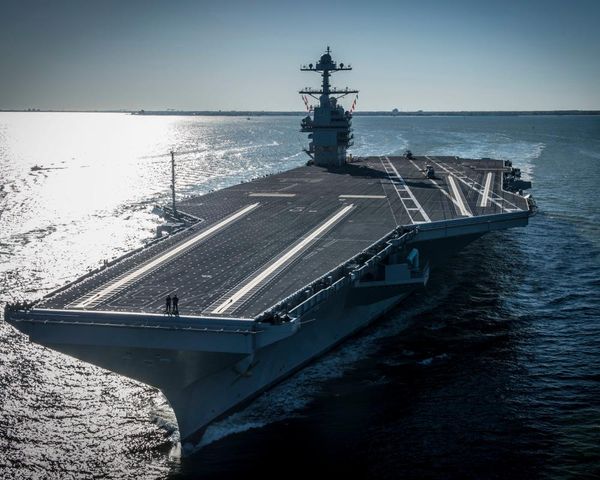
Mainfreight recently undertook its first sea charter from Shanghai to Auckland and has two more planned to Australia and the United States.
“We need to take the lessons of the last 12 months and use the gains we have achieved to get some momentum back into the country. Rather than Covid-19 slowing us down, it should be actually speeding us up." – Don Braid
It’s all part of finding solutions for customers, Braid says.
“We’ve undertaken 46 aircraft charters before and during the pandemic for perishable goods, PPE gear and other high value freight but we’ve never had to charter shipping vessels previously. Customers expect us to find solutions to their transport issues, irrespective of the pandemic, and so we are constantly using our expertise to come up with new ideas.”
When it comes to spiralling freight rates Braid isn’t expecting any change to occur for at least 12 months, possibly longer.
“Some of our bigger customers in the US are planning for longer than 12 months and one told me recently they expect the current situation could be with us for another three to four years.”
Foot on the gas
As the country begins to take its first tentative steps towards post-Covid normalisation with the recent opening of the trans-Tasman travel bubble, Braid worries that we are not moving fast enough and there’s too much bureaucracy fiddling around the edges rather than taking bold decisions.
While he acknowledges the country has done well to date, he believes we will ultimately be judged on our recovery efforts rather than our management of the pandemic.
“We need to take the lessons of the last 12 months and use the gains we have achieved to get some momentum back into the country. Rather than Covid-19 slowing us down, it should be actually speeding us up.
"The first step is obviously to get the vaccination rollout completed as quickly as possible to give everyone confidence.
"Then we should be establishing a world class border that attracts people here either as tourists or migrants because they know the country is serious about making sure the public are safe.”
Get that right, and he says the country can begin to regain its lost momentum.
If a company's share price is effectively the market’s scorecard of its performance then Mainfreight is probably top of the leader board right now.
But as its shares close in on $80 and remain on track to become New Zealand’s first ever $100 share, Braid scoffs at any suggestion of a share split.
“We need more high value shares. If you ask me we have far too many penny dreadfuls listed on the New Zealand market.”
Despite the disruption of a global pandemic, more accelerator and less brake continues to be Mainfreight’s mantra as it resets its sights on its 100-year vision.