Since its launch, Mahindra Rural Housing Finance Limited has disbursed loans to 265,000 rural families (impacting almost 1.5 million people) across 35,000 villages in India. The average loan amount is approximately $1,675 (£1080) and the average annual household income is $2,850 (£1,837) – which means that most would not qualify for loans offered by other mortgage industry players. While the capital provided to these “unbanked” customers is no doubt important, the respect and recognition they are accorded by us and by the villagers, are perhaps more significant.
Human stories of impact say a lot more than facts and figures and no amount of data can demonstrate the depth of the impact made by Mahindra in India as vividly as the vignettes customers have shared about their lives.
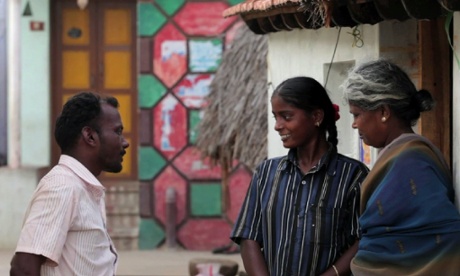
A widowed mother of three tells her story:
I was working as a labourer and earning a daily wage of about $4. I had three young children at the time and was living in a dilapidated house. During the rainy season, the house would get damp and water would drip in, forming puddles all over the floor. I used to be terrified that my children would fall ill and because I did not have the money for medical attention, that I might even lose one of them. Then I met a Mahindra team member, who gave me a loan to make the much-needed repairs to my home. Now I am no longer scared of the rain!
One of our team members relates the story of a young farmer who came to our offices and distributed sweets for his marriage:
This customer singled out the sales person instrumental in sanctioning his loan and invited him to his wedding. At the wedding, a special table was laid out for the newlyweds, their parents and one more guest – our team member! The happy and proud groom told the team member that his marriage would not have been possible without Mahindra. He had been living in a shabby, dilapidated house until receiving a loan from Mahindra to repair and improve it. After making the improvements, his neighbors and other villagers started showing him new respect. That’s when the marriage proposals started coming his way! He explained that improving one’s home is not just about the physical repairs: it’s about respect and living with your head held high.
How Mahindra started
With low industry penetration and a huge potential for growth, offering mortgages in India presented a good business opportunity. To illustrate the potential, in India while outstanding mortgage loans were just 9% of the Indian GDP, mortgages were 88% of the UK’s GDP and 81% of the US GDP in 2011, accoridng to a 2013 National Housing Bank report. While 68% percent of India’s households reside in rural areas (according to the 2011 census), the National Housing Bank reported that in 2010, just 7% of home loans disbursed by banks were used for rural housing.
The Mahindra Group is a respected name in rural India as a manufacturer of farm equipment and vehicles, and Mahindra Finance has been financing these agricultural assets for several years. It was possible to leverage the group’s brand equity, knowledge and reach to enter this untapped segment of the Indian mortgage market.
Challenges
Perhaps the biggest challenge at the beginning was winningthe trust of customers. Those in rural Indian can often be afraid of mortgaging their land since that is often the only asset their family owns. Mahindra’s brand image helped to reassure them of the company’s integrity and intentions.
Another challenge was that most of our customers have no documented evidence of their income. To overcome this issue, we designed a field investigation-based model for estimating incomes. Over time, the company developed a set of metrics to make the assessment fast and reliable.
Perhaps the biggest value we bring is in helping customers establish their legal title or rights to the land they own. In effect, we are helping them to monetize their assets.
Logistics is another major challenge we face. Our customers are dispersed far and wide, and most do not deposit their earnings in bank accounts. This means that we need to meet with them directly to collect repayments. Almost all of these repayments are made in cash, which poses its own set of challenges.
Since the business’s inception, a number of changes have been made to the product. For example, unlike other mortgage repayments (which are made in monthly installments), we now offer customers the option of paying in quarterly and six-monthly installments linked to the harvest seasons. It was pointless to ask customers for monthly payments when the cash inflows occur only as crops are harvested.
Rewards
We are profitable and growing – demonstrating the sustainability of this business model. For the financial year ending March 2015, profit after tax grew by 63% to $7m (£4.5m) on a loan book of approximately $333m (£215m). Those are the material rewards, but our real rewards come from the stories of our customers.
Find out more: Mahindra Rural Housing Finance Ltd: Making Home Loans Available to Poor People
Launched at the United Nations, the Business Call to Action (BCtA) is a global alliance hosted by the United Nations Development Programme. Follow on Twitter at @BCtAInitiative
Content on this page is provided by Business Call to Action, supporter of the role of business in development hub.